
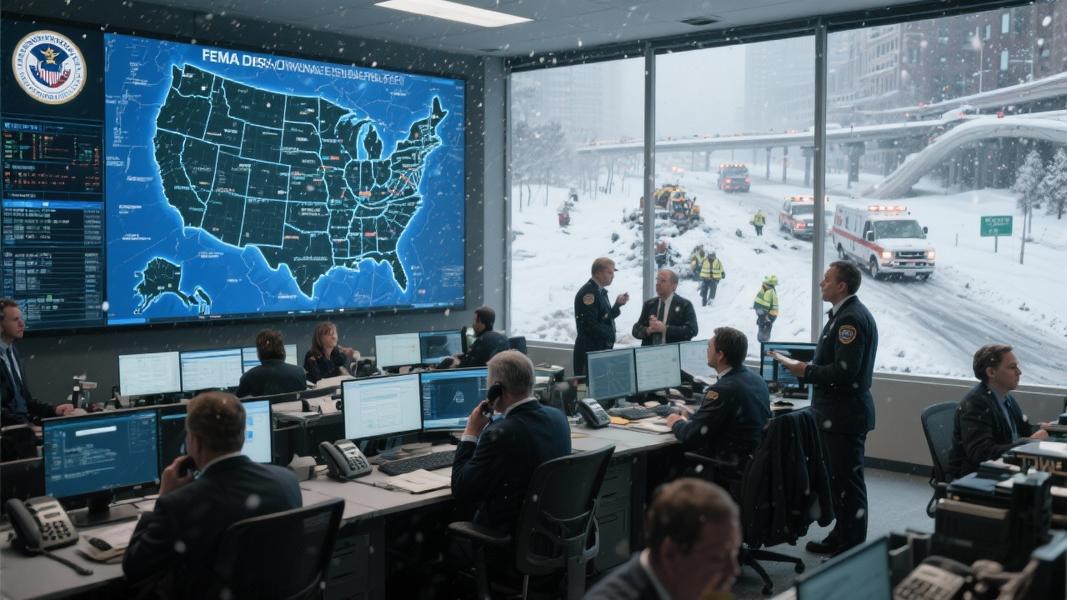
A massive winter storm swept across the United States in late January 2026, burying regions from the Southwest to New England under heavy snow and ice, leaving dozens dead and hundreds of thousands without power in its frigid wake.
The powerful system threatened nearly 180 million Americans as it carved a destructive path across the nation, dumping up to a foot or more of snow in Colorado, Illinois, Indiana, Missouri, New Jersey, New York, and Pennsylvania. By January 27, the death toll had climbed to at least 42 people, with more than half a million customers still facing power outages — most severely in Tennessee, Mississippi, and Louisiana.
States Mobilize Emergency Response
The storm’s approach prompted governors across multiple states to declare emergencies, with National Guard units activated in 12 states before the system even arrived. Mississippi, North Carolina, Indiana, Missouri, Kansas, Ohio, Tennessee, and Kentucky all issued emergency declarations as forecasters warned of potentially life-threatening conditions.
“This isn’t your typical winter weather event,” one emergency management official noted. “We’re seeing a combination of heavy snow, dangerous ice accumulations, and bitter cold that creates a perfect storm of hazards.”
Parts of southern Indiana and northern Kentucky received between 6 and 13 inches of snow and sleet, while central and eastern Kentucky faced potentially more dangerous ice accumulations ranging from 0.20 to 0.80 inches — enough to snap tree limbs and down power lines.
Record Snowfall Across Multiple Regions
How bad did it get? In Oklahoma alone, preliminary National Weather Service data showed snow accumulations reaching 12 inches between January 23 and 26. But that paled in comparison to parts of the Northeast, where some communities reported staggering totals around 20 inches.
The storm system’s unusual reach meant that regions typically unprepared for such severe winter conditions found themselves struggling to cope. Schools shuttered across dozens of states. Highways became impassable. And in cities and rural areas alike, residents hunkered down as temperatures plunged.
“I’ve lived here thirty years and never seen anything quite like this,” said one Mississippi resident, where ice rather than snow posed the greatest threat. “The sound of trees cracking under the weight of ice kept us up all night.”
Infrastructure Strained to Breaking Point
Travel became nearly impossible across wide swaths of the affected areas. Flight cancellations numbered in the thousands. Interstate highways closed in multiple states as plows struggled to keep pace with rapidly accumulating snow.
Power infrastructure, particularly in southeastern states less accustomed to such weather extremes, buckled under the combined weight of ice and snow. Utility companies warned some customers might face days without electricity as crews navigated treacherous conditions to reach damaged lines.
The storm’s timing — striking in late January when many regions were already dealing with seasonal cold — compounded the danger for vulnerable populations, particularly the elderly and homeless.
As communities begin the slow process of digging out and restoring services, meteorologists are already warning that climate change may be contributing to both the intensity and unusual patterns of such winter systems — a sobering reminder that what once seemed exceptional may become increasingly common.
