
The Pentagon is overhauling how it educates its most senior military officers — and some of the country’s most prestigious universities are now on the outside looking in.
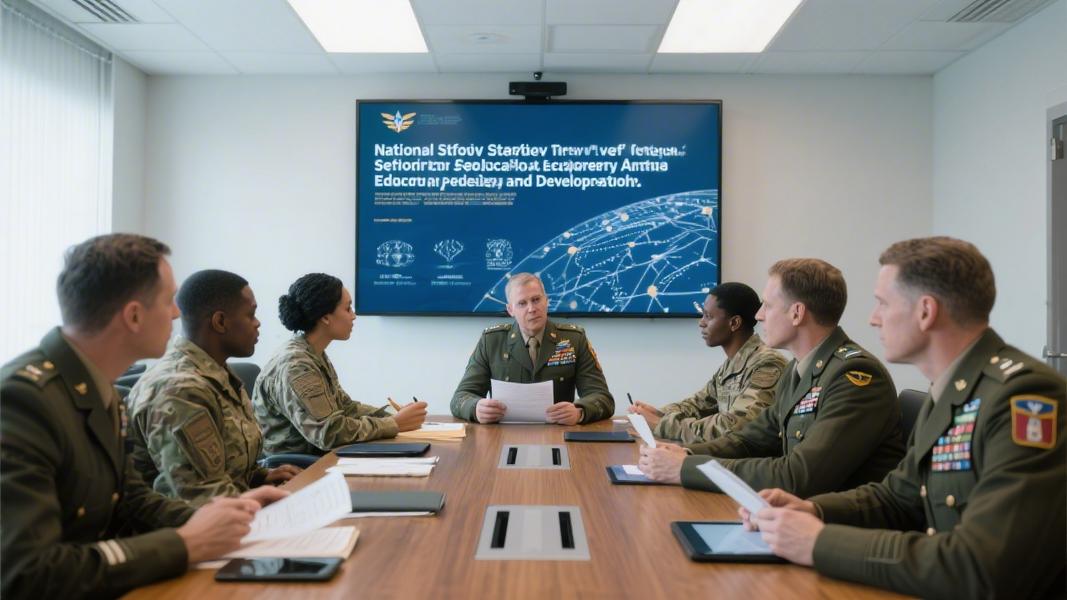
On March 12, 2026, Secretary of War Pete Hegseth signed a memorandum directing the establishment of a Senior Service College Task Force (SSC-TF), launching a 90-day comprehensive review of all Senior Service Colleges and associated fellowships. The directive, titled “Strengthening the Effectiveness of Our Senior Service Colleges,” tasks the Under Secretary of War for Personnel and Readiness with leading the effort. It’s the latest — and perhaps most sweeping — move in what Hegseth has framed as a fundamental reset of professional military education in America, one that has already cost more than a dozen elite universities their Pentagon partnerships. The stakes, at least according to the Department, couldn’t be higher.
A Task Force With a Mission
The SSC-TF isn’t being built from scratch without a roadmap. It follows two earlier Hegseth memoranda — a February 6, 2026 directive titled “Rebuilding the Warrior Ethos in Professional Military Education” and a February 27 order that began cutting ties with specific universities. Together, these documents form the backbone of what the Department has called a broader “Rapid Force-Wide Review of Military Standards.” The task force will evaluate whether faculty, administrators, and curricula are actually producing the kind of strategic thinkers the military needs — or whether they’ve drifted into something else entirely.
“At the Department of War, we have a duty to ensure that our professional military education develops real leaders, warfighters who dominate into the future,” Hegseth said. The language is pointed. It’s not just a bureaucratic review — it’s a signal.
The task force will assess alignment with the National Defense Strategy, identify deficiencies across educational standards, and deliver findings ahead of the 2026-27 academic year. Officials say the goal is to confirm that, as one statement put it, “high standards and meritocracy are at the forefront” — with a particular emphasis on national security, strategy, history, and what the Department calls “overall excellence.”
The Universities That Didn’t Make the Cut
Here’s where things get uncomfortable for a lot of admissions offices. Even before the task force was formally established, Hegseth had already moved to sever graduate-level PME fellowship ties with 13 elite universities, effective with the 2026-27 academic year. Harvard was the first named — its fellowship arrangement discontinued under the February 27 memorandum titled “Aligning Senior Service College Opportunities with American Values.” But the list didn’t stop there.
Brown, Columbia, Princeton, Yale, MIT, Georgetown, and Tufts are among the institutions affected. At Tufts alone, six fellowships are being eliminated. The reasoning, per the Department, is straightforward: these institutions have failed to sharpen warfighting capabilities. Critics see it differently. The cuts have been described by some observers as “a calculated, targeted assault on the core of our fighting force” and “a corruption of our own uniformed class.” That’s a striking charge — and one the Pentagon has not exactly rushed to refute.
That said, it’s not a clean break for everyone. Current enrollees at affected institutions are being allowed to complete their programs. So the door isn’t being slammed — it’s being closed, slowly, on a particular generation of military-academic partnerships that have existed for decades.
What This Really Means
Is this a genuine effort to sharpen military readiness? Or is it something more politically loaded? Probably both — and that’s exactly what makes it worth watching closely. The Senior Service Colleges aren’t obscure institutions. They train colonels, generals, and senior civilians who will shape American military strategy for the next two decades. What they learn — and where they learn it — matters enormously.
The Department’s stated criteria for the review include a focus on national security, strategy, history, and meritocracy. Those aren’t inherently controversial benchmarks. But the specific targeting of Ivy League and comparable universities — institutions with long histories of training military officers — has raised questions about whether ideology, not just pedagogy, is driving the cuts.
Pentagon spokesman Sean Parnell has defended the moves as consistent and necessary, framing them as part of a larger commitment to ensuring that PME institutions are producing warfighters, not policy wonks. The SSC-TF’s 90-day clock is already running, and its findings — expected before the next academic cycle begins — will likely determine whether this review expands even further.
For now, the message from the Department of War is unambiguous: the era of reflexively sending senior officers to elite civilian universities, simply because it’s always been done that way, is over. Whether that’s bold reform or a costly miscalculation is a question the next generation of military leaders may ultimately have to answer — from whatever institution is still willing to have them.
