
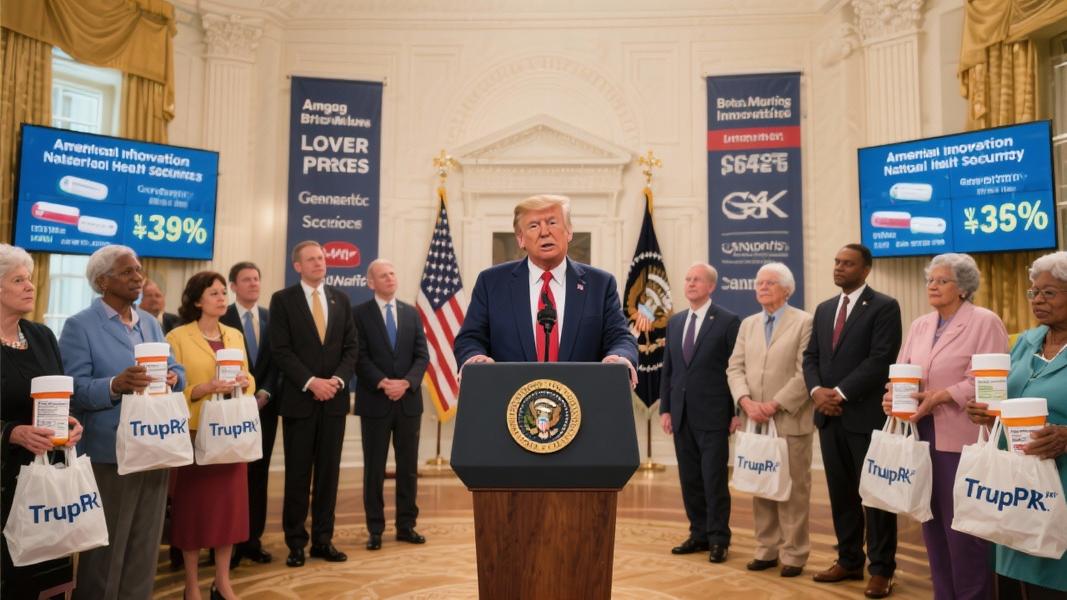
President Trump has struck the largest drug pricing deal in American history, securing agreements with nine major pharmaceutical companies to slash prescription costs to the lowest levels paid in other developed nations.
The White House announced on Thursday that Amgen, Bristol Myers Squibb, Boehringer Ingelheim, Genentech, Gilead Sciences, GSK, Merck, Novartis, and Sanofi have all agreed to implement “most-favored-nation” (MFN) pricing for medications treating a wide range of conditions including diabetes, rheumatoid arthritis, multiple sclerosis, and certain cancers. The agreements mark the culmination of a months-long negotiation process that began with an executive order signed in May.
Dramatic Price Reductions Across Major Medications
How dramatic are the cuts? Some medications will see price reductions of more than 90%. Bristol Myers Squibb’s HIV drug Reyataz will drop from $1,449 to $217, while Sanofi’s blood thinner Plavix falls from $756 to just $16 — a 98% reduction. Gilead’s hepatitis C treatment Epclusa will be reduced from nearly $25,000 to $2,425.
The agreements ensure these MFN prices will be available to every State Medicaid program, potentially saving billions in public healthcare spending. Additionally, the companies have committed to at least $150 billion in U.S. manufacturing investments as part of the deals.
“American patients have been ripped off for decades, paying the highest prices in the world for the same exact drugs,” President Trump said during the announcement ceremony. “Today, that ends. Now Americans will pay what other countries pay — or even less.”
Building on Previous Agreements
Thursday’s announcement builds on a series of earlier deals the administration has secured since September, including the first MFN agreement with Pfizer on December 1st, which coincided with a trade agreement with the United Kingdom that will increase U.K. drug prices by 25%.
In October, AstraZeneca agreed to MFN pricing for both Medicaid and Medicare, along with discounts of up to 80% through the TrumpRx program and a pledge to invest $50 billion in U.S. manufacturing by 2030.
The following month, Eli Lilly and Novo Nordisk joined the initiative, setting prices for popular weight loss and diabetes medications at $350-$389 per month on TrumpRx.gov, while committing to combined U.S. investments of $37 billion. The deals included Ozempic, one of the most sought-after medications in recent years.
Industry Response and Donations
Pharmaceutical industry representatives have offered mixed reactions. While participating companies have publicly embraced the agreements, industry lobbying groups have expressed concerns about long-term impacts on research and development.
As part of the arrangements, several manufacturers have also committed to significant medication donations to the Strategic Active Pharmaceutical Ingredients Reserve (SAPIR), including 98.8kg of albuterol from GSK, 6.5 tons of apixaban tablets from Bristol Myers Squibb, and 3.5 tons of ertapenem from Merck.
Critics note that the agreements primarily affect Medicaid pricing, with more limited impacts on what most privately insured Americans will pay. Still, the TrumpRx program aims to make discounted medications available to uninsured and underinsured patients.
The implementation timeline suggests most price reductions will take effect gradually throughout 2026, with the full impact not being felt until well into the second half of Trump’s term. That hasn’t stopped the administration from claiming an immediate victory.
“This is just the beginning,” said HHS Secretary Robert F. Kennedy Jr. “We’re bringing the pharmaceutical industry to heel and putting Americans first.”
