
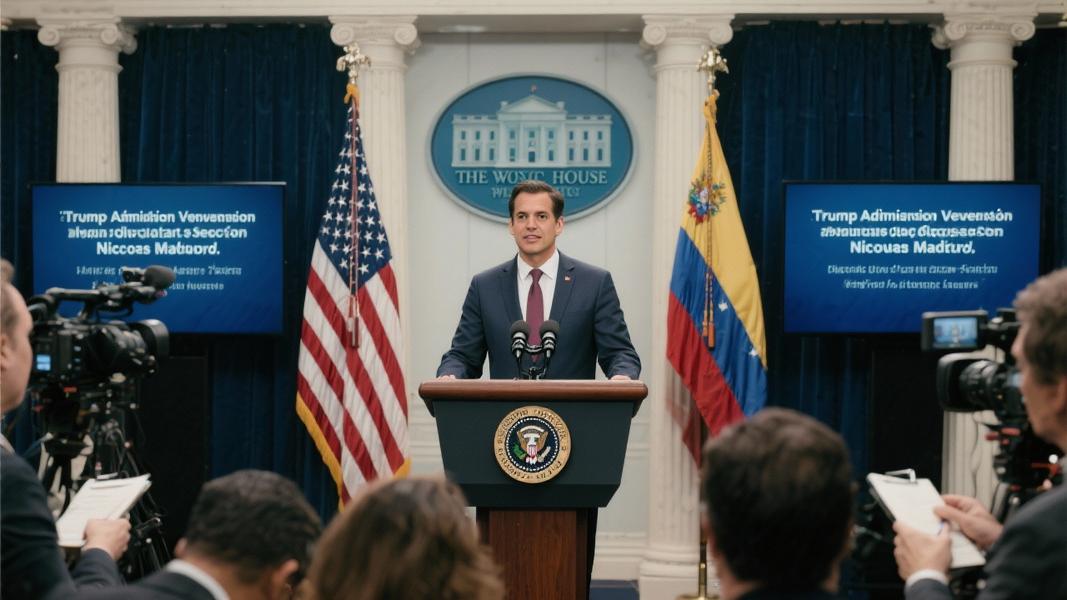
In a stunning development, Secretary of State Marco Rubio has revealed details of a swift military operation that resulted in the capture of Nicolás Maduro, the man U.S. officials describe as Venezuela’s “illegitimate former dictator” and an “indicted narcoterrorist.”
The operation, which took place in the early hours of January 4th, marks one of the most aggressive foreign policy moves of President Trump’s second term, sending shockwaves through diplomatic circles across the Western Hemisphere.
A Two-Hour Mission
“We don’t have U.S. forces on the ground in Venezuela. They were on the ground for about two hours when they went to capture Maduro,” Rubio explained in his first public comments since the operation. The Secretary emphasized that the mission was narrowly targeted and not an extended military presence.
Speaking from the White House, Rubio forcefully rejected characterizations of the operation as an act of war. “There’s not a war. We are at war against drug trafficking organizations — not a war against Venezuela,” he clarified, drawing a distinction that may prove critical in debates about whether congressional approval was required.
The Trump administration appears to be framing the capture as fulfillment of an existing bounty rather than a new military initiative. “In the Biden Administration, they had a $25 million reward for [Maduro’s] capture — so we have a reward for his capture but we’re not going to enforce it? That’s the difference between President Trump and everybody else,” Rubio stated. “President Trump did something about it.”
Not “President” Maduro
Rubio took particular issue with media characterizations of Maduro’s status. “Maduro is not just an indicted drug trafficker; he was an illegitimate president. He was not the head of state. I continue to see these media reports referring to him as ‘President Maduro’ and the ‘head of state.’ He was not the head of state,” he insisted.
Why does this distinction matter? The classification of Maduro as an illegitimate leader rather than a head of state could have significant implications under international law regarding sovereign immunity and the legality of the operation itself.
The White House confirmed that immediate priorities include stopping drug trafficking, removing Iranian and Hezbollah presence from Venezuela, and preventing the country’s oil industry from “enriching our adversaries around the world.”
A Hemispheric Red Line
Perhaps most striking was Rubio’s articulation of what appears to be an emerging Trump Doctrine for Latin America. “This is the Western Hemisphere. This is where we live — and we’re not going to allow the Western Hemisphere to be a base of operation for adversaries, competitors, and rivals of the United States,” he declared.
The administration has already implemented what Rubio describes as an “oil quarantine” against Venezuela, alongside other measures designed to apply maximum pressure. “Until they address [the problems], they will continue to face this oil quarantine. They will continue to face pressure from the United States. We will continue to target drug boats if they try to run towards the United States,” Rubio warned.
“We will continue to seize the boats that are sanctioned with court orders. We will continue to do that and potentially other things until the things we need to see addressed are addressed,” he added, leaving the door open for additional actions.
The Secretary’s comments represent the most comprehensive explanation yet of an operation that caught many by surprise. “The number one thing we care about is the safety, security, wellbeing, and prosperity of the United States,” Rubio emphasized, framing the dramatic capture as an act of national self-interest rather than regime change.
What remains unclear is how Venezuela’s political landscape will evolve in Maduro’s absence—and whether the Trump administration’s gambit will achieve its stated goals or trigger unforeseen consequences across a region already rife with political instability.
