
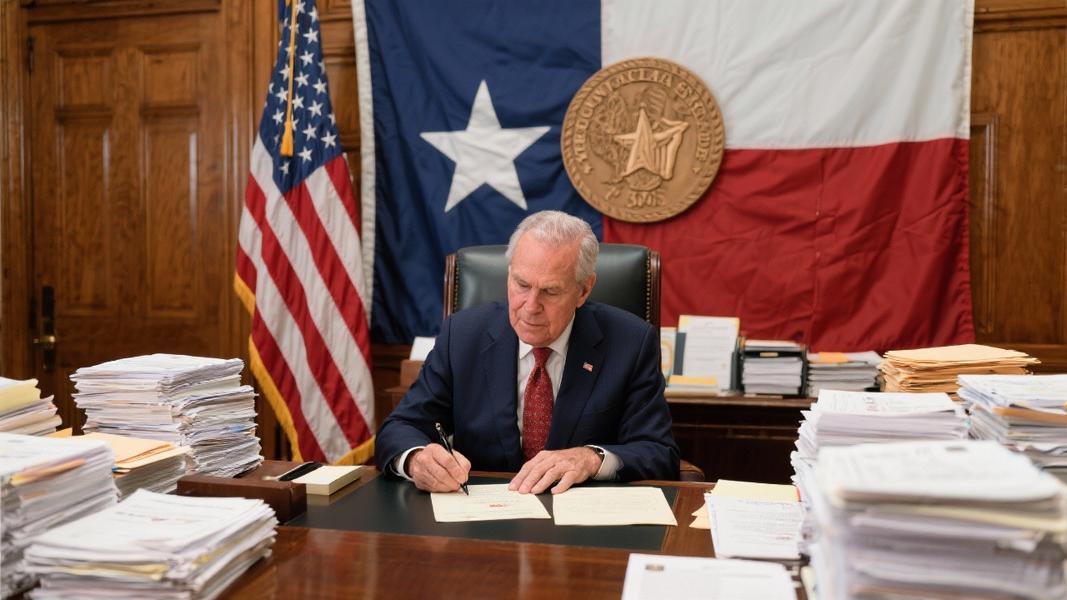
Governor Greg Abbott has vetoed a controversial bill that would have banned consumable hemp products containing THC throughout Texas, setting up a showdown with legislative leaders and igniting debate over cannabis regulation in the state.
The veto of Senate Bill 3, which would have prohibited products containing delta-8 and other forms of THC, came amid a flurry of 28 bills Abbott rejected from the 2025 legislative session. Rather than supporting the outright ban, Abbott has called for a special session beginning July 21 to create what he describes as a more legally sound regulatory framework.
Constitutional Concerns Trump Ban
In his veto statement, Abbott argued that while well-intentioned, Senate Bill 3 contained fatal constitutional flaws that would have rendered it unenforceable. “If I were to allow Senate Bill 3 to become law, its enforcement would be enjoined for years, leaving existing abuses unaddressed. Texas cannot afford to wait,” Abbott wrote in his veto proclamation.
The governor pointed to a similar law in Arkansas that was quickly halted by a federal court, which found it likely preempted by federal statutes and constitutionally vague. “That result must be avoided in Texas,” Abbott stated.
At the heart of the legal conflict? The 2018 federal Farm Bill, which legalized hemp products nationwide, potentially placing any state-level ban on shaky legal ground.
Political Fallout
The veto has created a rare public rift between Abbott and Lieutenant Governor Dan Patrick, who strongly supported the ban. Patrick didn’t mince words in his rebuke, suggesting the governor “wants to legalize recreational marijuana” in Texas.
“This is not a Dan Patrick bill… This is a bill that reasonable people in professions that know best, from medicine to law enforcement to education, said they all support,” Patrick countered. “Whether it’s unintentional and he didn’t think through it, or whether it’s intentional, that’s the result of the deal. There’s no justification for saying we can’t ban it.”
Patrick disputed Abbott’s legal reasoning, claiming that courts have upheld similar state bans and that the concerns about federal preemption were unpersuasive.
Special Session Approaching
What comes next? Instead of an outright ban, Abbott has called for a special legislative session to craft regulations that “protect public safety, align with federal law, and can be enforced without delay.”
“Texas must enact a regulatory framework that protects public safety, aligns with federal law, has a fully funded enforcement structure and can take effect without delay,” the governor explained when announcing the July session.
The hemp ban isn’t the only controversial veto from Abbott this session. He also struck down a $60 million appropriation for a Summer EBT program designed to provide nutrition to children during summer months, citing “significant uncertainty regarding federal matching rates” for the program, according to budget documents.
Several other Senate bills also fell to Abbott’s veto pen on June 21, including SB 1772, SB 1458, SB 1109, SB 474, SB 281, and SB 237, with the governor invoking Article IV, Section 14 of the Texas Constitution in each case.
A Regulatory Middle Ground?
Abbott’s approach suggests he’s seeking a middle path between an outright ban and the current relatively unregulated market. “To ensure the highest level of safety for minors, as well as for adults, who obtain a product more dangerous than what they expected, Texas must strongly regulate hemp, and it must do so immediately,” he emphasized.
The governor’s veto doesn’t mean he opposes regulation — quite the opposite. He appears to be advocating for immediate, enforceable restrictions rather than risking years of legal battles that could leave the current situation unchanged.
For Texans wondering about the future of THC products in the state, the July special session will likely determine whether these products remain available and under what restrictions. With Patrick and Abbott publicly at odds, the debate promises to be one of the most contentious policy fights in Texas this year.
