
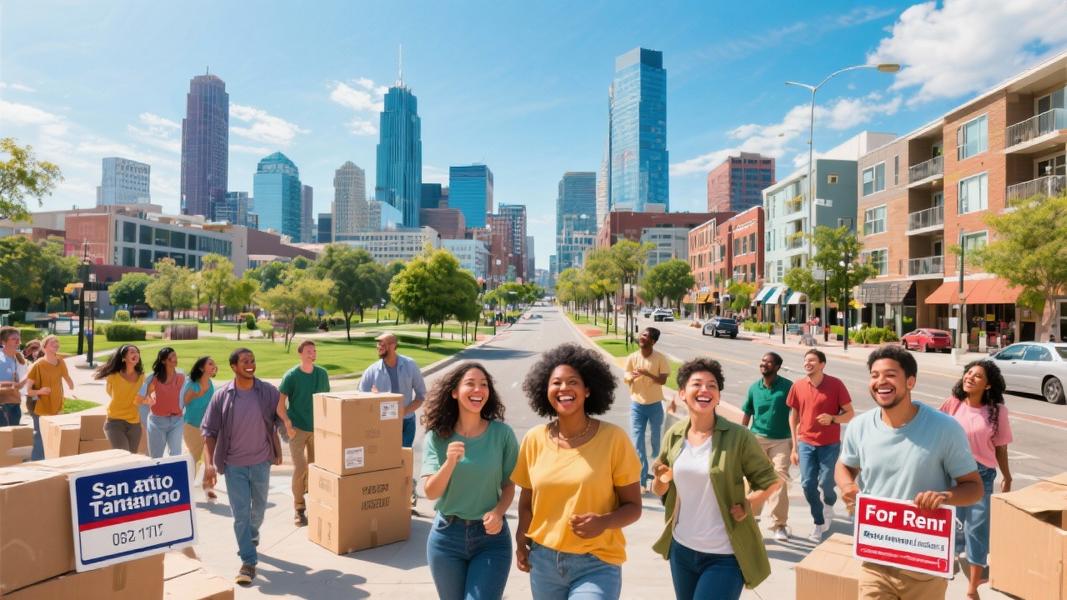
San Antonio, San Diego, and Raleigh have emerged as America’s most satisfying cities to live in, according to a comprehensive new survey that challenges conventional wisdom about urban migration patterns. While headlines have long trumpeted a mass exodus from major metropolitan areas, the data tells a more nuanced story: Americans aren’t abandoning cities — they’re just getting pickier about which ones they call home.
Gensler’s City Pulse 2025 survey, which gathered responses from nearly 13,500 residents across 27 U.S. cities, reveals that mid-sized urban centers are increasingly magnetic, combining affordability with livability in ways that both attract newcomers and retain current residents. “But even if people do move out of their current city, 7 out of 10 people still choose city life,” Gensler’s Sofia Song explained to FOX Local. “Americans are not abandoning cities. They’re moving to cities that feel affordable, safe, and vibrant.”
The Satisfaction Factor
What makes a city worth staying in? The answer might surprise urban planners and policy makers who’ve long focused on infrastructure and economic metrics. The survey found that emotional connections trump practical considerations when it comes to resident retention.
Among the top 10 cities where residents report highest satisfaction are San Antonio, San Diego, Raleigh, Minneapolis, Tampa, Austin, Charlotte, Houston, Boston, and Washington D.C. These cities have mastered a delicate balance between affordability and creating environments that foster emotional attachment.
“What gets people to stay is based on emotion and attachment,” Song noted. “Our analysis shows that the strongest predictors of staying in a city aren’t jobs, transit, or good schools. So cities that combine affordability and safety and build experiences that instill energy, pride, and belonging are the ones that really become ‘magnetic.'”
In fact, when Gensler’s researchers analyzed their broader global survey covering 33,000 respondents across 65 cities, they identified five key predictors that determine whether someone stays put: not feeling bored, feeling at home, pride in their city, perceiving the city as improving for aging residents, and a growing sense of belonging over time.
The Migration Magnets
Where are Americans actually moving? The Southeast continues to dominate as a destination region, with the Carolinas and Tennessee showing particularly strong appeal. The Myrtle Beach, SC/Wilmington, NC region ranked as the top move-in destination for the third consecutive year, according to PODS moving data covering January 2024 through March 2025.
Meanwhile, cities attracting the most newcomers include Tampa, Raleigh, Atlanta, Denver, Austin, Charlotte, Nashville, Washington D.C., Columbus, and Seattle. What ties these diverse locations together? Affordability ranks as the single most influential factor in relocation decisions, followed by safety concerns, healthcare quality, and job opportunities.
The correlation between local purchasing power and a city’s ability to attract new residents helps explain why mid-sized, more affordable cities are seeing such rapid growth. For many Americans, the financial equation has become impossible to ignore: why struggle in an expensive coastal metropolis when you could enjoy a higher standard of living elsewhere?
Staying Power Champions
Which cities are most likely to keep their current residents? The survey identifies Minneapolis, San Antonio, San Diego, Raleigh, Chicago, Tampa, Portland, Phoenix, San Francisco, and Austin as having the strongest “staying power.” Notably, this list includes some surprises — like Chicago and San Francisco — that have faced negative publicity about urban flight.
Could it be that residents of these often-maligned cities feel a deeper connection to their communities than outsiders might expect? The data suggests yes. Despite challenges, emotional ties to these places remain remarkably resilient.
Urban Renaissance Signs
Beyond migration patterns, there are signs of improving urban conditions across America. Gensler’s research shows that since 2021, residents increasingly perceive their neighborhoods as authentic (up from 60% to 66%), beautiful (59% to 67%), clean (60% to 65%), and welcoming (55% to 63%).
Employment prospects have brightened considerably too. There’s been a 13% increase in city dwellers who feel their career advancement opportunities have improved (40% in 2023 vs. 27% in 2021), and an 8% rise in those who believe job opportunities in their cities are getting better.
Even traditional urban complaints show improvement. Half of surveyed residents now feel their cities have clean air (up from 45%), and fewer believe their city is too noisy (down from 47% to 44%) or losing its cultural heritage (down from 37% to 36%).
Traditional Powerhouses Hold On
What about the traditional urban giants? Despite the buzz around mid-sized cities, places like New York City continue to demonstrate remarkable resilience. The Big Apple still ranks #1 in multiple livability indexes, while Denver has shattered passenger traffic records at its international airport, with 82.3 million travelers in 2024.
These statistics suggest that America’s urban future isn’t a simple story of winners and losers, but rather a complex rebalancing. The most successful cities — regardless of size — are those creating environments where residents can afford to live comfortably while developing meaningful emotional connections to place.
For city leaders navigating this changing landscape, the message is clear: practical matters like affordability get people in the door, but it’s the intangibles — a sense of belonging, pride, and engagement — that make them want to stay. In the competition for America’s mobile workforce, the cities that understand this emotional equation are the ones pulling ahead.
