
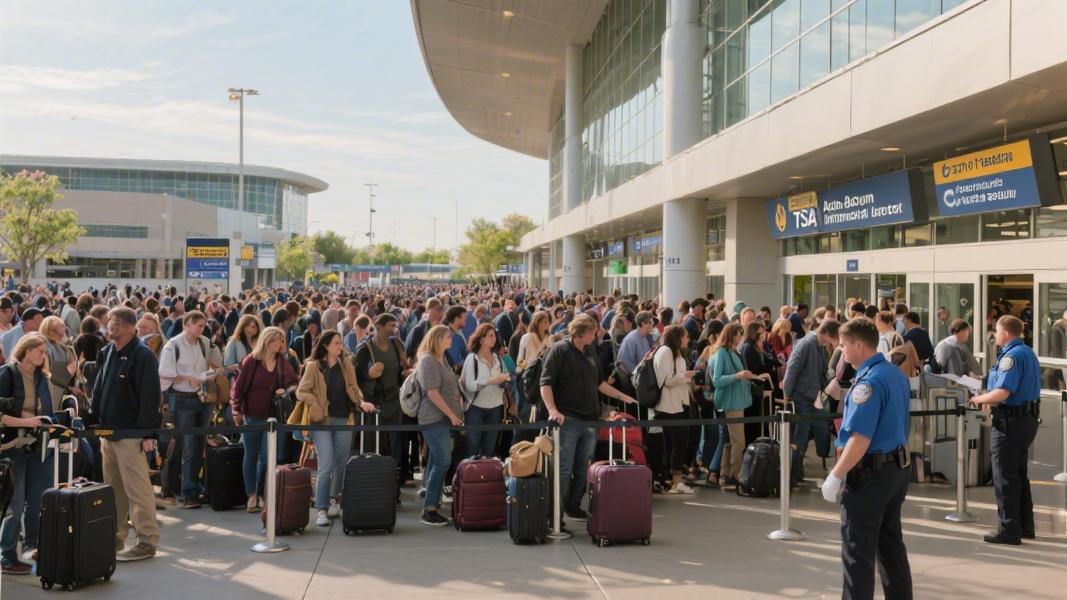
If you’re flying out of Austin this month, set that alarm a little earlier. A lot earlier, actually.
Austin-Bergstrom International Airport is bracing for one of its most congested stretches of the year, as a perfect storm of spring festivals, holiday travel, and federal staffing shortages converges on a single overwhelmed terminal. The timing couldn’t be worse — or more predictable, depending on who you ask.
A Season That Never Really Slows Down
March in Austin is never quiet. SXSW, Rodeo Austin, St. Patrick’s Day, and spring break don’t just overlap — they stack on top of each other, funneling tens of thousands of visitors into a city that’s still, in many ways, figuring out how to absorb them all. Airport officials have projected that AUS will see more than 30,000 departing passengers in a single day on several occasions this month. That’s not a surge. That’s a sustained wave.
And it’s hitting at a moment when the airport simply can’t staff up the way it normally would. A partial federal government shutdown has thinned TSA ranks at busy airports across the country, and AUS is no exception. The result is longer lines, stretched resources, and a lot of anxious travelers doing math in their heads about whether they left enough time.
How Bad Is It Right Now?
That depends on when you’re flying. Current average TSA wait times at AUS are hovering around 27 minutes, according to tracking data — but that number is deceptively calm. Hourly breakdowns tell a different story. Early morning slots between 5 and 6 a.m. are averaging closer to 27.8 minutes, and the 7 to 8 a.m. window climbs to 30.3 minutes, as documented by airport monitoring services. During peak festival days, security lines during the 5–8 a.m. and 4–7 p.m. windows have been known to stretch to 30 or even 40 minutes — and that’s before accounting for any shutdown-related slowdowns.
Still, airport officials are trying to thread the needle between honesty and reassurance. “Currently, AUS is not experiencing any delays, but with the partial federal government shutdown still in place, those unanticipated delays may occur,” said Samantha Rojas, a spokesperson for the airport, in a statement first published by CBS Austin. It’s a carefully worded warning — the kind that sounds like everything is fine right up until it isn’t.
Travelers Are Already Paying Attention
Some passengers aren’t waiting to find out the hard way. One traveler named Ward told CBS Austin they’d already started adjusting their plans after seeing news reports of delays at Houston-area airports. “We saw some news stories about some of the local airports, like in Houston, having delays. We are just going to try to monitor it and see if we need to add some extra hours into our travel to get home,” Ward said. It’s a reasonable instinct. The airports that got caught flat-footed weren’t the ones that planned ahead.
That said, AUS has made at least one meaningful infrastructure move heading into this crunch. A new fourth security checkpoint is now operational, helping distribute the passenger load more evenly across the terminal. Checkpoints 1 and 2 West both offer TSA PreCheck and CLEAR+ lanes beginning at 3:00 a.m. daily, according to listings from airport information services — a detail worth knowing if you’re on an early departure and want to shave a few minutes off your morning.
What the Airport Is Telling You to Do
The guidance from AUS is straightforward, if a little uncomfortable for anyone who likes to cut it close. The airport is advising travelers to arrive at least 2.5 hours before domestic flights and a full 3 hours ahead of international departures. If you’re checking bags, or flying on a peak festival day, add more time on top of that. The airport is also encouraging passengers to check TSA wait times before leaving for the terminal — a small habit that could save a significant amount of stress.
It’s the kind of advice that feels obvious until you’re the person sprinting through a terminal because you thought 90 minutes would be plenty. This month, it won’t be.
The Bigger Picture
What’s happening at AUS is really a microcosm of a broader tension playing out at airports nationwide — the collision of record-level travel demand and a federal workforce that, at least for now, is operating with fewer hands on deck. Austin’s spring festival calendar was always going to stress the airport. The shutdown just made a hard problem harder.
For the hundreds of thousands of people moving through AUS this month, the math is simple: the festival will wait for you. Your flight won’t.
