
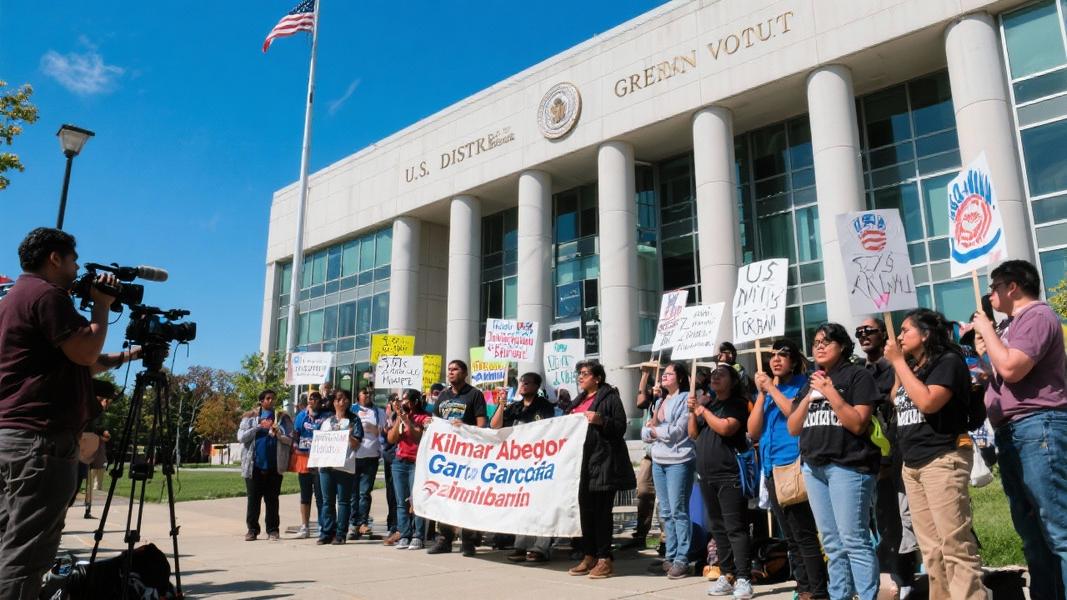
The Biden administration is seeking to deport a Salvadoran man to Liberia — a country he has never set foot in — months after admitting it wrongfully sent him to a “torture prison” in El Salvador by mistake.
Kilmar Armando Ábrego García, a Maryland father who had been living legally in the United States under a court-protected status, now finds himself at the center of an extraordinary legal battle that has drawn scrutiny from civil rights organizations and raised questions about the limits of government deportation powers.
“The Trump administration’s obsessive and petty cruelty is on full display in this latest move to deport Kilmar Abrego Garcia, a Maryland father they admitted to wrongfully deporting to a torture prison, to a country with which he has no relationship,” the American Civil Liberties Union stated in response to earlier deportation attempts.
A Deportation that Wasn’t Supposed to Happen
The saga began in March 2025 when immigration officials deported Ábrego García to El Salvador despite a 2019 order from an immigration judge granting him “withholding of removal” status due to the dangers he would face from gang violence in his home country. This protected status should have allowed him to live and work legally in the U.S., according to records of his case.
Government officials later characterized the deportation as “an administrative error.” But the consequences for Ábrego García were severe. His lawyers say he suffered isolation, beatings and psychological torture while detained in El Salvador — a country he had fled as a teenager around 2011 to escape gang threats.
After returning to the U.S., Ábrego García now faces a new challenge: the Department of Homeland Security has identified Liberia as a “country of removal” willing to accept him. In court filings, Department of Justice attorneys noted they had received “diplomatic assurances regarding the treatment of third-country individuals removed to Liberia from the United States.”
A Question of Rights
What rights does someone in Ábrego García’s position actually have? That’s the central question before the courts.
Government attorneys argue his due process rights are not equivalent to those of a U.S. citizen because he entered the country illegally. They contend he should be treated the same as someone who just crossed the border, despite his years living in Maryland with his American wife and child.
“This Court should therefore dissolve its preliminary injunction and permit Petitioner to be removed to Liberia,” government attorneys argued in recent filings.
But Ábrego García’s legal team sees the situation differently. They maintain that he has already designated Costa Rica as a country where he is willing to be deported, and the government’s insistence on sending him elsewhere suggests the process is retaliatory and violates fundamental protections.
Legal Troubles Mount
Complicating matters further, Ábrego García now faces human smuggling charges in federal court in Tennessee. He has pleaded not guilty to these allegations, which emerged after his initial deportation controversy. A hearing on his motion to dismiss the case on grounds of selective or vindictive prosecution is scheduled for December 8.
The case highlights the complex intersection of immigration enforcement, due process rights, and the human consequences of deportation policies. Ábrego García, who came to the United States as a 16-year-old, has established deep roots in Maryland over more than a decade.
Still, the government maintains that his illegal entry justifies treating him differently under the law, regardless of the circumstances of his initial deportation or his family ties in the U.S.
As the legal battle continues, Ábrego García remains caught between countries — wanted by none, claimed by none, yet facing deportation to a nation where he has never lived, thousands of miles from both his American family and his Salvadoran homeland.
