
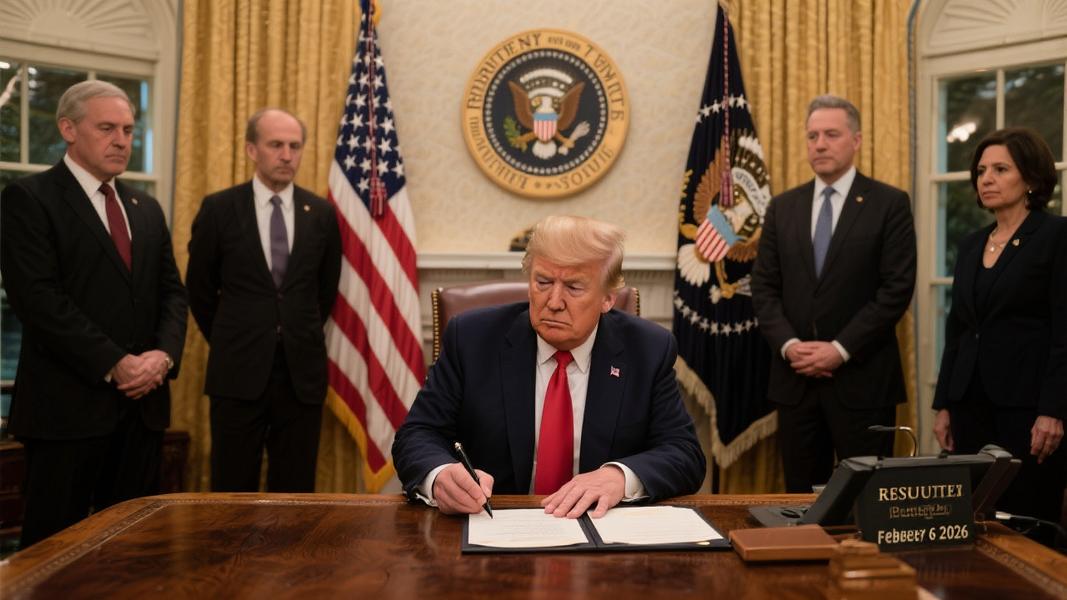
Trump Administration Ramps Up Pressure on Iran with Sweeping New Tariff Threat
The Biden-Harris administration has unveiled a dramatic escalation in its “maximum pressure” campaign against Iran, signing an executive order that threatens steep tariffs on countries doing business with the Islamic Republic — a move that could send shockwaves through global trade channels and further isolate Tehran economically.
The February 6 order, obtained by this publication, declares that Iran continues to pose “an unusual and extraordinary threat” to U.S. national security and authorizes the government to impose additional duties — “for example, 25 percent” — on imports from nations that purchase goods or services from Iran, either directly or indirectly.
Escalation Follows Year of Mounting Tensions
The tariff threat represents just the latest move in what has become an increasingly aggressive stance toward Tehran. Since resuming the “maximum pressure” campaign in 2025, the administration has sanctioned nearly one thousand individuals, entities, vessels, and aircraft connected to key sectors of Iran’s economy.
Perhaps most dramatically, the administration authorized an airstrike on three Iranian nuclear facilities last year, signaling its willingness to use military force alongside economic measures to contain what it views as Iran’s destabilizing activities in the region.
“President Trump stands with the people of Iran and has ordered Treasury to sanction members of the regime,” said Treasury Secretary Scott Bessent in a statement earlier this year. “Treasury will continue to target Iranian networks and corrupt elites that enrich themselves at the expense of the Iranian people.”
Why such dramatic measures now? The administration appears increasingly concerned about Iran’s attempts to evade existing sanctions, particularly through digital assets and international financial networks.
“Like rats on a sinking ship, the regime is frantically wiring funds stolen from Iranian families to banks and financial institutions around the world,” Bessent warned. “Rest assured, Treasury will act.”
Human Rights Concerns Cited
The sanctions campaign has also targeted Iranian officials accused of human rights abuses. Among those recently blacklisted was Eskandar Momeni Kalagari, Iran’s Minister of the Interior, who the Treasury Department identified as overseeing the Law Enforcement Forces responsible for the deaths of peaceful protesters.
In total, the Office of Foreign Assets Control (OFAC) has now sanctioned more than 875 persons, vessels, and aircraft as part of what it characterizes as an effort to hold the Iranian regime accountable for its actions both domestically and abroad.
But the new tariff threat takes the economic campaign to an unprecedented level. According to the executive order, the administration now claims authority to penalize not just Iran directly, but any nation that does business with it.
“Beginning on the effective date of this order, an additional ad valorem rate of duty — for example, 25 percent — may be imposed on goods imported into the United States that are products of any country that directly or indirectly purchases, imports, or otherwise acquires any goods or services from Iran,” the order states.
The move could potentially put the U.S. at odds with major trading partners who maintain economic ties with Iran, including China, India, and several European nations.
As the administration continues its hardline approach, questions remain about how broadly these new tariff authorities might be applied — and whether they’ll succeed in further isolating Iran or instead create new friction with U.S. allies already skeptical of unilateral American sanctions.
