
The Biden administration is cracking down — again — on what it calls a dangerous network of Venezuelan drug traffickers and oil smugglers with direct ties to the country’s first family.
The U.S. Treasury Department announced sweeping sanctions Thursday targeting three nephews of Venezuelan First Lady Cilia Flores, including two previously convicted cocaine traffickers who were granted clemency by President Biden in 2022. Six shipping companies, six vessels, and a Panamanian businessman were also sanctioned for their roles in propping up Nicolás Maduro’s regime through deceptive oil trading practices.
“Nicolas Maduro and his criminal associates in Venezuela are flooding the United States with drugs that are poisoning the American people,” said Treasury Secretary Scott Bessent, whose department’s Office of Foreign Assets Control (OFAC) implemented the sanctions.
The “Narco-Nephews” Return
Perhaps most striking among those targeted are Efrain Antonio Campo Flores and Franqui Francisco Flores de Freitas — commonly known as the “narco-nephews” — who have apparently resumed their criminal activities after being given a second chance.
“In November 2015, Campo and Flores de Freitas were arrested in Port-au-Prince, Haiti as they were finalizing a deal to transport hundreds of kilograms of cocaine to the United States,” the Treasury stated. The pair were subsequently convicted in 2016 but received clemency from President Biden in 2022 as part of diplomatic overtures toward Venezuela.
Intelligence now indicates they’ve returned to the drug trade since their release — a development that’s likely to fuel criticism of the administration’s earlier decision to grant clemency.
Diplomatic Chess: Sanctions On, Off, Then On Again
The third nephew, Carlos Erik Malpica Flores, represents another complex turn in U.S.-Venezuela relations. Previously sanctioned in 2017, Malpica was removed from the sanctions list in 2022 “to promote the resumption of negotiations for an ultimately failed deal pursued by the Biden administration.”
That goodwill gesture has now been reversed. The Treasury is “redesignating Malpica, pursuant to E.O. 13692, for being a current or former official of the Government of Venezuela.”
Why the zigzagging approach? The sanctions reflect Washington’s ongoing struggle to balance pressure tactics with diplomatic engagement in its Venezuela policy, particularly as the Maduro regime has tightened its grip on power despite years of international isolation.
Oil Smuggling Network Exposed
The sanctions also target Panamanian businessman Ramon Carretero Napolitano, who Treasury officials say has business ties to the Maduro-Flores family and has “facilitated shipments of petroleum products on behalf of the Venezuelan government.”
Six shipping companies and their vessels were identified for sanctions after allegedly engaging in deceptive shipping practices to hide Venezuelan oil shipments:
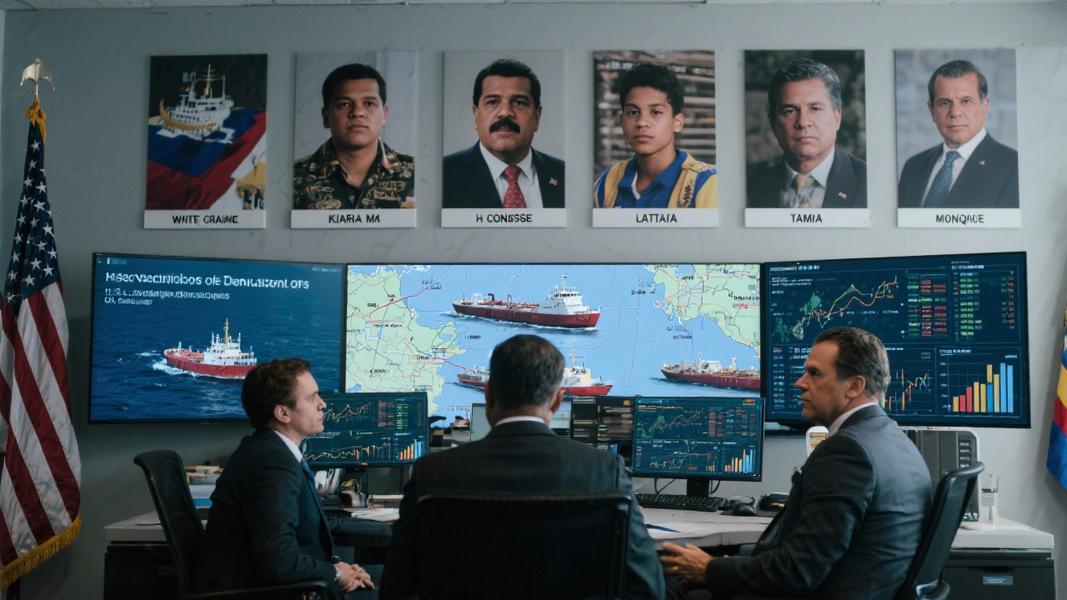
Myra Marine Limited’s vessel WHITE CRANE “has used deceptive practices to obfuscate its location by either failing to transmit its location or transmitting a false location,” while Arctic Voyager Incorporated’s KIARA M “loaded oil in Venezuela and is presently headed for Asia to offload its cargo.”
Other vessels — including the H. CONSTANCE, LATTAFA, TAMIA, and MONIQUE — were similarly accused of manipulating transmission data to hide their activities transporting Venezuelan oil.
The Consequences
What happens now? Any property or interests belonging to these individuals and entities that fall under U.S. jurisdiction are effectively frozen. American citizens and companies are prohibited from doing business with them unless specifically authorized by OFAC.
“As a result of today’s action, all property and interests in property of the designated or blocked person described above that are in the United States or in the possession or control of U.S. persons are blocked and must be reported to OFAC,” the Treasury explained.
Violations could result in civil or criminal penalties — a serious concern for international businesses that might inadvertently engage with sanctioned entities.
Despite the tough measures, Treasury officials emphasized that “the ultimate goal of sanctions is not to punish, but to bring about a positive change in behavior” — suggesting there may still be room for negotiation if those targeted change course.
For now, the Maduro regime faces renewed pressure as the U.S. targets both its drug trafficking networks and its oil sector — the economic lifeline that has helped Venezuela’s government survive years of sanctions and international isolation.
