
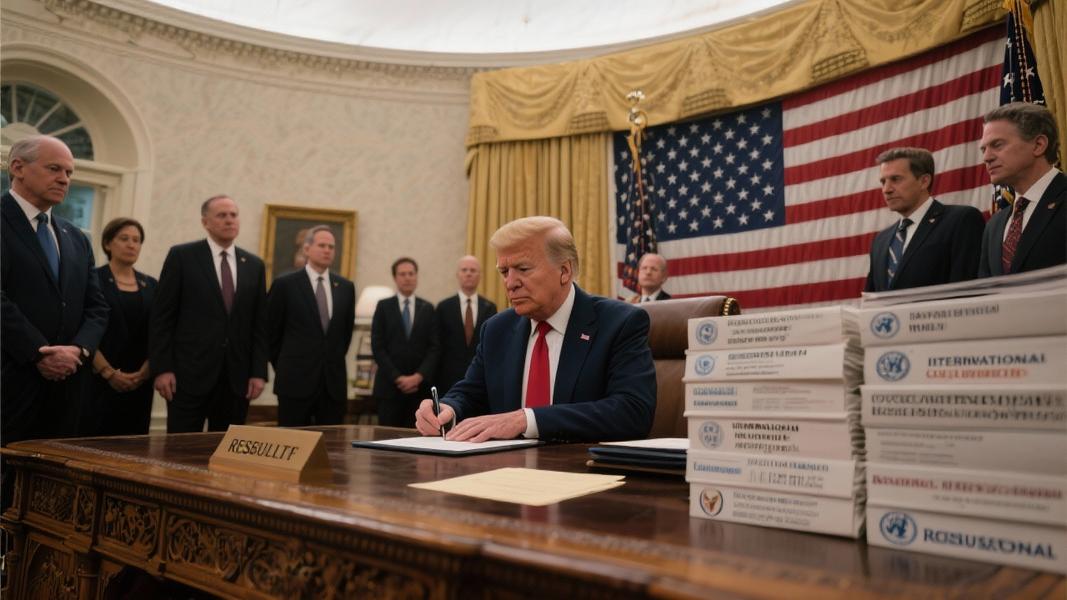
In a sweeping diplomatic overhaul, the White House has announced plans to withdraw the United States from 66 international organizations, signaling a dramatic shift in America’s global engagement strategy.
A presidential memorandum dated January 7, 2026, directs U.S. agencies to immediately begin the process of exiting 35 non-UN organizations and 31 UN bodies deemed “contrary to U.S. interests.” The directive follows a comprehensive review of international commitments ordered by Executive Order 14199, which President Biden signed on February 4, 2025.
Unprecedented Scale of Withdrawal
“By the authority vested in me as President by the Constitution and the laws of the United States of America, I hereby direct,” begins the memorandum, before listing dozens of organizations from which the U.S. will disengage. The scope of the withdrawal is remarkable by historical standards, touching organizations focused on environment, energy, migration, development, gender equality, and climate initiatives.
Among the non-UN organizations targeted are the 24/7 Carbon-Free Energy Compact, Colombo Plan Council, and 33 others. The UN entities include the Department of Economic and Social Affairs, various UN Economic and Social Council regional commissions, and 26 additional bodies related to peacebuilding, gender equality, climate action, and population issues.
Why such a dramatic shift? The memorandum cites a determination made after Cabinet deliberations that “it is contrary to the interests of the United States to remain a member of, participate in, or otherwise provide support to the organizations listed.” This follows language in the original executive order which claimed that some UN agencies “have drifted from this mission and instead act contrary to the interests of the United States while attacking our allies and propagating anti-Semitism.”
Continuation of Earlier Actions
The mass withdrawal didn’t materialize from thin air. Executive Order 14199 had already specifically withdrawn the United States from the UN Human Rights Council (UNHRC) and ended funding to the United Nations Relief and Works Agency for Palestine Refugees (UNRWA), while ordering reviews of other bodies including UNESCO.
What does this mean for America’s role on the world stage? The implications could be profound, potentially undermining decades of U.S. leadership in multilateral institutions while creating vacuums that rivals like China and Russia may eagerly fill.
The memorandum instructs all executive departments and agencies “to take immediate steps to effectuate the withdrawal of the United States from the organizations listed… as soon as possible.” This includes ceasing participation in meetings and activities, terminating funding, and beginning formal withdrawal procedures.
“I have considered the Secretary of State’s report and, after deliberating with my Cabinet, have determined that it is contrary to the interests of the United States to remain a member of, participate in, or otherwise provide support to the organizations listed in section 2 of this memorandum,” the President stated in the document.
Critics are already sounding alarms. “This isn’t strategic disengagement—it’s wholesale diplomatic abandonment,” said one former State Department official who requested anonymity to speak candidly.
The administration, however, frames the move as a necessary realignment of international commitments with America’s core interests and values. The review process reportedly continues for other international organizations not included in this round of withdrawals.
As the diplomatic dust settles, one thing remains clear: American foreign policy is undergoing its most significant restructuring in generations, with ripple effects that will be felt in capitals worldwide for decades to come.
