
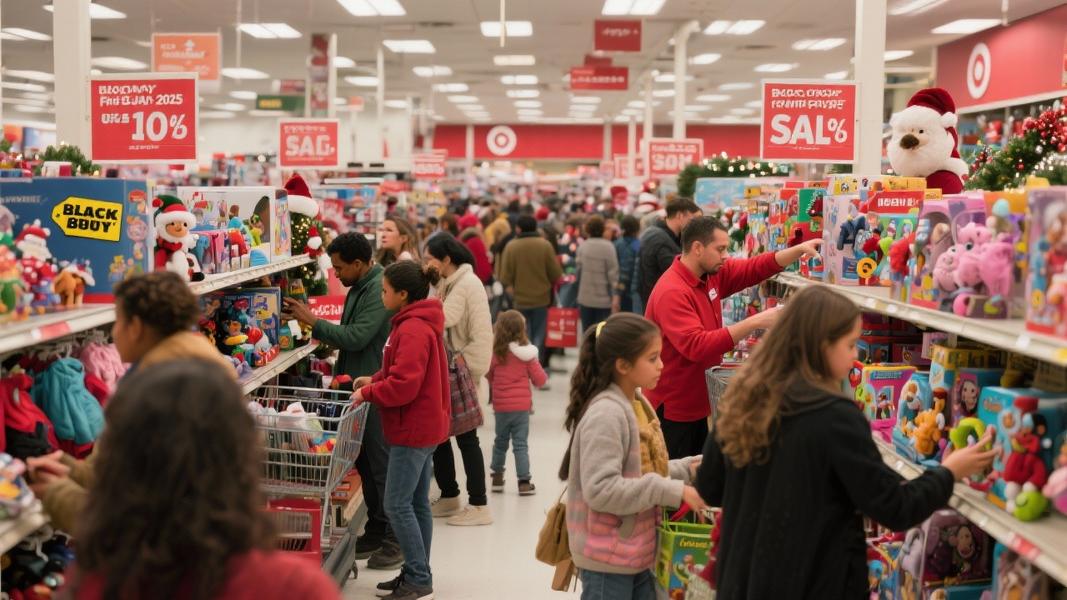
Black Friday spending smashed records in 2024, with American consumers dropping a staggering $10.8 billion online in a single day. The shopping bonanza marked a 10.2% jump from 2023’s $9.8 billion haul, signaling that despite economic uncertainties, shoppers weren’t holding back.
The global picture looks equally impressive, with worldwide online sales hitting $74.4 billion during the 24-hour shopping frenzy — a 5% increase year-over-year, according to data from industry analysts. Nearly 87.3 million Americans shopped online while 81.7 million braved in-store crowds, with mobile shopping accounting for more than half of all digital purchases at 54.47%.
Looking Ahead: Even Bigger Numbers for 2025?
If you think those numbers are eye-popping, just wait. Adobe predicts Black Friday online sales will grow by another 8.3% in 2025, potentially reaching $11.7 billion. “Adobe predicts that Black Friday sales will rise again in 2025, by 8.3% to $11.7 billion,” industry watchers noted after analyzing this year’s trends.
It’s worth remembering that while Black Friday generates massive headlines, Cyber Monday remains the undisputed champion of the holiday shopping season. In 2024, consumers spent $13.3 billion online during Cyber Monday, helping push the entire Cyber Week haul to $76 billion in the U.S. alone. Salesforce reported a 7% increase in US Cyber Week sales compared to the previous year.
What’s driving this seemingly unstoppable growth? Mobile convenience, aggressive retailer promotions, and the increasing normalization of online shopping have all contributed to these record-breaking figures. That said, not everyone is spending more.
Shifting Shopping Patterns for 2025
The retail landscape continues to evolve rapidly. For 2025, a striking 71% of consumers plan to shop online during Black Friday, while just 29% say they’ll venture into physical stores. Nearly a quarter of shoppers (24%) expect to spend $1,000 or more on holiday purchases, but the vast majority — 76% — plan to keep their spending flat or even reduce it compared to 2024.
Economic realities are tempering some consumers’ enthusiasm. The rising cost of living was cited by 70% of shoppers as a reason to cut back, while 57% specifically mentioned grocery inflation as a factor limiting their holiday budgets, according to consumer research.
When it comes to brick-and-mortar shopping, certain retail giants continue to dominate. “Most people will shop in-person at Walmart (71%) and Target (56%) on Black Friday,” researchers found. But the most dramatic shift may be happening online, where “Amazon grew from 85% of Cyber Week shoppers in 2024 to 94% in 2025—a significant jump that signals its dominance as the go-to retailer.”
The e-commerce giant’s strengthening grip on holiday spending raises interesting questions for competitors. Can traditional retailers find ways to compete with Amazon’s convenience, selection, and increasingly rapid delivery options? Or are we witnessing the continued consolidation of online retail power?
As inflation concerns persist and consumer habits continue to shift toward digital channels, one thing remains clear: Black Friday and Cyber Monday have transformed from mere shopping days into cultural and economic phenomena that shape retail strategies year-round — and the records just keep breaking.
