
Boeing Completes $8.3 Billion Spirit AeroSystems Acquisition, Reversing Two-Decade Outsourcing Strategy
Boeing has officially brought a key supplier back into the fold, completing its $8.3 billion acquisition of Spirit AeroSystems in a strategic reversal that comes amid ongoing quality and safety challenges for the aerospace giant.
The deal, finalized Monday, includes an equity value of $4.7 billion at $37.25 per share and effectively reunites Boeing with a manufacturer it had spun off nearly two decades ago. The move represents a dramatic shift away from Boeing’s long-standing outsourcing strategy for major aircraft components that began when it separated from Spirit in 2005.
Returning to the Boeing Family
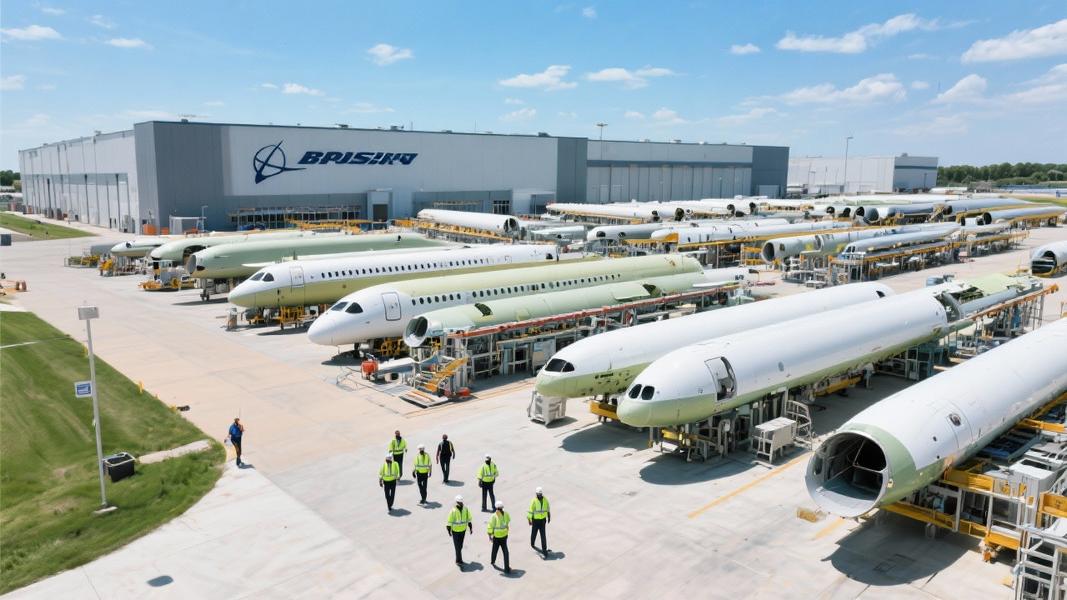
Spirit manufactures fuselages for Boeing’s 737, 767, 777, and 787 Dreamliner commercial aircraft, as well as components for the P-8 maritime patrol aircraft and KC-46 tanker defense programs. The acquisition brings approximately 15,000 Spirit employees back under the Boeing umbrella, with commercial operations joining Boeing Commercial Airplanes and maintenance services integrating into Boeing Global Services.
Boeing CEO Kelly Ortberg characterized the acquisition as a critical moment for the company’s future. “As we welcome our new teammates and unite our two companies, our focus is on maintaining stability so we can continue delivering high-quality aircraft, differentiated services and advanced defense capabilities for our customers and the industry,” Ortberg stated.
Meanwhile, Airbus simultaneously completed its own acquisition of Spirit’s operations that supplied it, receiving compensation of $439 million (€406 million) and integrating these assets into its A350, A320, and A220 programs. The parallel deals effectively divide Spirit between the aerospace industry’s two dominant manufacturers.
A Response to Crisis
Why bring Spirit back in-house now? The move comes after years of quality control issues that reached crisis levels in January 2024, when a door plug panel detached from an Alaska Airlines 737 MAX at 16,000 feet shortly after departing from Seattle. Investigators later discovered four missing bolts that should have secured the door panel following repairs at a Boeing facility.
This incident followed the far more catastrophic 737 MAX crashes off Indonesia in 2018 and Ethiopia in 2019 that killed 346 people combined and resulted in a global grounding of the aircraft for nearly two years.
Boeing’s criminal case related to these crashes was recently resolved when a federal judge in Texas approved the Department of Justice’s request to dismiss charges as part of a settlement requiring Boeing to pay or invest $1.1 billion in additional fines, victim compensation, and internal safety and quality measures.
Reorganizing for Defense Independence
The acquisition includes some notable structural nuances. Boeing has created Spirit Defense as a non-integrated subsidiary within Boeing Defense, Space & Security to maintain operational independence and support U.S. defense programs, according to industry sources.
This arrangement appears designed to preserve existing defense contracts while allowing Boeing to more directly control the quality and integration of critical components for its commercial aircraft programs.
Industry analysts have pointed out that bringing Spirit’s operations back in-house could give Boeing more direct control over manufacturing processes that have been problematic in recent years. The reintegration might help address quality control issues that have plagued both companies.
Looking Forward
Can this acquisition help Boeing regain its footing after years of turmoil? The aerospace giant clearly hopes so, betting that vertical reintegration will help address the quality control issues that have damaged its reputation and bottom line.
The challenges remain substantial. Boeing must now successfully integrate thousands of employees while maintaining production schedules and improving quality control across its operations. The company continues to face scrutiny from regulators, customers, and the public following its safety record in recent years.
For an industry where trust is paramount and lives depend on precision manufacturing, Boeing’s decision to bring Spirit back into the fold represents more than just a business transaction — it’s an admission that its decades-long experiment with extensive outsourcing may have compromised the very qualities that once made it the gold standard in aerospace manufacturing.
