
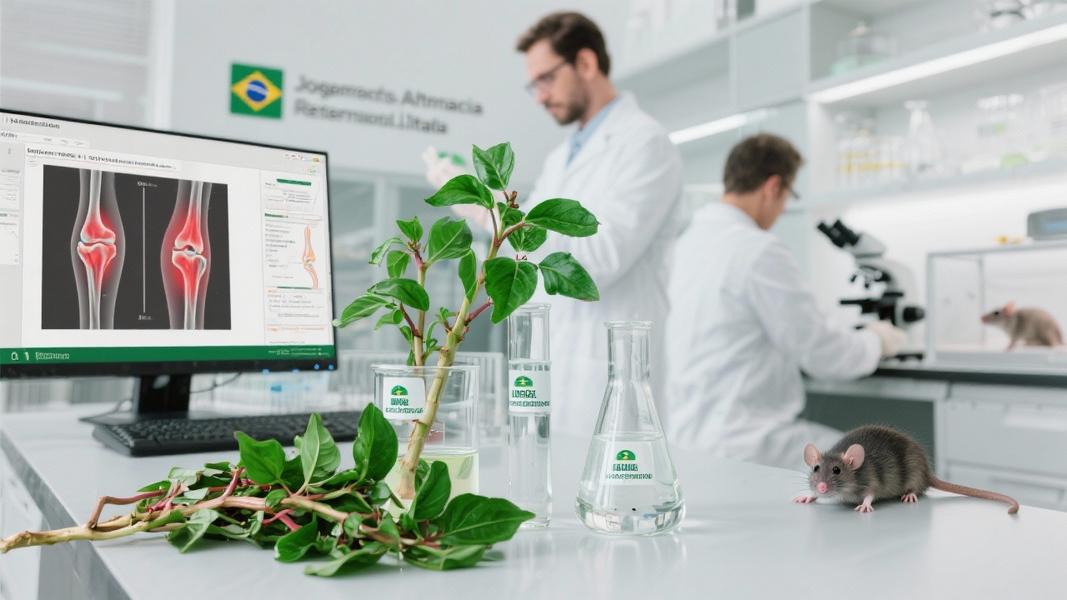
Brazilian coastal plant shows promise in treating arthritis symptoms, researchers find
Traditional Folk Remedy Gets Scientific Validation
A common seaside plant used in Brazilian folk medicine has demonstrated significant anti-inflammatory and anti-arthritic effects in laboratory studies, potentially opening a new avenue for natural arthritis treatments.
Researchers from multiple Brazilian universities have discovered that an ethanolic extract from the aerial parts of Alternanthera littoralis — commonly known as Joseph’s Coat — reduced swelling, improved joint function, and modulated inflammatory responses in experimental models of arthritis.
“In the experimental models, we observed reduced edema, improved joint parameters, and modulation of inflammatory mediators, suggesting antioxidant and tissue-protective actions,” the research team noted in their findings.
The study, published in the Journal of Ethnopharmacology, represents a collaboration between the Federal University of Grande Dourados, the State University of Campinas, and São Paulo State University — a multi-institutional effort to scientifically validate traditional remedies according to research details.
From Coastal Remedy to Lab-Tested Extract
Joseph’s Coat grows naturally along Brazil’s coastline and has been used by local communities for generations to treat various inflammatory conditions, infections, and parasitic diseases. This traditional use motivated scientists to investigate whether there was genuine therapeutic potential behind the folk practice.
What did they find? Joints treated with the extract showed remarkably fewer signs of degeneration and better overall joint health compared to untreated controls in the experimental models. The extract also demonstrated a promising safety profile, with toxicology testing revealing no harmful effects at the tested doses.
One of the lead investigators emphasized that the research is part of a broader initiative: “This research is part of an ongoing line of investigation developed by UFGD, UNESP, and UNICAMP, and our purpose is to value Brazilian biodiversity and traditional knowledge, but with a rigorous scientific basis, promoting the safe and rational use of natural products,” they explained.
Promising Results, But Not Ready for Human Use
Despite the encouraging findings, the researchers are quick to caution against premature excitement. The study was conducted exclusively in preclinical models, and the results cannot be directly applied to human patients without further research.
The path to a potential treatment remains lengthy. Additional toxicological analyses, isolation of the active compounds, standardization of the extract, and properly designed clinical trials would all be necessary before any therapeutic use could be recommended.
There’s another complication. The research hasn’t yet identified which specific compounds within the extract are responsible for the anti-inflammatory effects, making standardization and dose prediction challenging for potential human applications.
But the formal title of their published work — “Ethanolic extract of Alternanthera littoralis P. Beauv. aerial parts: Safety assessment and efficacy in experimental models of articular” — reflects the methodical approach the team has taken, providing a foundation for future research and potential development of herbal products.
For millions suffering from arthritis worldwide, the validation of this traditional remedy represents a small but potentially significant step toward expanding treatment options. Still, patients will need to wait for further research before this coastal plant makes its way from Brazilian shores to pharmacy shelves.
