
Buffalo’s wastewater infrastructure just got a major upgrade — one that officials say will protect essential services even when Mother Nature unleashes her worst.
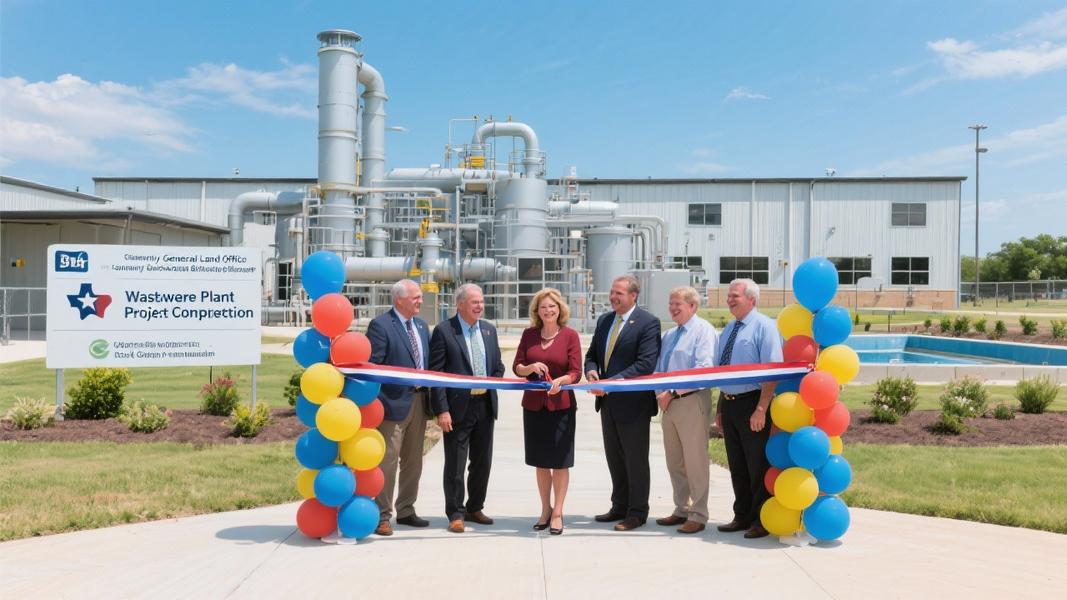
Local and state leaders gathered this week to celebrate the completion of Buffalo’s improved Wastewater Treatment Plant, a $9.6 million project designed to prevent service disruptions during severe storms and enhance the community’s resilience against future disasters.
Texas Land Commissioner Dawn Buckingham joined Buffalo city officials for a ribbon-cutting ceremony marking the end of construction on the facility, which was funded through the Community Development Block Grant – Mitigation program administered by the Texas General Land Office.
Why does a wastewater plant merit such attention? The answer lies in what happens when these critical systems fail during disasters.
“Investments like this wastewater treatment plant ensure that Texas communities have the infrastructure they need to withstand future disasters,” said Commissioner Buckingham at the event. “The Texas General Land Office is proud to partner with local leaders in Buffalo to strengthen essential services and protect families during severe storm events. These projects are about planning ahead and building a stronger Texas.”
The City of Buffalo was awarded $9,628,000 through the 2016 Mitigation Competition specifically to modernize its wastewater treatment facilities. The improvements are part of a broader strategy to safeguard public health and maintain essential services during extreme weather events that have become increasingly common across the state.
Members of the Buffalo City Council, county leadership, and state officials attended the ceremony, celebrating what many described as a crucial step in protecting the community’s infrastructure and public health.
Part of a Billion-Dollar Mitigation Effort
The Buffalo project represents just one piece of a much larger puzzle. The GLO has allocated more than $1.1 billion statewide for competitive mitigation projects in HUD-eligible disaster-impacted counties that suffered damage from events between 2015 and 2017.
These investments focus on several priorities, including infrastructure improvements that reduce flood and storm impacts, mitigation projects protecting public health and safety, and partnerships with local governments to strengthen long-term resilience.
The Texas General Land Office currently oversees one of the nation’s largest disaster recovery and mitigation programs, managing more than $14 billion in federal funds dedicated to helping Texas communities bounce back from disasters and prepare for future risks.
That massive funding pool reflects both the scale of disasters that have hit Texas in recent years and the growing recognition that proactive investment in resilient infrastructure often costs far less than emergency response and rebuilding after catastrophe strikes.
For residents of Buffalo, the improved wastewater facility means more than just better infrastructure. It represents peace of mind knowing that essential services will continue functioning during storms and floods that might have previously caused system failures and public health concerns.
As extreme weather events become more frequent across Texas, projects like Buffalo’s wastewater treatment plant upgrade may well become the new normal — not just rebuilding what was lost, but building something stronger that can weather whatever comes next.
