
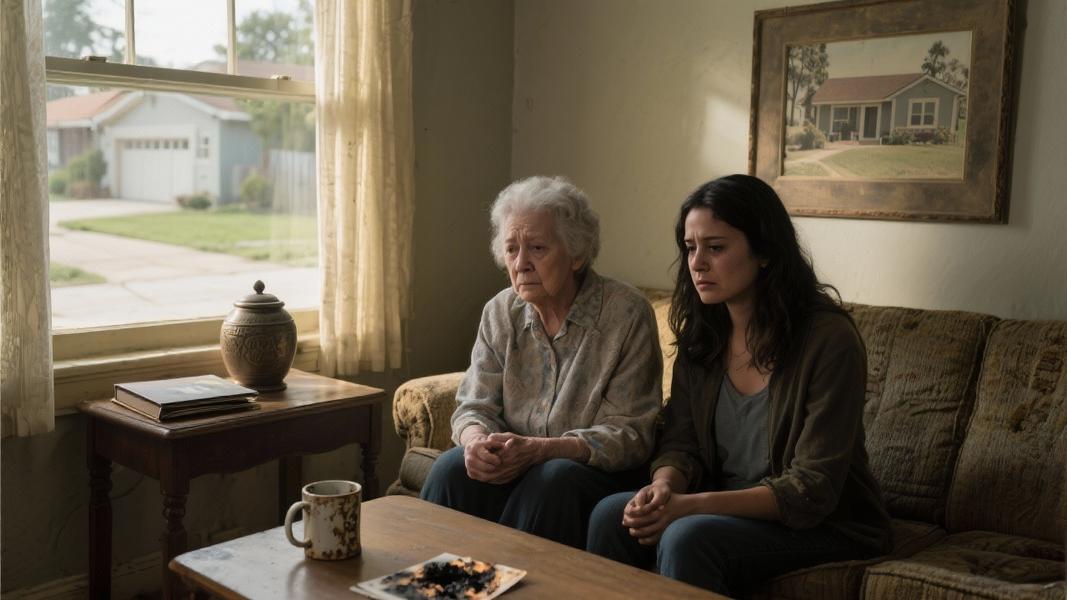
One year after the flames subsided, Bobbie Roberts still wakes up thinking she’s in her Altadena home. The 89-year-old now lives with her daughter Pamela in Flower Mound, Texas — over 1,400 miles from the charred remains of the place they once called home.
“I am going to sing the goodness of God because he led us through that fire,” Roberts told reporters last week, clutching her late husband’s urn — one of the few possessions salvaged from the Eaton Fire that tore through their neighborhood on January 7, 2025.
The Roberts family’s story is just one among thousands from what would become one of California’s most destructive wildfire seasons, leaving a trail of devastation that researchers are still working to fully quantify. While official records placed the death toll at 31, the true human cost was likely far greater.
Hidden Death Toll Emerges
A Boston University study has revealed what many suspected: the fires’ deadly impact extended well beyond those directly killed in the flames. Researchers estimate 440 excess deaths in Los Angeles County alone during the four-week period from January 5 to February 1, 2025 — nearly 15 times higher than official counts.
The study compared 6,371 actual deaths against 5,931 expected deaths during that period, representing a 7% increase above normal mortality rates. These excess deaths include those affected by smoke inhalation, stress-induced cardiac events, and disrupted access to medical care.
How bad was it? By any measure, catastrophic. The January fires in Southern California ranked among the most destructive in state history, with the Eaton and Palisades Fires alone destroying over 15,000 structures and claiming dozens of lives in their immediate path. According to CAL FIRE’s 2025 archive, California experienced 8,036 wildfires statewide that burned 525,223 acres and destroyed 16,512 structures.
A Perfect Firestorm
What made January 2025 so devastating was a deadly confluence of factors. Wet winters in previous years had promoted lush vegetation growth, which then dried to tinder during a record-dry fall. When extreme Santa Ana winds — some gusting over 100 mph — swept through the region, they created what fire scientists call a “perfect firestorm.”
Climate researchers have connected these conditions directly to global warming, which increased fire weather intensity by 6% and likelihood by 35%. “That’s not small,” noted climate scientist Daniel Swain. “But also, it doesn’t fully capture the nonlinearity [of the impact]. That you’re not just increasing the fire risk, you’re extending the dry season at the very end.”
NASA visualizations tracked the Eaton and Palisades Fires as they erupted on January 7, using satellite, aerial and ground data to monitor their rapid spread through densely populated areas. The fires moved with unprecedented speed, leaving residents and emergency responders little time to react.
Unprecedented Response
The disaster triggered the largest wildfire hazardous materials cleanup in EPA history. More than 1,600 staff members worked to clear debris from fire footprints across Los Angeles County in just 29 days, as part of a FEMA-coordinated recovery effort.
“Our report represents a critical first step in understanding how the Southern California fires last January progressed — and how agencies responded during this unprecedented event,” the UL Research Institutes noted in their timeline report. “Documenting these preparedness measures and response activities across 12 simultaneous fires is essential for strengthening our defenses against wildfires that interface with the built environment.”
The Eaton Fire alone destroyed approximately 7,000 structures and burned more than 14,000 acres in the Los Angeles area, according to FEMA data. In just one month, California experienced its second most destructive fire year on record in terms of structures lost.
The Long Road Home
For survivors like Bobbie Roberts, recovery remains elusive. Insurance battles, permitting hurdles, and the sheer emotional toll of displacement have complicated efforts to rebuild. Many, like the Roberts family, haven’t been able to return at all.
The “invisible costs” of the disaster — psychological trauma, community displacement, and economic ripple effects — may never be fully measured. Public health officials worry that the true impact of these fires will continue to emerge for years to come.
Back in Texas, Bobbie Roberts keeps a single coffee mug salvaged from her Altadena home on a shelf above her bed. “It’s just a mug,” she says, “but it’s home.” A year after the flames, that sense of home — and the path back to it — remains as elusive as the true toll of California’s deadliest month of fire.
