
In a striking policy shift, the Centers for Disease Control and Prevention (CDC) has updated its vaccine safety website to acknowledge that the long-standing claim “vaccines do not cause autism” is “not an evidence-based claim,” while simultaneously preparing new studies on a potential link that most scientists have long considered settled science.
The update, made in early 2025, represents an extraordinary reversal for the public health agency that has maintained for decades that no connection exists between childhood vaccines and autism spectrum disorders. The CDC’s website now states that “scientific studies have not ruled out the possibility that infant vaccines contribute to the development of autism” — language that has alarmed many public health experts.
Policy Change Amid Political Pressure
Despite this significant acknowledgment, the CDC has kept the headline “Vaccines do not cause autism” on its website due to what it describes as “an agreement with the chair of the U.S. Senate Health, Education, Labor, and Pensions Committee.” This unusual arrangement has raised questions about political influence over public health messaging.
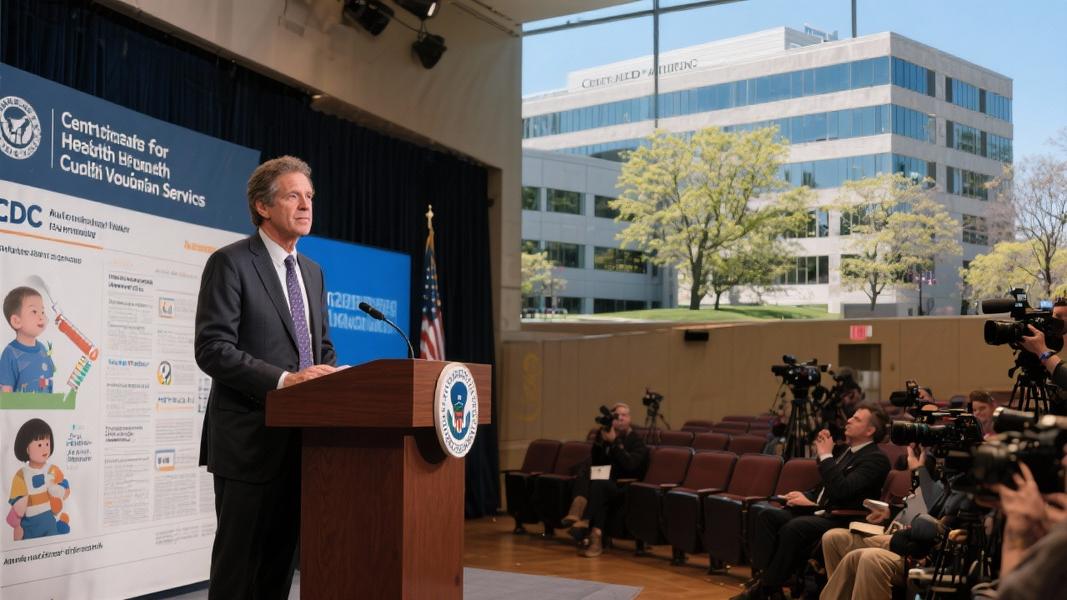
The shift comes following the appointment of Robert F. Kennedy Jr. as Secretary of Health and Human Services, who has long challenged the scientific consensus on vaccine safety. In April 2025, Kennedy held a press conference highlighting what he called an “alarming increase” in autism rates, signaling a dramatic reorientation of federal health policy priorities.
The CDC is now planning new studies examining potential links between vaccines and autism, despite what many researchers consider overwhelming evidence to the contrary. This decision has provoked concern from scientific organizations that warn such studies may legitimize debunked theories and threaten public health.
Scientific Community Pushback
“Dozens and dozens of studies have been conducted looking at vaccines and autism and they all show the same result: no relationship,” said Alison Singer, president of the Autism Science Foundation, a nonprofit that funds autism research.
The Infectious Diseases Society of America (IDSA) issued a strongly worded statement criticizing the CDC’s decision, emphasizing that “vaccines have been thoroughly researched and administered to large numbers of people of all ages and have been proven to be very safe and effective.”
Is there any scientific basis for reopening this question? The evidence suggests not. Multiple epidemiological studies conducted across several countries over 25 years have consistently found no association between vaccines and autism spectrum disorders. This includes specific research on thimerosal, a mercury-based preservative once used in some vaccines that became a focus of concern.
The CDC itself previously concluded that “evidence from several studies examining trends in vaccine use and changes in autism frequency does not support such an association.” That position has now been effectively undermined by the agency’s own website update.
Public Health Implications
The IDSA warned that the CDC’s new position could have serious consequences: “CDC’s study on the safety of vaccines could drive misinformation, leading to lower vaccination rates, more serious, vaccine-preventable disease outbreaks and a significantly weakened public health response.”
Public health experts fear the agency’s reversal might further erode trust in vaccines at a time when childhood immunization rates have already declined in many parts of the country. The concern is particularly acute given the resurgence of diseases like measles that had previously been nearly eliminated in the United States.
That said, defenders of the new approach argue that additional research could help reassure skeptical parents and potentially increase vaccination rates if it once again confirms vaccine safety.
The scientific and medical communities remain overwhelmingly united in their assessment that vaccines do not cause autism. But with this policy shift, the federal government’s messaging on this crucial public health issue has become notably less clear—leaving many wondering whether politics has trumped science in America’s premier public health agency.
