
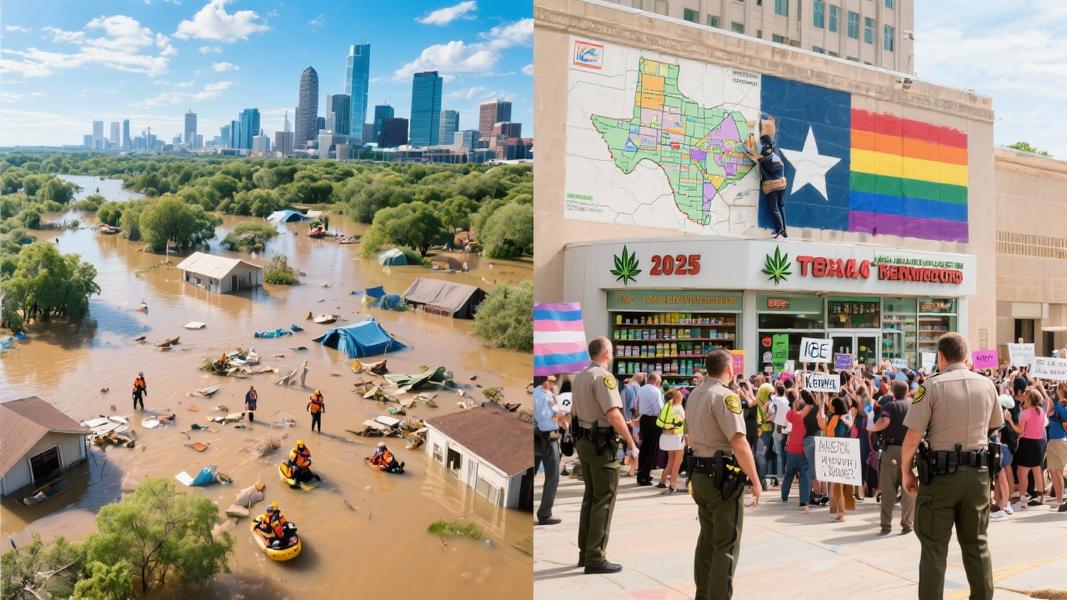
More than 100 lives were claimed when catastrophic flash floods tore through Central Texas during the 2025 Fourth of July weekend, transforming a holiday celebration into a devastating disaster. The deluge struck with terrifying speed in the early morning hours of Independence Day, catching many vacationers and residents asleep.
A Deadly Deluge
The flash floods, triggered by torrential rainfall measuring up to 46 centimeters, sent walls of water surging through the Guadalupe River basin in the Texas Hill Country. Kerr County bore the brunt of the disaster, recording at least 96 fatalities — a staggering toll that included 27 deaths at Camp Mystic, a popular summer destination.
“Unlike slow-onset river floods, flash floods leave very limited time for reaction,” explained disaster management experts assessing the aftermath. That critical lack of warning time proved deadly as the waters rose rapidly between July 4-7, catching many in vulnerable low-lying areas.
How quickly did conditions deteriorate? Within hours, normally placid creeks transformed into raging torrents, washing away vehicles, demolishing structures, and cutting off evacuation routes. The flood’s timing — during a peak holiday weekend when the region was filled with visitors unfamiliar with local flood risks — likely contributed to the high casualty count.
Camp Tragedy
Perhaps most heartbreaking was the situation at Camp Mystic, where 27 people, many of them children and counselors, lost their lives. The summer camp, situated along a normally picturesque stretch of the Guadalupe River, became a nightmare scene as floodwaters rose in the pre-dawn darkness.
First responders described harrowing rescue attempts amid powerful currents and debris-filled waters. “We could hear calls for help, but couldn’t always reach them in time,” one emergency worker recounted, voice breaking. “The water just came too fast, too furious.”
Several counties surrounding Kerr were also severely impacted, though with fewer casualties. Still, the regional infrastructure suffered catastrophic damage, with numerous bridges washed out, power lines down, and water treatment facilities compromised.
Climate Questions
While July flooding isn’t uncommon in the Texas Hill Country, the intensity of the 2025 deluge has raised questions about changing precipitation patterns. The region has experienced increasing instances of extreme rainfall events in recent years.
“We’re seeing more of these high-intensity precipitation events that drop enormous amounts of rain in very short periods,” noted one meteorologist. “When that happens in a geography like the Hill Country, with its steep slopes and narrow valleys, you get these devastating flash flood scenarios.”
Recovery efforts continue across the affected region, with state and federal disaster teams coordinating to provide emergency shelter, restore utilities, and begin the long process of rebuilding. For many communities along the Guadalupe, though, the emotional toll may prove the hardest to overcome.
As one Kerr County resident put it, watching volunteers clear debris from what remained of his family’s third-generation ranch house: “We’ve always respected the river. But this time, it showed us something we’ve never seen before. Something I hope we never see again.”
