
The assassination of Charlie Kirk, a prominent right-wing political activist, has sent shockwaves through American political discourse, becoming one of the most divisive moments in recent U.S. history since the fatal shooting occurred on September 10, 2025.
Kirk was gunned down at approximately 12:26 p.m. while addressing an audience at Utah Valley University. He was rushed to Timpanogos Regional Hospital for emergency surgery, but efforts to save his life proved unsuccessful. Former President Donald Trump announced Kirk’s death later that same day via Truth Social, triggering an immediate suspension of all campus activities until September 15.
A Nation Divided
The killing has quickly become a flashpoint in America’s already fractured political landscape. Kirk, known for his provocative conservative advocacy on issues including gun rights, abortion, and gender identity, had built his reputation on encouraging debate—particularly on college campuses. His violent death has deepened existing political divides rather than bridging them.
“The assassination sent shock waves throughout the nation and has quickly become one of the most divisive moments in modern US politics,” noted political observers tracking the aftermath of the shooting.
In a raw, emotional livestream following her husband’s death, Charlie’s widow Erika Kirk expressed gratitude to first responders while also issuing a stark warning. “You have no idea the fire that you have ignited within this wife,” she declared, “the cries of this widow will echo around the world like a battle cry.” She pledged to keep her husband’s voice alive and vowed retribution against those responsible.
Campus Controversy Erupts
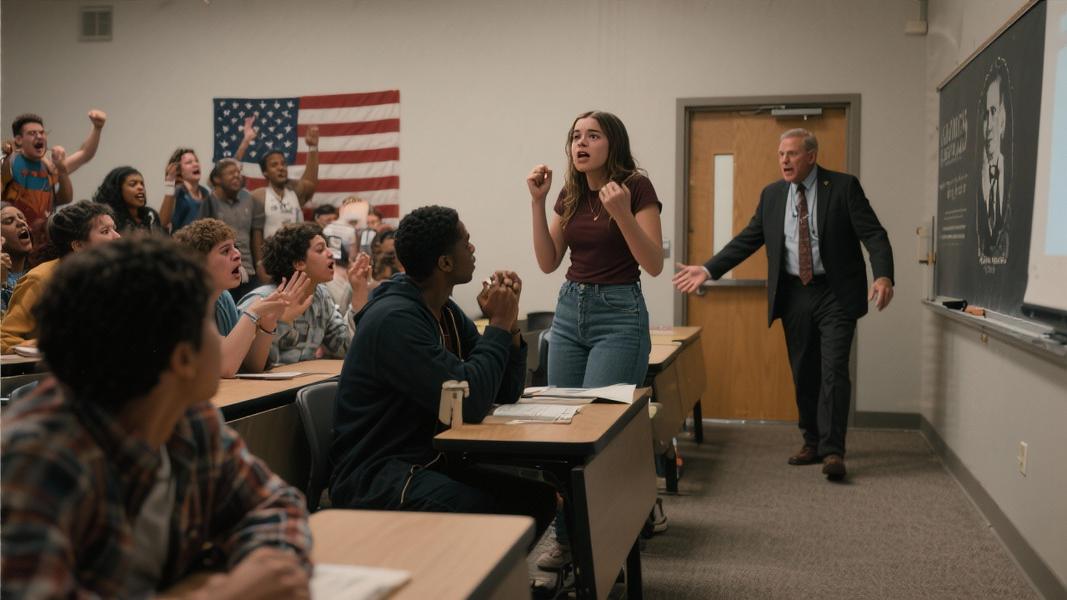
What happens when political violence meets academia? The aftermath has already sparked controversy on other campuses, including the University of North Texas, where Attorney General Ken Paxton has launched an investigation after a student was allegedly expelled from class for denouncing celebrations of Kirk’s assassination.
Paxton has demanded answers from UNT, accusing the institution of violating Texas law by punishing the student while failing to enforce its own conduct and free speech policies.
“For too long, universities have become incubators for radical left-wing ideology instead of fostering a space for learning and open, peaceful discussion of ideas,” Paxton said in a scathing letter to university officials. “Instead of addressing the disgusting celebrations of political assassinations, UNT has protected these terrorist sympathizers and punished the brave student who stood up to the radical mob.”
The Attorney General’s letter further insisted that the university expand its investigations into students encouraging illegal political violence, writing, “I will not remain silent when our so-called institutions of higher learning stifle free speech and encourage an atmosphere of political terrorism. UNT must answer for its apparent negligence.”
Kirk had built his career challenging what he viewed as liberal orthodoxy on college campuses through his organization Turning Point USA. Now, in death, his legacy appears to be continuing that same contentious conversation—though in ways nobody could have anticipated.
As memorial services are being arranged and investigations continue into the shooting, one thing remains clear: in an already polarized America, Charlie Kirk’s assassination hasn’t just taken a life—it’s opened yet another wound in the nation’s fractured political discourse, one that shows little sign of healing anytime soon.
