
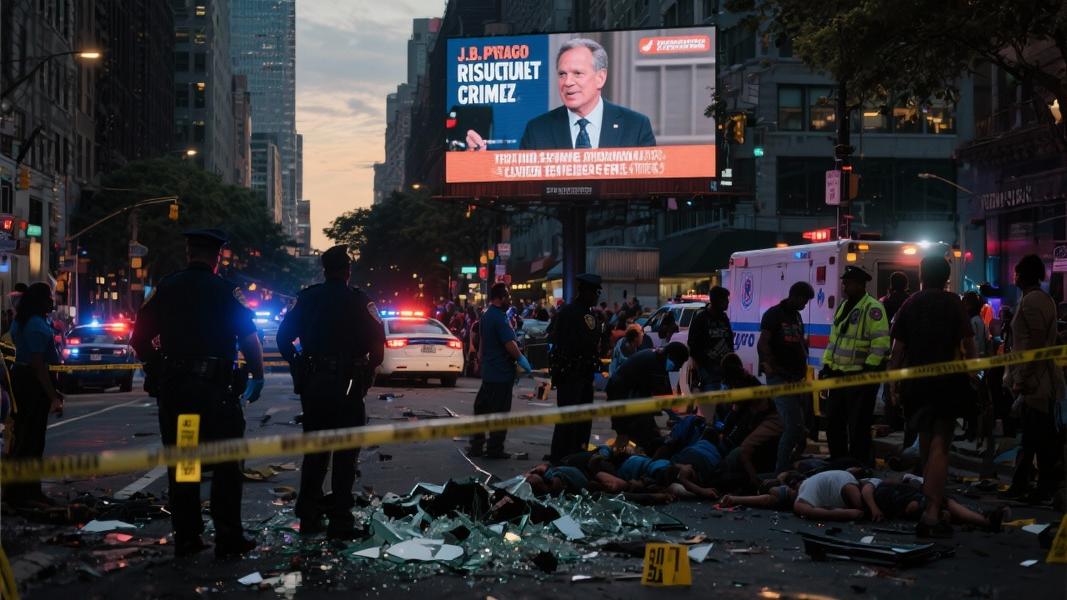
Chicago’s Labor Day weekend erupted in violence as at least 58 people were shot and eight killed in a series of shootings across the city, marking a dramatic spike in gun violence compared to last year’s holiday weekend.
The bloodshed, which included three mass shootings, unfolded between Friday and Monday evening, according to data released by the Chicago Police Department. Victims ranged in age from 14 to 50, with incidents scattered throughout the city’s neighborhoods. The weekend’s toll nearly doubled the number of shootings compared to the same period last year, officials confirmed.
Violence Sparks Political Tension
The surge in shootings quickly became political fodder. Former President Donald Trump lambasted Illinois Governor J.B. Pritzker’s handling of the situation, even threatening federal intervention. “Chicago is the worst most dangerous city in the World, by far. Pritzker needs help badly, he just doesn’t know it yet,” Trump wrote in a statement. “I will solve the crime problem fast, just like I did in DC. Chicago will be safe again, and soon.”
Pritzker, however, has firmly rejected these characterizations. “We’ve been trying to prevent crime and it’s been working,” the governor stated. He dismissed Trump’s offer of federal assistance, adding, “There is no emergency” and claiming that Trump was attempting to “manufacture a crisis.”
Among the weekend’s most violent incidents was a major shooting in Bronzeville that left five people wounded. In another case, a 25-year-old woman was killed inside an apartment building, while a 43-year-old man was shot in the left shin in a separate incident, according to police reports.
Community Solutions vs. Military Intervention
Is sending in troops the answer? Community leaders don’t think so. Some local activists have argued that solutions lie not in military deployment but in rebuilding communities from within. They’ve suggested that gun violence represents just the visible tip of deeper social issues affecting Chicago’s neighborhoods.
While Pritzker maintains that “We have our job, which is to fight violent crime on the streets of our city — and by the way, we’re succeeding,” the weekend’s statistics paint a more complicated picture. The governor has downplayed concerns by noting that “Big cities have crime,” a statement that’s done little to comfort residents in affected neighborhoods.
Many community advocates have called for increased mentorship programs and greater involvement from Black men in affected neighborhoods to help break the cycle of violence. They argue that sustainable change requires addressing root causes rather than treating symptoms through increased policing or military presence.
The weekend’s violence comes at a time when Chicago, like many major American cities, continues to grapple with the complex interplay of poverty, guns, gangs, and limited economic opportunities — a deadly combination that has proven resistant to quick fixes or political posturing.
For the families of those killed and the dozens injured, the debate over solutions offers little immediate comfort as they face the harsh reality that in some Chicago neighborhoods, even a holiday weekend can turn deadly in an instant.
