
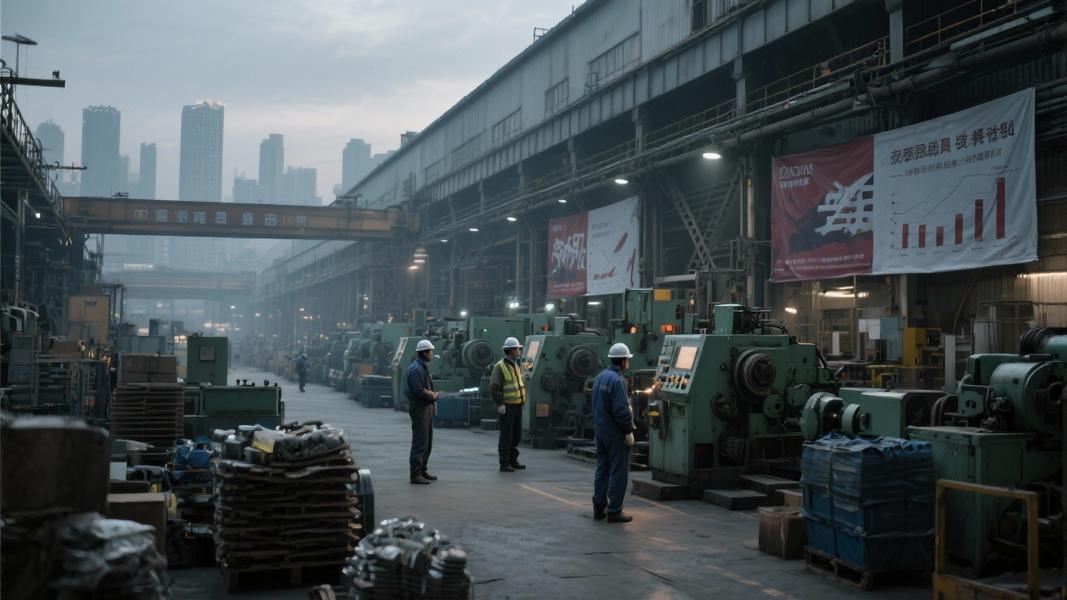
China’s manufacturing sector continues to struggle as factory activity contracted for the eighth consecutive month, according to government data released Monday. Despite a slight improvement, the country’s manufacturing remains firmly in contraction territory amid persistent economic challenges.
The official manufacturing Purchasing Managers’ Index (PMI) inched up to 49.2 in November from 49.0 in October, China’s National Bureau of Statistics reported. While the marginal uptick offers a glimmer of hope, the figure still sits below the crucial 50-point threshold that separates growth from contraction — a line Chinese manufacturers haven’t crossed since March.
“A prolonged slump in China’s property market and falling home prices are still hurting consumer confidence, and real estate investments have been down,” economists noted. “Intense price competition domestically in many sectors including the auto industry have also put pressure on many businesses.”
Mixed Signals Amid Persistent Weakness
The November reading, while slightly improved, paints a complex picture of China’s industrial landscape. Output stabilized at 50.0 after October’s decline to 49.7, marking a tentative halt to deterioration. Meanwhile, delivery times remained essentially steady with a reading of 50.1 compared to 50.0 in the previous month, according to the statistics bureau.
On the pricing front, manufacturers face a challenging environment. Input costs rose for the fifth straight month, accelerating to 53.6 from 52.5, while selling prices continued to fall, albeit at a slower pace (48.2 vs. 47.5 in October). This price squeeze reflects the competitive pressures many Chinese businesses are facing as they struggle to maintain market share.
Business confidence did strengthen slightly from October’s three-month low, rising to 53.1 from the previous 52.8, but the broader economic environment remains challenging for manufacturers suggests the latest data.
Trade Truce Yet to Deliver
What about the U.S.-China trade truce? Despite a recent U.S. tariff cut on Chinese goods, the expected boost to export momentum hasn’t materialized in the November figures.
“A U.S. tariff cut earlier this month likely would mean that Chinese exports could gain competitiveness in the U.S. market, but it may be too early to say whether exports have regained momentum following the trade truce,” analysts observed.
The sluggish recovery comes against the backdrop of persistent structural challenges in China’s economy. Housing market woes continue to cast a long shadow, with falling home prices undermining consumer confidence and real estate investment. This weakness has spread to manufacturing through reduced demand for construction materials and home goods.
Policy Support: Too Little, Too Late?
Economists increasingly argue that more decisive government intervention is needed. “More government policy support is required to help boost the economy,” many experts insist. But there appears to be reluctance from Beijing to deploy additional stimulus measures.
“Policymakers appear to be delaying further policy support,” Lynn Song, chief economist for Greater China at ING bank, wrote in a recent analysis.
Complicating matters, some existing support measures are being phased out. The government had previously implemented trade-in subsidies for home appliances and electric vehicles to boost consumption, but these programs are now winding down. Analysts predict sales and demand are likely to drop as these incentives disappear.
“The fading boost from the consumer goods trade-in policies may be weighing on domestic demand for manufactured goods and signals on domestic demand have been mixed,” said Zichun Huang, China economist at Capital Economics, in a statement last week.
Growth Target Still in Sight
Despite the manufacturing slump, Chinese officials maintain their target of around 5% economic growth for 2025. The economy expanded 4.8% in the July-September quarter, suggesting the annual goal remains within reach despite industrial weakness.
Some economists believe the current trajectory may be sufficient. “This year’s growth target is likely to require minimal additional support to be reached,” Song concluded in his analysis.
The eighth consecutive month of manufacturing contraction, however, raises questions about the sustainability of China’s economic model and its heavy reliance on property and infrastructure investment. Without more robust consumer demand or a significant export revival, the manufacturing sector may continue to struggle even as headline growth figures meet government targets.
