
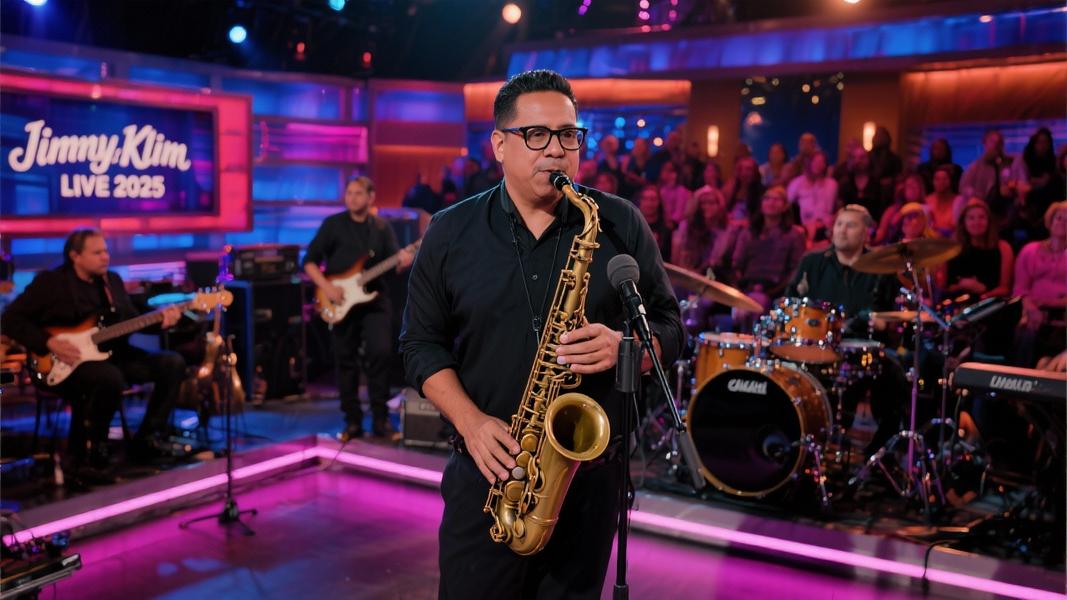
Cleto Escobedo III, the saxophonist and bandleader who spent over two decades as Jimmy Kimmel’s musical right-hand man on late-night television, has died at 59, leaving behind a legacy that stretches far beyond the ABC studio where he became a fixture for millions of viewers.
Escobedo passed away on Tuesday, November 11, 2025, according to an emotional announcement from Kimmel, who has been friends with the musician since their childhood days in Las Vegas. “To say that we are heartbroken is an understatement. Cleto and I have been inseparable,” Kimmel revealed in a tearful tribute during his show.
A Friendship That Defined Late-Night Television
The saxophonist’s band, known to fans as “Cleto and the Cletones,” had been the house band for “Jimmy Kimmel Live!” since the program’s premiere in 2003. Their presence — punctuated by Kimmel’s signature call of “Cleto!” — became one of late night’s most recognizable sonic signatures.
But the relationship between Kimmel and Escobedo wasn’t merely professional. The two met as teenagers, forming a bond that would eventually bring them both to national prominence. Theirs was the rare Hollywood partnership that predated fame itself.
What made the Cletones different from other late-night bands? Perhaps it was the authentic chemistry between bandleader and host — a rapport impossible to manufacture and evident whenever cameras caught their interactions.
The band’s appearances on the show went beyond providing musical interludes. Escobedo frequently participated in comedy bits and became a beloved character in the show’s extended universe, his infectious laugh and musical talents making him a standout personality in his own right.
From Las Vegas to Late Night
Born into a musical family, Escobedo’s father was himself a working musician in Las Vegas, where the younger Cleto honed his craft before eventually following his childhood friend to Los Angeles and the national spotlight.
The saxophonist’s journey paralleled Kimmel’s rise through radio and television. When Kimmel was offered his own late-night show in 2003, one of his first calls was to Escobedo — a decision that would shape the sound and feel of the program for more than two decades.
“Cleto wasn’t just my bandleader, he was my brother,” Kimmel said during his announcement. The host struggled visibly with emotion while sharing the news, underlining just how central Escobedo was not just to the show but to Kimmel’s life.
In television, where behind-the-scenes changes are constant and relationships often transactional, their partnership stood as a remarkable exception — a genuine friendship that happened to play out nightly on national television.
Tributes from fellow musicians, comedians, and celebrities began pouring in immediately following the announcement, with many noting Escobedo’s generosity and musical versatility. The band had backed countless musical guests over their tenure, adapting to styles ranging from hip-hop to country with seeming effortlessness.
A Legacy Beyond the Spotlight
Though most recognized for his television work, Escobedo maintained an active career outside the show, performing with various groups and continuing to build his reputation as a respected saxophonist in multiple genres.
His influence extended to younger musicians as well. Several now-prominent players have cited Escobedo’s highly visible role on television as inspiration for their own pursuit of instrumental music in an era when such visibility has become increasingly rare.
The show has not yet announced plans regarding the musical direction moving forward. For now, the focus remains on honoring a musician whose presence helped define one of television’s longest-running late-night programs.
As the television landscape continues its rapid evolution, Escobedo’s 22-year run stands as a remarkable testament to consistency, friendship, and musical excellence — a nightly reminder that sometimes the best collaborations are the ones that began long before the cameras started rolling.
