
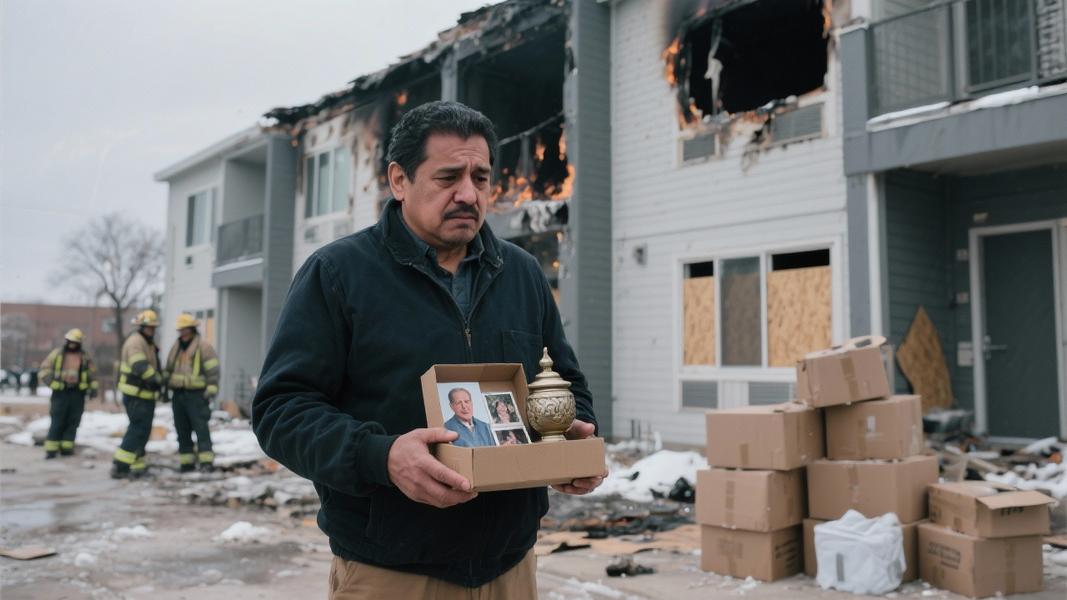
Six months after a devastating apartment fire that upended hundreds of lives, former residents of The Cooper in Fort Worth are still grappling with the aftermath — and now they’re fighting back.
For Eliseo Acevedo, the June blaze that engulfed his apartment building left him with just a fraction of his possessions. After a half-year wait, he was finally permitted to retrieve what remained: only what crews could pack in a two-hour window. While he recovered cherished photos of his late father, much was left behind — furniture, clothing, a Fossil watch, even his social security card.
“It’s a mixed bag of emotions. I know I should feel thankful for at least getting some items, but it doesn’t feel like a win, it feels like a consolation prize,” Acevedo told reporters.
Legal Action Mounts
The frustration has boiled over into legal action. Former residents have filed a lawsuit against property manager Cushman and Wakefield and electrical contractor Cano Electric, claiming gross negligence led to the catastrophic fire that displaced more than 800 people.
At the heart of the lawsuit? Allegations that an unlicensed contractor was replacing a breaker on a rooftop HVAC unit when the June 20 fire ignited. Adding insult to injury, residents claim they were systematically prevented from retrieving their belongings in the months following the disaster.
“What happened at The Cooper is unfathomable,” said Katie Steele, the residents’ attorney from Varghese Summersett. “No one should lose their home due to negligence — and then be shut out from recovering what little remained. This is cruelty piled on top of catastrophe,” she stated.
Historic Response
Just how massive was this fire? The blaze that erupted around 1:30 p.m. on West Rosedale Street quickly escalated to a historic six-alarm response, a rarity in Fort Worth’s fire department history.
Nearly 170 personnel battled the flames for almost nine hours. The department deployed 64 fire apparatuses and called in assistance from neighboring departments in a massive coordinated effort. Despite the scale of the disaster, emergency responders reported only one injury and six cases of heat exhaustion.
But the numbers tell only part of the story. Behind each of the 834 displaced residents lies a personal catastrophe — belongings destroyed, memories lost, and lives upended in a matter of hours.
What happens next for the former Cooper residents remains uncertain. Many have scattered across the Dallas-Fort Worth metroplex, forced to rebuild their lives with little more than what they were wearing when they evacuated.
For people like Acevedo, the lawsuit represents not just potential compensation, but acknowledgment of a preventable tragedy. As the legal process unfolds, hundreds of former residents wait — for closure, for justice, and for the chance to truly move forward from that scorching June afternoon that changed everything.
