
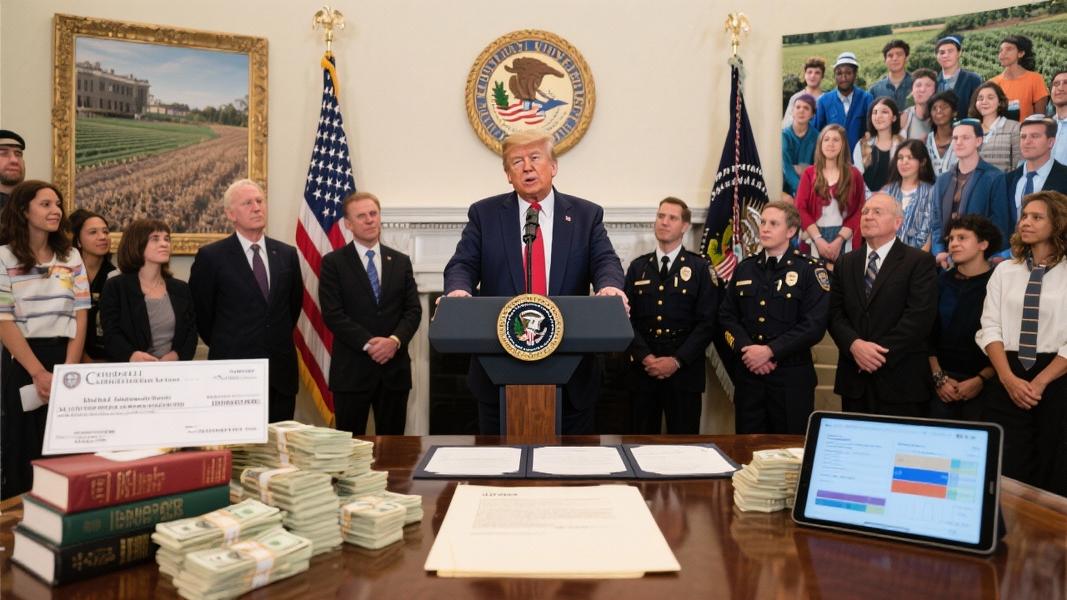
Cornell University has agreed to pay $60 million to settle with the Trump administration, ending a federal investigation into alleged civil rights violations and restoring more than $250 million in frozen research funding. The landmark deal, announced Friday, requires the Ivy League institution to ensure compliance with federal civil rights laws and end any racial discrimination in its admissions process.
Under the settlement terms, Cornell will pay a $30 million penalty directly to the federal government and invest another $30 million in research programs benefiting U.S. farmers, both payable in equal installments over three years. The agreement also mandates annual campus climate surveys to address anti-Semitism and requires Cornell’s president to certify compliance quarterly under penalty of perjury.
Funding Freeze Impact
The settlement comes after months of negotiations following what Cornell President Michael Kotlikoff described as a devastating funding freeze that had “stalled research, upended careers and threatened the future of academic programs.” The university had reportedly received approximately 120 stop-work orders on federally funded projects, with The New York Times estimating more than $1 billion in funding had been frozen.
President Donald Trump hailed the agreement as a “historic settlement” that would “restore accountability and fairness in higher education.” The deal requires Cornell to provide the federal government access to detailed admissions data to verify compliance with merit-based admissions standards following the 2023 Supreme Court ruling that banned affirmative action.
Why did Cornell ultimately settle? The financial pressure had become enormous. With hundreds of millions in research dollars hanging in the balance, the university found itself restructuring operations and programs while seeking ways to reduce costs, including worker layoffs, according to reports earlier this year.
Kotlikoff framed the agreement in more positive terms, saying it “affirms the university’s commitment to the principles of academic freedom, independence, and institutional autonomy” while restoring critical federal partnerships.
Pattern of Settlements
Cornell’s $60 million settlement positions it between other recent agreements reached with Ivy League institutions. It’s substantially less than Columbia University’s $221 million settlement but more than Brown University’s $50 million deal with the administration, as noted by education observers.
Education Secretary Linda McMahon celebrated the agreement on social media, calling it “a huge win in the fight to restore excellence to American higher education” and claiming U.S. universities are now “refocusing their attention on merit” as a result of these settlement agreements.
The Cornell deal was initially expected to reach up to $100 million based on August reports from Bloomberg, which described ongoing negotiations that included discussions about appointing a resolution monitor similar to Columbia’s arrangement. The final $60 million figure represents a significant compromise.
Not all investigations have been closed, however. While the agreement reinstates federal grants and resolves pending Title VI and Title IX investigations, the settlement specifically excludes ongoing Title VII investigations related to allegations of discrimination in Cornell’s employment practices.
For Cornell students and faculty who have weathered months of uncertainty, the settlement brings relief but also questions about the long-term implications of the administration’s approach to higher education policy. As research programs resume and funding flows again, the true cost of this settlement may ultimately be measured not just in dollars, but in how it reshapes the landscape of academic freedom and institutional governance for years to come.
