
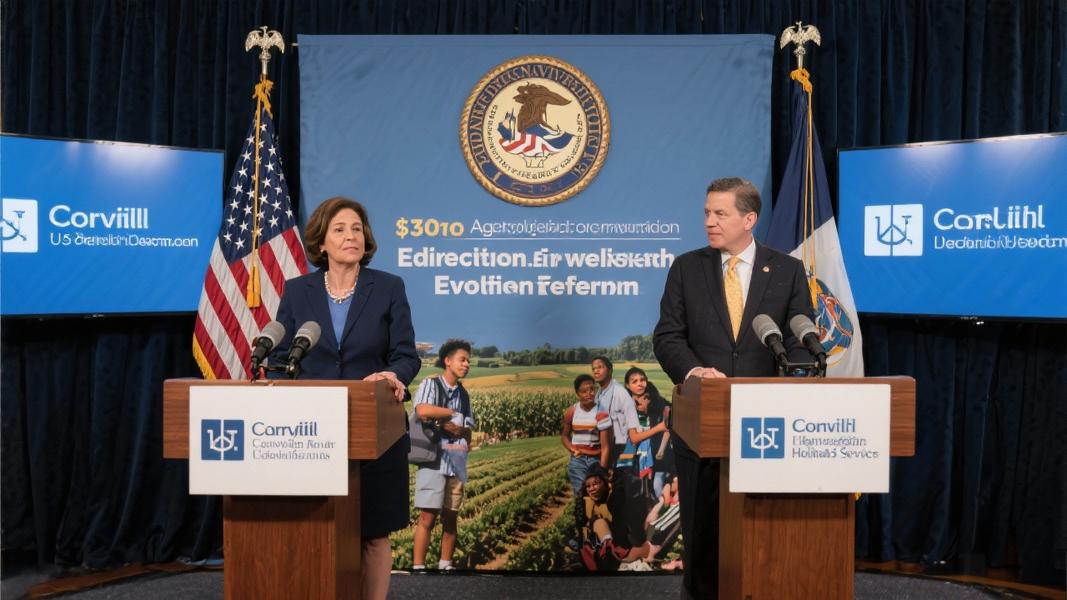
Cornell University Agrees to $60 Million Settlement with Trump Administration
Cornell University has struck a $60 million deal with the Trump administration to end federal investigations and restore more than $250 million in research funding that had been withheld amid allegations of civil rights violations.
The landmark agreement, announced Friday by Cornell President Michael Kotlikoff, requires the Ivy League institution to accept the administration’s interpretation of civil rights laws while affirming what Kotlikoff described as the university’s commitment to academic freedom.
Financial Terms and Research Investment
Under the terms of the settlement, Cornell will pay $30 million directly to the U.S. government over the next three years. The university will invest an additional $30 million through 2028 in agricultural research programs aimed at supporting American farmers through “lower costs of production and enhanced efficiency,” according to the agreement details.
The deal comes with strings attached. Cornell must now use the Department of Justice’s “Guidance for Recipients of Federal Funding Regarding Unlawful Discrimination” as a training resource for faculty and staff. The university will also continue conducting annual campus climate surveys to evaluate the student experience, as outlined in settlement documents.
Perhaps most notable is the requirement that Cornell’s president personally certify — under penalty of perjury — that the university is complying with the agreement. Through 2028, the university must also provide anonymized admissions data to the government for statistical analysis, a provision that indicates ongoing scrutiny of the school’s admissions practices.
Federal Investigations Closed
What does Cornell get in return? The U.S. government will close all pending investigations into the university’s admissions policies and other civil rights concerns. Additionally, federal agencies will restore terminated grants and treat Cornell as eligible for future funding — a crucial win for an institution where research is central to its mission and reputation.
Attorney General Pamela Bondi celebrated the agreement, stating, “Recipients of federal funding must fully adhere to federal civil rights laws and ensure that harmful DEI policies do not discriminate against students.” She called the deal “a positive outcome that illustrates the value of universities working with this administration.”
The agreement represents the latest in a series of actions by the Trump administration targeting diversity, equity and inclusion initiatives at elite universities. Education Secretary Linda McMahon characterized the settlement as “another transformative commitment from an Ivy League institution to end divisive DEI policies.”
Administration Officials Hail Victory
Is this a turning point for higher education policy? Administration officials certainly framed it that way.
“The Trump Administration is actively dismantling the ability of elite universities to discriminate based on race or religion,” Health and Human Services Secretary Robert F. Kennedy Jr. declared. “The DOJ’s agreement with Cornell strengthens protections for students against antisemitism and all other forms of discrimination.”
McMahon praised what she sees as a broader shift, stating that “U.S. universities are refocusing their attention on merit, rigor, and truth seeking – not ideology.” She added that “these reforms are a huge win in the fight to restore excellence to American higher education and make our schools the greatest in the world.”
Assistant Attorney General Harmeet K. Dhillon of the Justice Department’s Civil Rights Division emphasized that the settlement demonstrates “this administration’s deep commitment to vigilantly enforce our federal civil rights laws on college campuses, and ensure that American universities manage taxpayer dollars responsibly.”
For Cornell, the settlement ends a period of uncertainty that had threatened significant research funding. Yet it also signals a new era of federal oversight that could reshape how the university — and potentially other institutions — approach admissions, diversity initiatives, and compliance with civil rights laws as interpreted by the current administration.
