
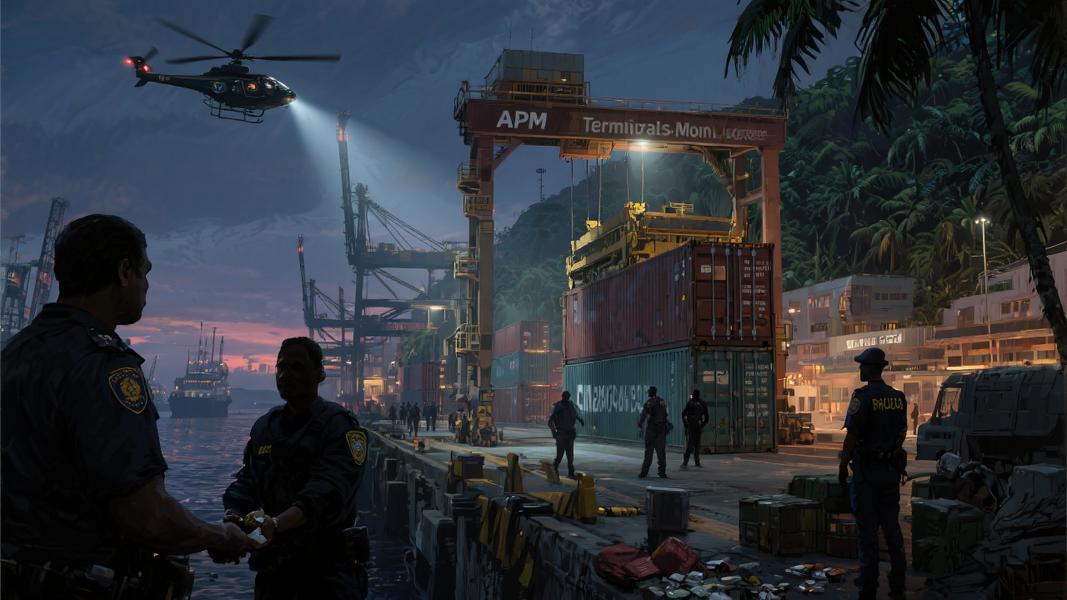
Costa Rica, long celebrated for its pristine beaches and vibrant eco-tourism, has quietly transformed into something far more sinister: a critical hub in the global cocaine trade. The Central American nation now stands at the crossroads of massive drug shipments moving from South America toward the United States, fueling an epidemic that claimed over 22,000 American lives to overdoses in just the past year.
“Drug cartels are poisoning Americans and making our communities more dangerous by trafficking cocaine, often laced with fentanyl, into the United States,” said Under Secretary for Terrorism and Financial Intelligence John K. Hurley in a statement addressing the crisis.
Paradise Lost: Violence Surges in Tourist Haven
The transformation hasn’t come without cost to Costa Rica itself. Once known for its relative safety in a troubled region, the country recorded its second-most violent year in history in 2024, with 2025 tracking toward similarly grim numbers, according to data from security agencies.
Nowhere is this more evident than in coastal Limón province, where the Moín seaport has become ground zero for territorial conflicts between rival traffickers. Gang violence has erupted as organizations fight for control of lucrative shipping routes capable of moving tons of cocaine northward.
The United Nations Office on Drugs and Crime has identified Costa Rica among the primary maritime and aerial corridors linking cocaine producers in Colombia and Ecuador with consumers in North America and Europe. This strategic position has made the country an irresistible transit point for traffickers seeking to move product northward.
Cocaine Production Soars Globally
Why is Costa Rica suddenly so important? The answer lies partly in the unprecedented boom in cocaine production. Global output surged 34% in 2023 alone, reaching a staggering 3,708 tons. Law enforcement worldwide seized a record 2,275 tons during the same period — yet prices haven’t collapsed, suggesting demand continues to outstrip even this expanded supply.
The number of cocaine users worldwide has jumped from 17 million a decade ago to 25 million in 2023, making it the illicit drug market with the highest growth rate globally.
How bad is it getting? Costa Rican authorities seized 32.1 metric tons of drugs between January and September 2024 alone, including 20.5 tons of cocaine and 11.5 tons of marijuana. Yet this actually represents a slight decrease from 2023’s haul of 36.4 tons, according to the U.S. State Department’s International Narcotics Control Strategy Report — suggesting traffickers may be adapting their methods to avoid detection.
Corruption at the Highest Levels
Perhaps most troubling is how deeply narcotrafficking has penetrated Costa Rica’s institutions. In a stunning development, former Vice Minister of Public Security Celso Manuel Gamboa Sanchez was arrested in June 2025 following U.S. extradition requests. Authorities allege Gamboa facilitated cocaine shipments worth tens of millions of dollars through Costa Rica toward American and European markets.
“As a former Costa Rican Vice Minister of Public Security, Gamboa used his extensive network of contacts within the government to acquire information about ongoing counternarcotics investigations. He subsequently sold this information to the targets of those exact investigations,” Treasury officials revealed.
Investigators say Gamboa laundered drug proceeds through his law firm, Bufete Celso Gamboa & Asociados, and, bizarrely, through Limón Black Star FC, a soccer club in Costa Rica’s second division. The arrests came shortly after Costa Rica’s president signed a May 2025 constitutional reform allowing extradition of nationals accused of drug trafficking and terrorism.
A Network of Traffickers
Gamboa didn’t operate alone. Alejandro Antonio James Wilson allegedly collaborated with the former official to smuggle cocaine through the Moín seaport, bribing corrupt police and port officials to ensure shipments moved smoothly to North American and European destinations.
Meanwhile, Alejandro Arias Monge remains Costa Rica’s most wanted fugitive. Involved in drug trafficking, robberies, and homicides throughout Limón province, Arias has reportedly evaded capture by exploiting Gamboa’s government contacts to receive advance warning of police operations.
The situation is serious enough that the U.S. Department of State is offering up to $500,000 under its Transnational Organized Crime Rewards Program for information leading to Arias’s arrest or conviction.
Another key figure, Edwin Danney Lopez Vega, known by the street name “Pecho de Rata” (Rat Chest), was also arrested in June 2025. Authorities describe Lopez as Arias’s only known cocaine supplier and a close collaborator with James and Gamboa in trafficking operations.
Fentanyl: The Growing Threat
Though Costa Rica shows no signs of large-scale fentanyl production, authorities have increasingly found pills intended for local distribution, indicating the country’s evolution from mere transit point to distribution hub for synthetic drugs manufactured elsewhere.
The impact on Costa Rica’s criminal justice system has been overwhelming. In 2020 alone, authorities made 114,090 arrests for drug-related offenses. The country’s prisons now operate at 27% above capacity, with virtually no access to harm reduction services for inmates.
That said, the government isn’t standing idle. Since March 2023, Costa Rica has partnered with the United Nations on a joint program to strengthen institutional capacity for combating organized crime. The initiative emphasizes a gender-sensitive, human rights-based approach to tackling trafficking networks, according to UN officials.
For a country that abolished its military in 1949 and built its identity around peace and environmental protection, the transformation into a narcotrafficking battleground represents a profound national crisis. The question remains whether Costa Rica can reclaim its reputation as Central America’s democratic success story, or whether the cocaine trade has already altered its trajectory for decades to come.
