
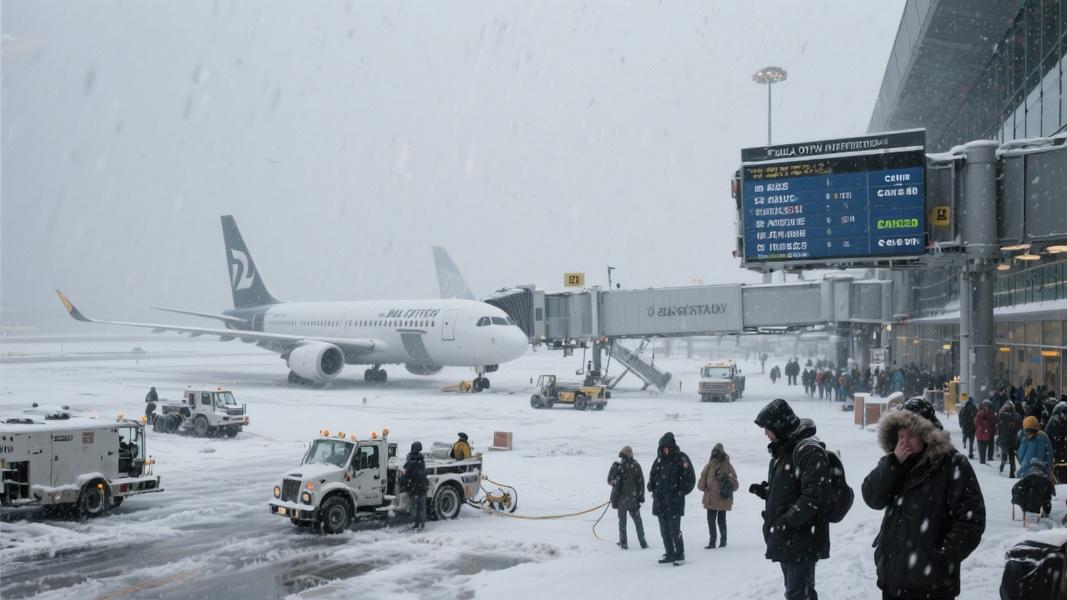
Dallas airports have turned into a travel nightmare this weekend as a winter storm pummels North Texas, with more than 1,200 flights canceled at DFW International Airport alone.
The cancellations at Dallas-Fort Worth and Love Field airports are leading the nation by a significant margin, with DFW seeing over 60% of its scheduled Saturday flights grounded as freezing rain and sleet create hazardous conditions across the region. The disruption comes as a powerful winter storm system brings a dangerous mix of precipitation and plunging temperatures to the heart of a major airline hub.
DFW Bears Brunt of Storm’s Impact
By late Friday, DFW International had already reported 1,271 flight cancellations for the weekend, including 635 outbound and 603 inbound flights. The numbers continued to climb overnight, with the total reaching nearly 1,300 cancellations by Saturday morning — representing more than two-thirds of the airport’s scheduled traffic.
“Dallas airports are still leading the nation in flight cancellations as the winter storm moves in,” noted the National Weather Service in Fort Worth, which has issued both a Winter Storm Warning through noon Sunday and an Extreme Cold Warning from Saturday evening through Monday.
American Airlines, which operates its largest hub at DFW, has canceled more than 800 flights at the airport, accounting for the bulk of its 822 cancellations nationwide. The airline added 17 extra flights — eight departing Friday and nine arriving Sunday — in an attempt to accommodate some passengers ahead of and after the worst of the storm.
How bad is it at Dallas Love Field? The city’s second airport has seen 186 flight disruptions so far, with 90 outbound and 91 inbound flights canceled. Southwest Airlines, which dominates operations there, has scrubbed more than 130 flights at Love Field as part of its 571 cancellations across its network.
Travelers Face Limited Options
“North Texas airports are seeing the highest volume of cancellations in the country by a significant margin,” confirmed the Department of Transportation in a statement urging passengers to check their flight status before heading to the airport. DFW’s cancellation rate far exceeds those at other major airports like Atlanta, Charlotte, Memphis, and Nashville, which are also experiencing weather-related disruptions.
All major carriers have issued travel waivers for affected passengers. Delta Air Lines is offering free rebooking at 41 airports for travel scheduled between January 23-25, with new travel to commence by January 28. United has similar waivers covering 35 airports, while American’s policy extends to 34 airports across the storm’s path.
“If your flight is canceled, and you choose to forgo the trip you had planned, you’re entitled to a refund for any unused portion of your flight – even if the flight is non-refundable,” explains the DOT’s consumer protection division. However, because the cancellations stem from weather — considered outside airline control — carriers aren’t required to provide accommodations or meals.
The disruption extends beyond air travel. Amtrak has suspended several routes through the region, adding to transportation woes for travelers.
Ice and Cold Creating “Potentially Catastrophic” Conditions
The winter storm is expected to deliver 2-3 inches of sleet across the Dallas-Fort Worth area, with higher accumulations and a transition to snow in northwestern parts of the region. Temperatures will plunge into the teens by Saturday night, creating treacherous conditions.
“DFW Airport Hit Hard, With More Than 60% of Scheduled Flights to and From Hub Canceled for Jan. 24,” stated airport officials, who are working to treat runways and taxiways. The persistent cold temperatures — forecasted to remain below freezing until Tuesday — mean ice will continue to be a problem long after the precipitation ends.
Weather experts are particularly concerned about the storm’s intensity. National Weather Service meteorologists are calling this system “potentially catastrophic,” with DHS Secretary urging Americans to “prepare for power outages and flight cancellations.”
The storm’s effects are being felt nationwide. By Saturday morning, more than 2,300 flights had been grounded across the country, with disruptions expected to affect 6,000 to 15,000 flights through Sunday as the system moves eastward. More than 49 million people are under winter storm watches or warnings from Texas to the Northeast.
What Passengers Should Do
Travelers can check their flight status at dfwairport.com/flights for DFW and dallas-lovefield.com for Love Field. TSA wait times, available through various apps and websites, are estimates and may be longer due to staffing challenges during the storm.
For those with canceled flights, options are limited but clear: request a refund for the unused portion of your ticket (including any fees for checked bags or extras) or rebook on the same airline or a partner carrier, subject to availability. With cancellations expected to continue through the weekend, patience will be essential.
“US Airlines Cancel Thousands of Flights Before Winter Storm,” warned the FAA in travel alerts. Unlike some previous disruptions, the agency has not issued ground stops, instead allowing airlines to manage their own cancellations based on conditions.
For North Texas residents and those with travel plans through the region, the message is clear: this weekend is not the time to fly. With Monday looking marginally better and temperatures not expected to rise above freezing until Tuesday, the ripple effects of this winter storm will likely be felt well into next week.
