
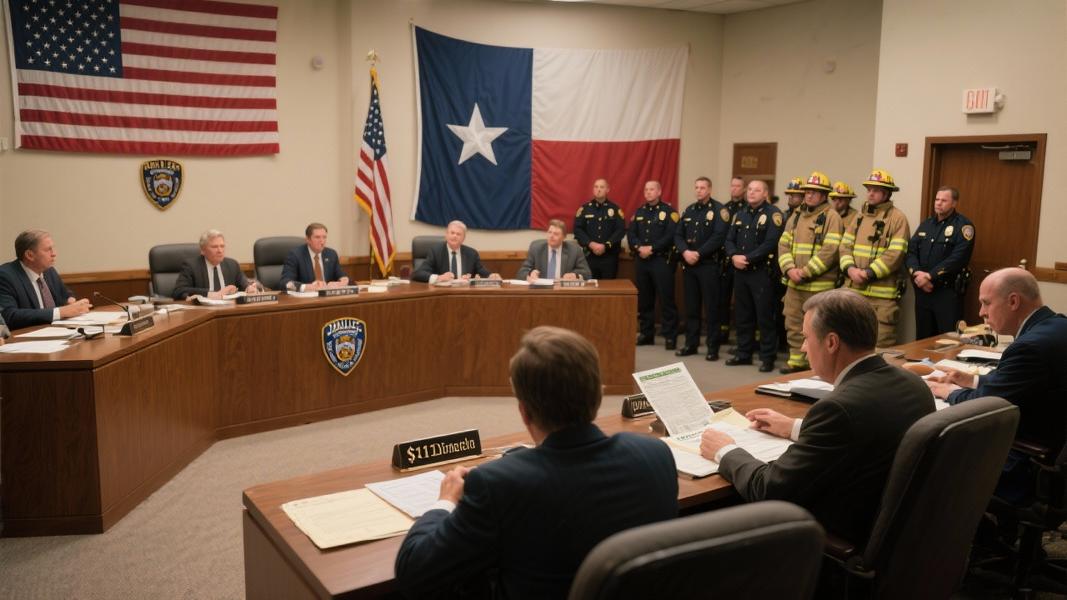
Dallas City Council has approved an $11 billion lifeline for its ailing police and fire pension system, but the deal’s fate now hangs on a final vote from the pension board itself. The 14-1 council decision represents a critical step toward resolving years of financial uncertainty for the city’s first responders.
The 30-year funding plan, approved Wednesday, aims to shore up a system that’s currently just 39% funded and facing a staggering $3.2 billion unfunded liability. The agreement would also settle ongoing litigation between the city and pension board over which entity has authority to submit funding plans to the state Pension Review Board — a deadline looming on November 1st, as reported by municipal finance watchers.
“When both parties agree to this funding agreement, it will end years of uncertainty and resolve longstanding disputes that have weighed heavily on the pension system,” Council Member Kathy Stewart explained during discussions. The plan gradually increases the city’s contributions from $184 million in 2025 to $282.6 million by 2029, eventually reaching actuarially determined levels by 2030.
A Contentious Solution
But not everyone sees the plan as a victory. The Dallas Police Association has vocally opposed the measure, warning it could exacerbate already challenging staffing shortages among the city’s police force.
“With what you will propose later today, you will essentially re-declare a pension war against all first responders,” Jaime Castro, president of the Dallas Police Association, cautioned the council before the vote. He argued the proposal “woefully underfunds the long-term viability of the pension,” potentially driving more officers to seek employment elsewhere.
How serious is the funding shortfall? With the system only 39% funded and carrying a $3.2 billion liability, officials have been scrambling to prevent a collapse that could jeopardize retirement security for thousands of the city’s first responders. The plan leverages the city’s general fund while incorporating input from financial experts and civic leaders to stabilize the system.
For current employees and retirees, the agreement does offer some immediate relief. The city commits to a one-time 1% increase to retirees’ base pension in 2025, along with a market-pay increase of 7.23% for active-duty first responders. “We are also committed to a market-pay increase of 7.23% for active-duty first responders who work to keep us all safe,” the city stated in its official communications.
The pension crisis has been brewing for years, with the 2017 state law requiring the system to maintain certain funding levels. That legislation set the stage for the current showdown between city officials and pension board representatives over who has final say in the funding approach.
Thursday’s pension board vote now becomes the critical final hurdle. Without their approval, the agreement cannot move forward, potentially sending all parties back to the negotiating table with the state deadline rapidly approaching.
For Dallas taxpayers, the $11 billion commitment represents a significant long-term investment in maintaining essential public safety services. For first responders, it’s about something more fundamental — the security of their retirement after careers spent protecting the public.
As the pension board prepares for its decisive vote, the city’s financial future and its relationship with those who serve on the front lines hang in the balance.
