
Dallas City Hall — the inverted concrete pyramid designed by I.M. Pei that has anchored the city’s civic identity for nearly half a century — may be on its way out. And residents are furious about how fast it’s happening.
The Dallas City Council is scheduled to vote Wednesday, March 4, 2026, at noon on a resolution that would set the iconic building at 1500 Marilla Street on a path toward redevelopment, directing City Manager Kimberly Bizor Tolbert to begin relocating city operations and exploring options for the site itself. The vote — called by Mayor Eric Johnson after what was initially billed as a routine briefing — marks a sharp acceleration in a process that critics say has left the public largely on the sidelines.
A Pivotal Vote, A Rushed Timeline
The resolution isn’t subtle about its direction. It instructs Tolbert to prioritize moving 311, 911, and emergency operations to new government centers while exploring relocation for all remaining staff and functions — and to pursue redevelopment of the City Hall site. That’s a significant leap from where this conversation started, and opponents have noticed.
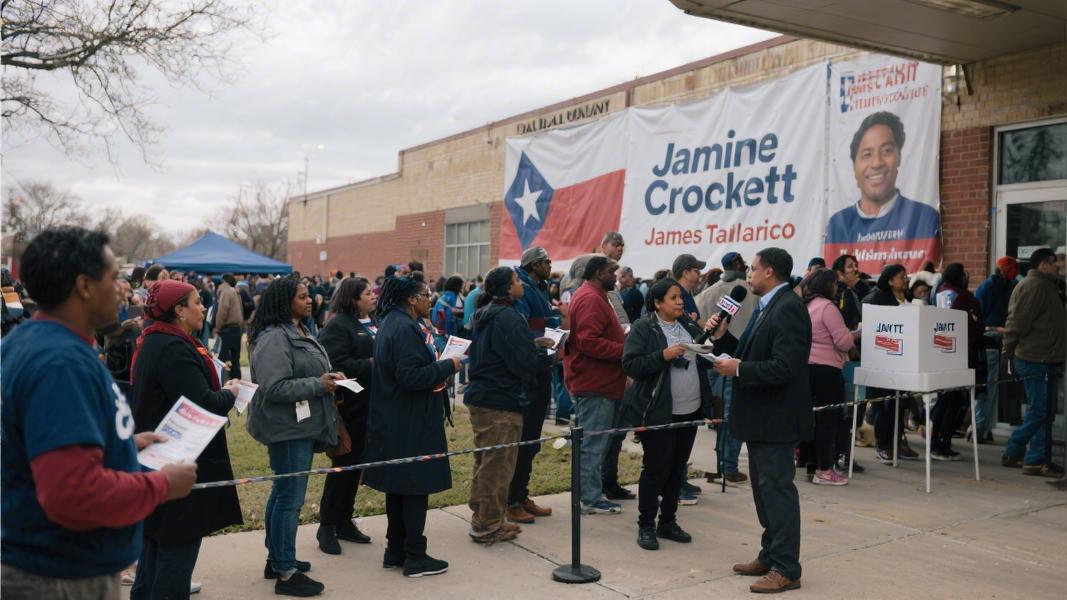
A public hearing held on March 2 drew a crowd that was, by most accounts, overwhelmingly opposed. Speaker after speaker urged the council to pump the brakes. “City Hall is a paid-for asset, it belongs to all of us,” one resident told the council. Another was blunter: “The people’s house is not for sale. This process feels like corruption to me.”
That sentiment — that this is being done to Dallas residents rather than with them — ran through nearly every public comment. No referendum has been proposed. No comprehensive public input process was launched before the vote was scheduled. And the building, completed in 1978 and designed by one of the most celebrated architects of the 20th century, carries a historical and civic weight that many residents say simply can’t be replicated.
The Billion-Dollar Question
How bad is the building’s condition? Bad enough, according to city consultants, to warrant a repair bill estimated somewhere between $906 million and $1.4 billion — a figure that covers mechanical, plumbing, HVAC, and electrical upgrades needed to keep the structure functional for another 20 years, along with five years of temporary relocation costs and ongoing operational expenses. The systems, experts note, fail modern standards on multiple fronts.
But critics aren’t buying the number — or at least, not all of it. Cookie Peadon, a Dallas resident who spoke at the hearing, questioned why relocation costs for employees who could work remotely were bundled into a “repair” estimate. “Why include move-out costs for people who can work from home like during COVID?” she asked. “There is no office building hardened to protect employees and citizens who visit it. There are no ceremonial places for receptions, marathons.”
That critique found a sharper edge from Robert Meckfessel, president of DSGN Associates, who argued the consultant analysis was fundamentally compromised. “Consultants are overtly biased towards relocation, chock-full of contradictions and fuzzy numbers,” Meckfessel said. Notably absent from the city’s analysis: any comparable cost breakdown for leasing dispersed downtown office space or building new. It’s a gap that preservation advocates say makes the billion-dollar figure look less like a genuine comparison and more like a predetermined conclusion.
Dispersal, Equity, and Who Gets Left Behind
There’s a practical dimension here that hasn’t gotten enough attention. Right now, Dallas residents — including seniors, people without cars, and working families — can walk into one building and access city services. The proposed alternative would scatter those functions across multiple downtown high-rises, a model that former Dallas City Councilwoman Veletta Forsythe Lill says has never been honestly presented to the public.
“There is no plan — no intention — to build a new City Hall,” Lill said. “There is only a plan to remove city services from City Hall and place them across downtown high-rises. City Hall will be harder to access, and the city will be diverting money from libraries and recreation centers to rent for downtown landlords.” That framing — public money flowing to private building owners while neighborhood services get squeezed — has energized the Save Dallas City Hall Coalition, which plans to show up in force both at Monday’s economic development committee meeting and at Wednesday’s vote.
Only four council members are reported to be firmly opposed to the resolution. That’s not enough to stop it.
The Mavericks in the Room
And then there’s the subplot that nobody’s officially talking about — except, apparently, everyone is. The Dallas Mavericks have been quietly scouting the City Hall site as a potential location for a new arena, alongside a Far North Dallas lot. No formal discussions have been made public. Still, the subtext was impossible to ignore at Monday’s hearing, where Councilwoman Cara Mendelsohn showed up wearing a Mavericks t-shirt.
She didn’t try to hide the implication. “I wore it because the Mavericks are in the room, but they are not in the room, so let’s have them with us,” Mendelsohn explained. The crowd, predictably, had thoughts. One resident drew a direct line to the region’s history of stadium deals: “You are going to ask taxpayers to fund another stadium in this city, and they will come back in 20–25 years and ask taxpayers to pay for another stadium.”
Another speaker went further — and got the room’s attention. Invoking the Mavericks’ trade of Luka Dončić, widely considered one of the most criticized moves in recent NBA history, the resident turned it into a warning: “The Mavericks were ridiculed nationally, and still are. Worst trade in the history of the NBA. The decision to knock this building down without all the facts and allowing the people to make the decision is your Luka Dončić trade.”
It was the kind of line that lands because it doesn’t need explaining. Not in Dallas.
What Comes Next
Wednesday’s vote won’t demolish City Hall. What it will do is send a clear institutional signal — that the council is ready to move from studying the problem to acting on it, and that the building’s future as a civic space is no longer assumed. The I.M. Pei design, 47 years old and genuinely difficult to replicate anywhere in the city, would enter a redevelopment pipeline with no guaranteed outcome and no public vote on the horizon.
Whether the council listens to the public testimony it just received, or proceeds on a timeline that residents say was never really open for debate, will become clear at noon on Wednesday. Downtown Dallas, Inc. has signaled support for moving on from the building. Preservation advocates, former elected officials, and a striking number of ordinary Dallasites are asking the council to slow down and show its work.
One resident put it simply enough that it didn’t need any elaboration: the building belongs to all of them. The question is whether the people voting on its future believe that too.
