
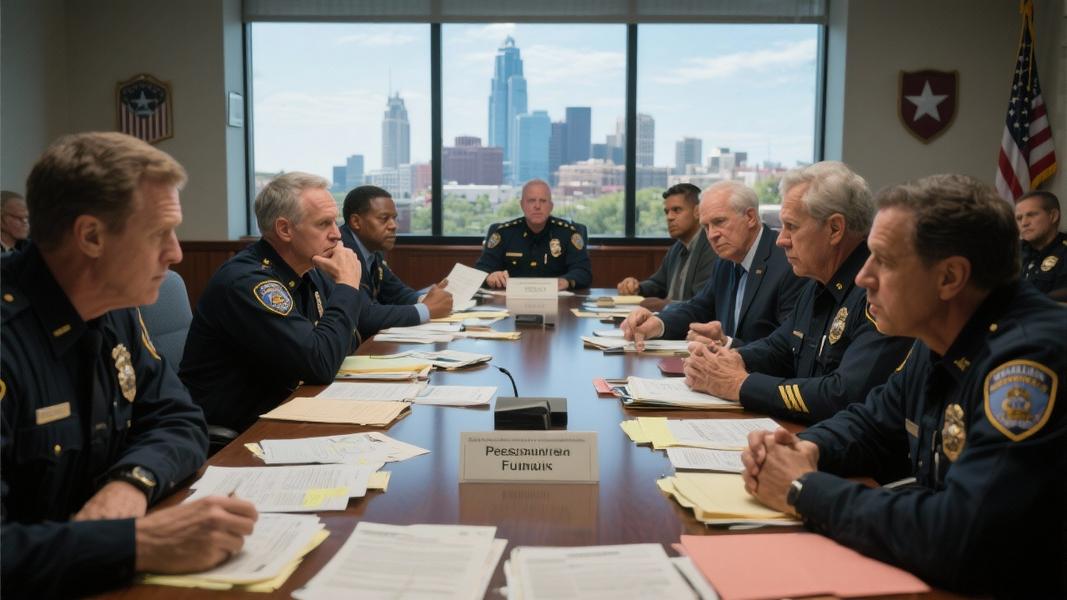
Dallas police officers and firefighters have suffered a significant blow in their pension battle as the city’s controversial $11 billion funding plan squeaked through with a razor-thin margin on Thursday, despite vocal opposition from first responders who claim the plan leaves them financially vulnerable.
The Dallas Police and Fire Pension System Board approved the 30-year funding proposal in a deeply divided 6-5 vote that fell strictly along appointment lines — all six of the mayor’s appointees voted in favor, while the five board members representing police officers and firefighters stood firmly against it. The split decision revealed the deep tensions surrounding a plan that will impact thousands of current and retired first responders.
“When I die under this plan, the pension will not be healthy, it won’t be 80 percent funded. That is what two actuaries have told us. But that is the way the city wants it, and the board ultimately voted today,” pension board chair Michael Taglienti stated after the contentious meeting.
A Crisis Years in the Making
The pension fund currently sits at just 34 percent funded — a precarious position that many first responders fear will only worsen. Under the newly approved city plan, financial experts project funding levels to actually drop to 30 percent within five years, raising serious questions about the plan’s long-term viability.
For Dallas’s first responders, the stakes couldn’t be higher. Retirees haven’t received a cost of living adjustment in eight years, meaning a dollar from 2017 is now worth just 70 cents in today’s economy. The board did adopt a plan on August 8 calling for a partial cost of living adjustment, but relief won’t begin until October 2025 — little comfort for those struggling now, according to information published on the pension system’s website.
Dallas Fire Association President Jeff Patterson made the personal stakes crystal clear. “I can speak firsthand as someone almost killed in a house fire years ago in 2014. I have skin in this game, literally, my family has skin in this game,” Patterson said. “It’s important the board sees the faces of not only active but the retirees.”
The situation has become even more contentious with allegations that the mayor’s appointees may not be fulfilling their fiduciary duties to pension members. State Representative Mitch Little expressed concerns about divided loyalties: “There are questions that remain about whether the mayor’s appointees occupy their duty to the system and not the City of Dallas.”
City Officials Defend the Plan
Is this truly an adequate solution to a $3.4 billion shortfall? The City of Dallas thinks so. Mayor Eric Johnson has vigorously defended the funding plan, portraying it as a long-overdue fix for a system that has been financially unstable for decades.
“Our public safety officers put their lives on the line for Dallas every day, and for the first time in decades, we are funding their pension responsibly so that it will provide what they were promised,” Johnson declared. “This plan ensures that today’s retirees are secure, that our current officers can look forward to a stable future, and that Dallas can continue attracting the best men and women to serve in our public safety departments.”
The City’s Ad Hoc Committee on Pensions maintains that the plan was developed after nearly a year of analysis and collaboration with experts. “Currently facing a $3.4 billion shortfall, we are ready for the DFPS to agree to our funding plan that lessens the sacrifices of our taxpayers and active-duty first responders,” the committee stated.
City officials have also pointed to significant salary increases for police and fire personnel as evidence of their commitment to public safety. These raises, they argue, not only improve compensation but also grow investment in the fund, according to information provided by the city.
First Responders Left Feeling Betrayed
But for many of Dallas’s first responders, these assurances ring hollow. They point to the fact that Dallas police officers and firefighters pay twice as much into their pension plan as most of their counterparts in the Metroplex, with the exception of Irving — a burden that Taglienti highlighted during discussions.
Retired Dallas police officer Dale Erves emphasized the moral obligation to protect those who protect the city. “We have to fight for those who can’t fight later,” Erves noted. “They go out every day and put their lives on the line.”
The Dallas Police and Fire Pension System, established by city ordinance in 1916, has provided defined benefit retirement, death, and disability benefits to the city’s first responders for over a century. It operates as an independently governed component unit of the City of Dallas, though the current controversy has raised questions about just how independent its governance truly is.
The narrow approval of the city’s plan doesn’t appear to be the end of this contentious battle. There are already indications that some board members plan to sue the mayor’s appointees for alleged breaches of fiduciary duty — ensuring that the fight over Dallas first responders’ financial future is far from over.
