
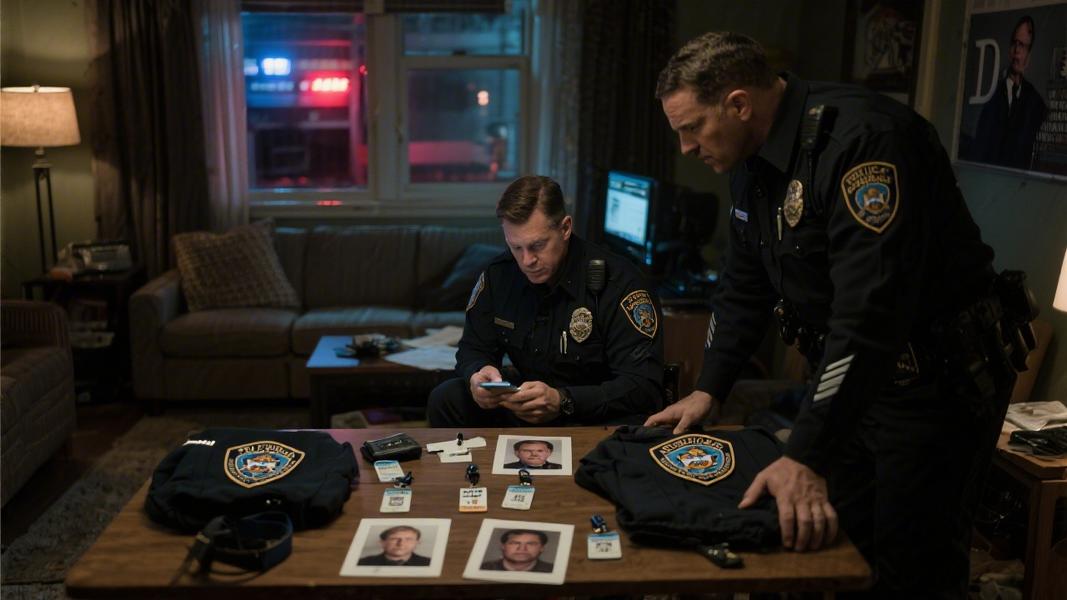
A police impersonator with a criminal record managed to infiltrate the security detail of a sitting U.S. congresswoman — and it took a fatal SWAT confrontation to expose the gap. Now, Dallas is scrambling to make sure it never happens again.
The Dallas Police Department is moving to tighten its off-duty work rules in the wake of a deeply unsettling case involving Diamon Robinson, a 39-year-old man who posed as a law enforcement officer and embedded himself in private security operations. Robinson, who also went by the name Mike King, had a criminal record. He was shot and killed by Dallas SWAT officers after drawing a weapon during an attempted arrest. The fallout has raised pointed questions about oversight, accountability, and just how easy it was for someone like Robinson to slip through the cracks.
Two Accounts, One Big Problem
Here’s where it gets complicated. Robinson didn’t just show up and bluff his way in — he had a functional presence on RollKall, the digital platform Dallas PD uses to manage off-duty job assignments. According to Allison Hudson, the DPD Media Relations Office Assistant Director, Robinson had exploited a structural loophole in the system. Explained Hudson: “He did have two accounts on the platform, one as an officer and one as an external organizer, that person that gets extra jobs and coordinates, and basically an external coordinator.” Two accounts. One platform. Zero red flags — until it was too late.
RollKall moved quickly to contain the reputational damage, issuing a statement insisting that no personal data had been compromised. “We want to be clear: the suspect’s use of the Rollkall platform did not result in a breach of user data. Personally identifiable information, including Social Security numbers and bank account details, stored within the Rollkall platform remains secure. At no point was this individual able to access the personal data of any other person on the platform,” the company stated. That’s reassuring, as far as it goes. But the deeper issue isn’t data theft — it’s the question of how Robinson was coordinating security work in the first place.
Audits, Safeguards, and a Tight Timeline
Dallas PD isn’t waiting around. Hudson confirmed the department is actively working with RollKall to close the gaps, with new safeguards expected within weeks. “We are going through, obviously, our checkpoints, our audits and things like that because there’s always room for improvement,” she noted. “And so we are working with RollKall very closely. Obviously, this platform was fully vetted. We believe in the program. And so moving forward, we are going to put additional safeguards in place that will be forthcoming in the next couple of weeks.” The phrase “fully vetted” will likely raise a few eyebrows given the circumstances — but the department’s willingness to acknowledge the need for improvement is at least a starting point.
The partnership between DPD and RollKall was itself designed to bring more structure to a historically murky corner of police work. Off-duty employment — officers moonlighting at private events, businesses, or for public figures — has long been a regulatory gray area in departments across the country. Dallas moved to formalize things by partnering with the Irving-based tech company to centralize scheduling, payments, and policy compliance. DPD Chief Eddie Garcia framed it as a transparency play: “The safety and well-being of our employees and the community we serve are paramount. Partnering with RollKall allows us to achieve greater oversight, transparency, and compliance in our off-duty program, ultimately helping to improve public safety and coverage across the city.” Ambitious goals. The Robinson case suggests the execution still needs work.
Hours, Rules, and the Fine Print
Still, it’s worth noting that Dallas has already been tightening the screws on off-duty work before this incident made headlines. The department now caps officers at 80 hours per week of off-duty employment — a significant reduction from the previous ceiling of 112 hours weekly, according to reporting on the department’s evolving policies. Officers are also limited to 16 hours per day. That’s still a lot of hours outside the badge, but the direction of travel is clearly toward more oversight, not less.
Dallas Police General Orders already require officers to obtain explicit permission from the Chief of Police before taking on any outside employment, and explicitly prohibit work that conflicts with their official duties. The rules exist. The question — always the harder one — is whether they’re being enforced consistently, and whether a platform like RollKall is equipped to catch bad actors operating under false pretenses.
That’s the catch. Technology can streamline a process, but it can’t replace human judgment — and it can’t vet what it doesn’t know to look for. Robinson exploited not just a software loophole, but the broader assumption that people operating within the system are who they say they are. In a world where a man with a criminal record can coordinate security for a member of Congress, that assumption deserves a hard second look.
