
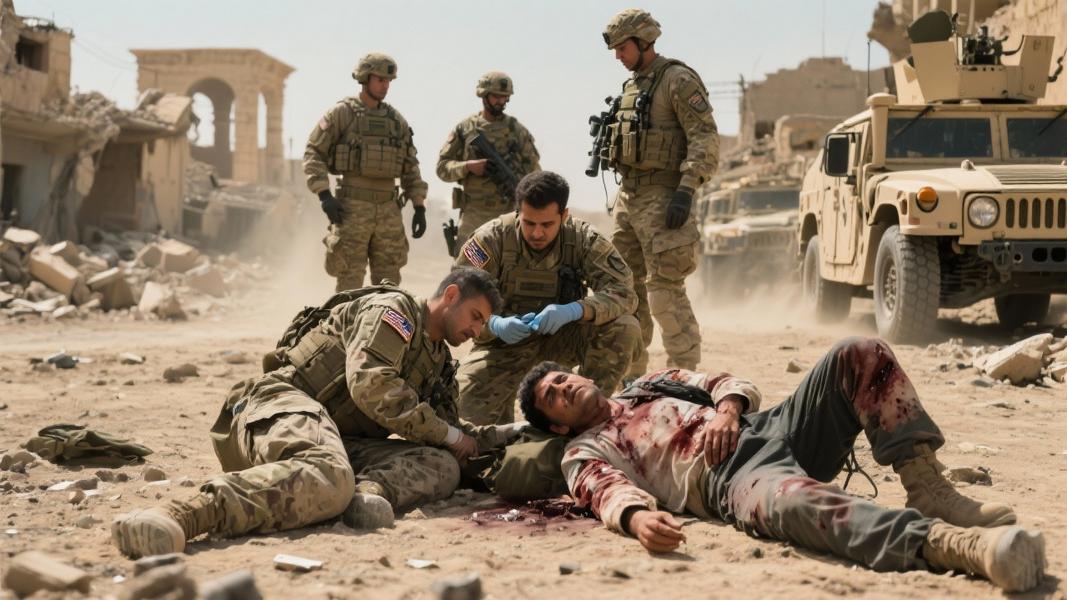
Two U.S. Army soldiers and a civilian interpreter were killed in an ambush attack in Syria on Thursday, marking one of the deadliest incidents for American forces in the region since their deployment to counter ISIS operations.
The Pentagon confirmed the attack occurred during a key leader engagement in Palmyra, Syria, an area outside the control of Syrian President Ahmed al-Sharaa. Three additional service members were wounded in what officials believe was an ISIS-orchestrated assault.
“Today in Palmyra, Syria, two United States Army soldiers and one civilian U.S. interpreter were killed, and three were wounded,” Chief Pentagon spokesperson Sean Parnell announced in a statement on X.
Partner Forces Eliminate Attacker
The lone gunman responsible for the attack was killed by partner forces, according to Defense Secretary Pete Hegseth, who issued a stern warning to potential adversaries.
“The savage who perpetrated this attack was killed by partner forces,” Hegseth stated. “Let it be known, if you target Americans — anywhere in the world — you will spend the rest of your brief, anxious life knowing the United States will hunt you, find you, and ruthlessly kill you.”
Military officials are withholding the identities of those killed until 24 hours after next-of-kin notifications have been completed. An investigation into the incident is already underway.
Evolving U.S. Presence in Syria
What exactly are American troops still doing in Syria? The U.S. first deployed forces to the region under the Obama administration as part of Operation Inherent Resolve, a multinational effort to defeat ISIS. Despite the terror group losing territorial control in 2019, American forces have maintained a presence to prevent any potential resurgence.
The U.S. military footprint in Syria has gradually decreased in recent months. As of June 2025, approximately 1,500 troops remain in the country — down from around 2,000 troops reported in April.
Of the eight bases originally established since 2014, three have been either closed or transferred to Syrian Democratic Forces, reflecting the shifting strategic priorities in the region.
Thursday’s deadly ambush highlights the persistent dangers facing American personnel, even as their mission has evolved from direct combat operations to advisory and training roles focused on preventing an ISIS comeback.
The attack comes at a sensitive time for U.S. involvement in the Middle East, where Washington continues to balance counterterrorism objectives against growing calls for troop withdrawals across multiple theaters.
For now, the families of those killed await official notification while military planners assess whether additional security measures are needed for the remaining U.S. forces operating in what remains one of the world’s most volatile regions.
