
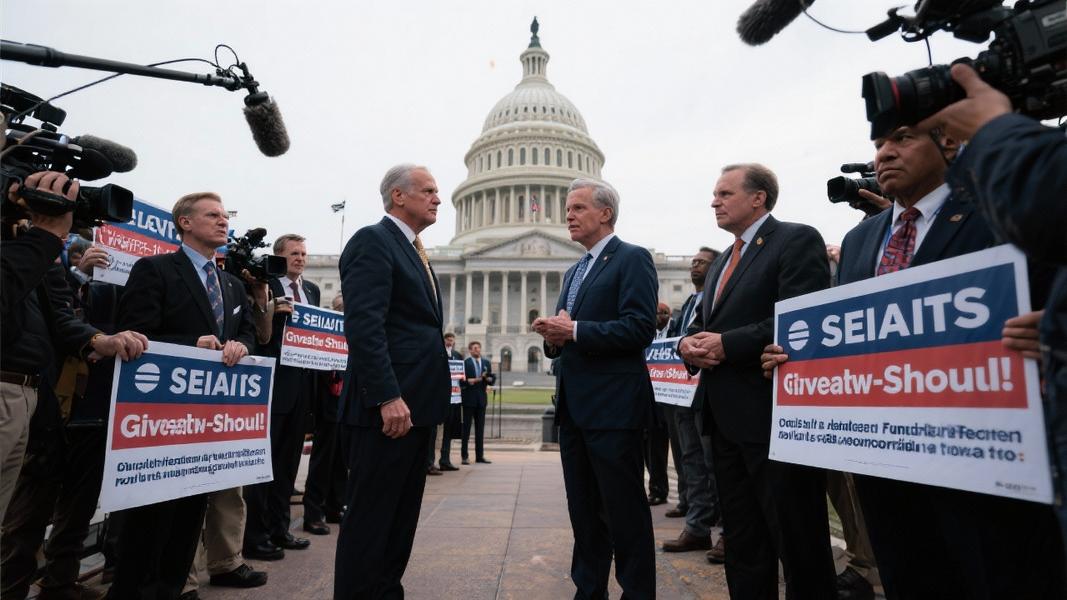
Democrats are playing a high-stakes game of chicken with government funding, pushing the country toward a potential shutdown as September 30 looms large on the calendar. The standoff centers on a Democratic wish list valued at roughly $1.5 trillion, with healthcare subsidies emerging as the primary battleground.
The partisan divide couldn’t be starker. Republicans have proposed what they call a “clean” seven-week continuing resolution that would keep government operations running through November 21, buying time for fuller budget negotiations. Democrats, however, are demanding a shorter four-week extension packed with additional provisions — most notably permanent extensions of health insurance subsidies and reversals to Medicaid cuts.
Shutdown Politics
Senate Democrats on Friday blocked the Republican funding plan, with Senate Minority Leader Chuck Schumer and his caucus digging in their heels. “Democrats have been clear and consistent in our position. We are ready to work toward a bipartisan spending agreement that improves the lives of American families and addresses the Republican healthcare crisis,” stated Schumer and House Democratic Leader Hakeem Jeffries in a joint statement.
But Republicans aren’t buying it. “Democrats are threatening to hold government funding hostage to score political points, ignoring the real-world consequences — barreling our country towards a government shutdown if Republicans don’t adhere to their roughly $1.5 trillion wish list,” the White House countered in an official statement.
The New York Times observed that Senate Democrats are playing a key role in pushing the country toward a shutdown by blocking the Republican plan and “demanding concessions on health care and other issues in exchange for their support.”
What’s really driving this Democratic brinkmanship?
According to multiple reports, frustration over inability to slow President Trump’s agenda is a major factor. Bloomberg notes that Democrats are “under increasing pressure to risk a shutdown” as they’ve been “unable to slow Trump’s agenda or even garner much media attention for their efforts.” This marks a shift from March, when Schumer allowed ten Democratic senators to cross the aisle and support a temporary spending bill.
Healthcare at the Center
The Economic Times reports that healthcare programs form the core of the Democrats’ shutdown strategy, specifically “reversing cuts to Medicaid and extending enhanced health insurance subsidies.” The Washington Examiner highlights that the Democratic counterproposal includes “Obamacare insurance credits, along with a Democratic wish list of other policies that are non-starters for the GOP.”
President Trump has expressed openness to meeting with Democratic leadership but remains skeptical about the impact of such discussions. “I’d love to meet with them, but I don’t think it’s going to have any impact,” he remarked, while assuring the public that essential payments like Social Security and military funding would continue even in the event of a shutdown.
Party Divisions and Risky Strategy
Not all Democrats are on board with the shutdown strategy. Pennsylvania Senator John Fetterman was the only Democrat to vote for the Republican funding bill in the House, revealing cracks in party unity. The Hill suggests that Democratic senators view a government shutdown as “necessary” to send a message to President Trump, refusing the Republican “clean” continuing resolution unless their demands are met.
That said, there’s growing concern about the Democrats’ endgame. CNN reveals that behind their united public front, some Democrats are “worried about the party’s exit strategy if Trump and the GOP refuse to cave.” The fear is that a shutdown “could wreak havoc across the country — only for Democrats to ultimately yield to Republicans with nothing in exchange.”
Politico describes Democrats as “flirting with a politically risky shutdown without a firm exit plan or even an idea of what victory might look like.” The pressure from their base to fight Trump is intense, but the strategy could backfire if public sentiment turns against them.
As the September 30 deadline approaches, both sides are digging in. Democratic leaders insist that “Republicans will bear responsibility for another painful government shutdown because of the refusal of GOP congressional leadership to even talk with Democrats.” But with only days remaining and neither side showing signs of compromise, American government workers and citizens who depend on federal services are left wondering who will blink first — and at what cost.
