
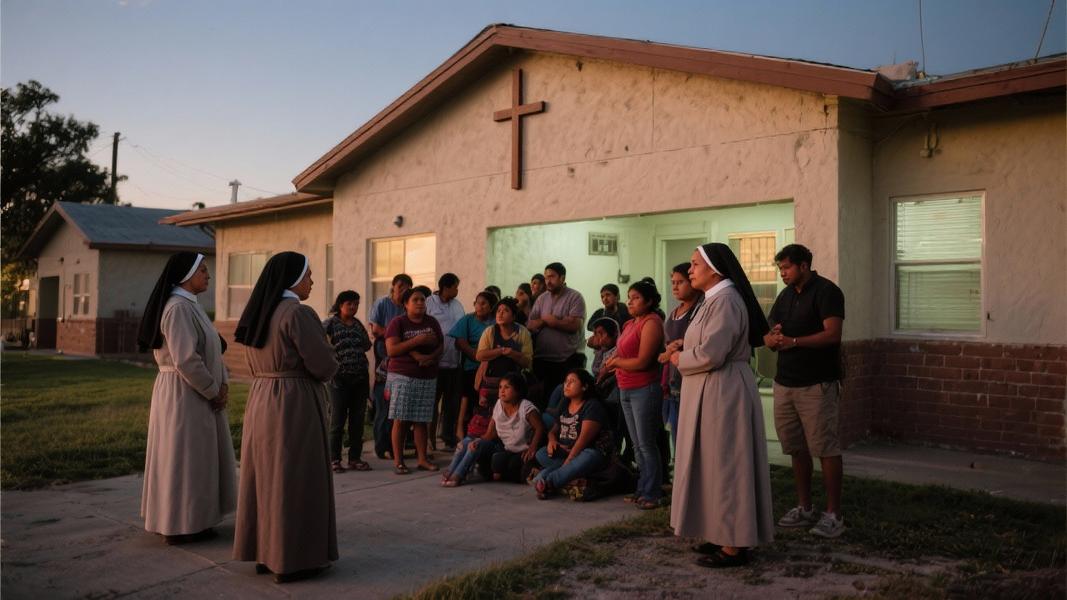
The Department of Homeland Security has suspended Catholic Charities of the Rio Grande Valley (CCRGV) from receiving federal funding and is seeking to ban the organization from such support for six years, following an investigation that uncovered grant violations and what officials describe as “pervasive problems” across multiple programs.
The Texas-based nonprofit, which has been at the forefront of providing humanitarian services to migrants along the U.S.-Mexico border, now has 30 days to respond to the proposed debarment, according to documents obtained by Fox News. During this suspension period, CCRGV cannot receive any new federal awards.
Billing Irregularities Cited
At the heart of the investigation are allegations that CCRGV improperly billed the government for services. FEMA investigators identified at least 248 instances where the charity charged for services provided outside the 45-day window that federal rules allow for migrants released by Customs and Border Protection, as reported by Religion News Service.
Perhaps more damaging, FEMA concluded that CCRGV provided assurances that its data and spreadsheets were accurate when those assurances were “false” or “not entirely truthful.” These allegations suggest systematic issues rather than isolated mistakes.
The organization, led by Sister Norma Pimentel, has become well-known for its humanitarian work with migrants. In response to the suspension, CCRGV confirmed it was “temporarily suspended” from federal funding eligibility and stated it would work with DHS to resolve the matter.
“All funding provided by DHS was used to care for individuals who were brought to CCRGV by U.S. Customs and Border Protection (CBP),” the organization said in its public statement, seemingly contradicting some of the government’s findings about improper billing.
Sister Norma Defends Organization’s Work
Sister Norma Pimentel, the executive director who has received widespread recognition for her work with migrants, defended the organization’s mission. “Those on the front lines of our humanitarian outreach know the work we do truly helps to restore human dignity,” she stated, adding, “I take very seriously every single dollar entrusted to us.”
What happens next? The charity now faces an uphill battle to defend its practices as it responds to the proposed six-year debarment. Meanwhile, the suspension creates immediate challenges for an organization that has been a critical part of the humanitarian response to migrants arriving at the southern border.
In its November 28 statement addressing the suspension, CCRGV concluded with a biblical reference that underscores its mission: “For I was hungry and you gave me food, I was thirsty and you gave me drink, a stranger and you welcomed me.” Matthew 25:35.
The case highlights the complex intersection of government oversight, nonprofit operations, and the ongoing humanitarian challenges at the U.S.-Mexico border. Should the six-year debarment proceed, it would represent a significant blow to one of the region’s most prominent faith-based humanitarian organizations.
