
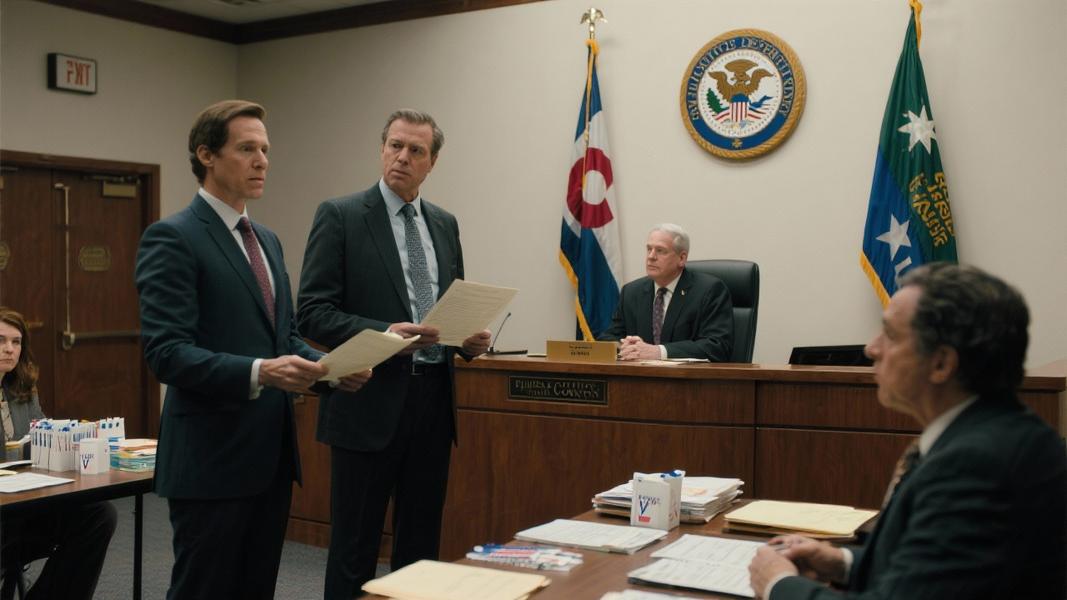
The Justice Department has dramatically escalated its battle with states over voter registration lists, filing lawsuits against Colorado, Hawaii, Massachusetts, Nevada and Georgia’s Fulton County for refusing to hand over sensitive voter data, including Social Security numbers and driver’s license information.
The legal actions, announced on December 12, bring the total number of DOJ lawsuits on this issue to 18 nationwide, as the department under the Trump administration pushes for unprecedented access to detailed voter information. Assistant Attorney General Harmeet K. Dhillon of the Justice Department’s Civil Rights Division made the department’s position clear: “States have the statutory duty to preserve and protect their constituents from vote dilution,” she said in the announcement. “At this Department of Justice, we will not permit states to jeopardize the integrity and effectiveness of elections by refusing to abide by our federal elections laws. If states will not fulfill their duty to protect the integrity of the ballot, we will.”
A Sweeping National Campaign
The DOJ’s campaign is far broader than these lawsuits suggest. The department has demanded voter registration lists from at least 40 states since May, according to multiple reports. The Brennan Center for Justice has been tracking these requests, confirming the widespread nature of the DOJ’s initiative.
What’s particularly striking about the lawsuits? They seek access to highly sensitive personal information. In its complaint against Colorado, for example, the department explicitly requested driver’s license numbers and partial Social Security numbers for every registered voter in the state, as noted by Colorado Public Radio.
The department claims authority under multiple federal statutes, including the National Voter Registration Act (NVRA), the Help America Vote Act (HAVA), and the Civil Rights Act of 1960, which it says empowers the Attorney General to demand production and inspection of statewide voter registration lists.
Bipartisan Resistance
Interestingly, opposition to these demands isn’t falling along typical partisan lines. Even Republican-led states have pushed back against sharing unredacted voter information, as Democracy Docket reports. The resistance appears to stem more from concerns about voter privacy and data security than partisan politics.
Why are states so reluctant to comply? Many election officials express serious concerns about sharing sensitive personal data that could potentially expose voters to identity theft or other privacy violations. Some have questioned whether the DOJ’s reliance on Civil Rights-era precedents from 1962 properly applies to modern digital voter databases containing personally identifiable information.
The DOJ under Dhillon has been aggressive in framing the issue as one of election integrity and vote dilution, suggesting the department is focused on identifying potential ineligible voters on state rolls. Critics, however, worry about the unprecedented scope of the data collection and its potential uses.
As the legal battles unfold across multiple jurisdictions, the ultimate question may be whether federal courts will side with the Justice Department’s expansive interpretation of its authority or with states arguing to protect their voters’ sensitive personal information. With 18 lawsuits now active and potentially more to come, the outcome could significantly reshape the relationship between federal and state authorities in managing voter rolls.
