
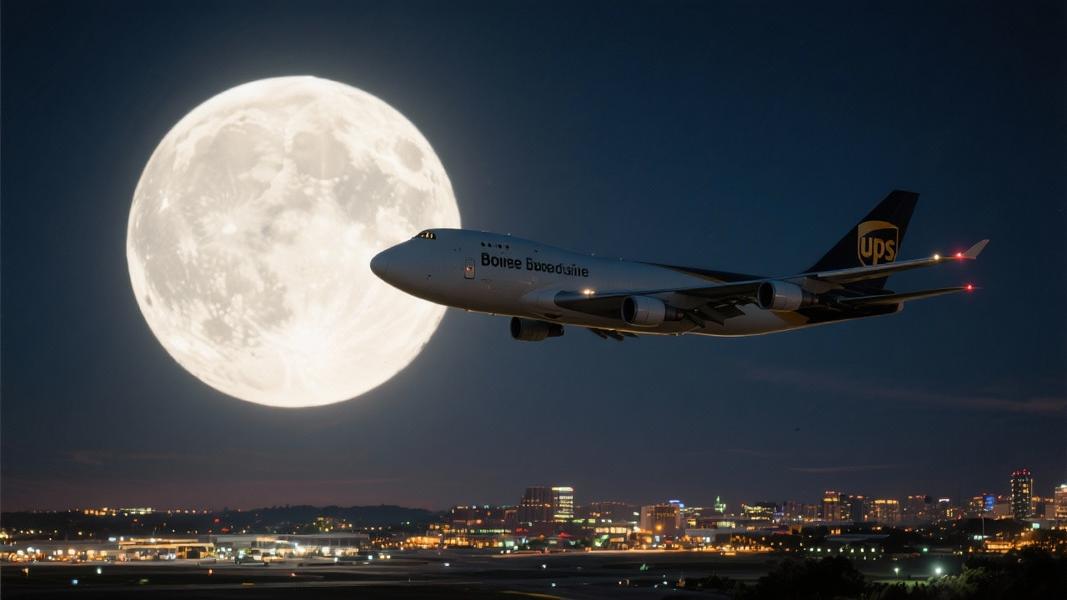
The night sky will offer a spectacular finale to 2025’s celestial events as the year’s last supermoon lights up on December 4, appearing significantly larger and brighter than an average full moon due to its unusually close approach to Earth.
This December supermoon will reach its full phase at precisely 6:14 p.m. EST, according to astronomers, marking the conclusion of a trio of consecutive supermoons that have graced our skies this year. What makes this celestial event particularly special? It will be the closest full moon to Earth in 2025, coming within just 221,965 miles of our planet at its nearest point — a proximity that explains its enhanced visual impact.
The Science Behind the Spectacle
“When a full moon is closer to Earth in its orbit, a so-called supermoon happens. It makes the moon look up to 14% bigger and 30% brighter than the faintest moon of the year,” explains NASA. It’s this dramatic difference in appearance that has made supermoons increasingly popular viewing events for both amateur and professional stargazers alike.
The term “supermoon” isn’t actually an official astronomical classification. Rather, it’s commonly used to describe full moons that occur within at least 90 percent of perigee — the closest point in the Moon’s orbit to Earth — as noted by NASA’s own definition. These celestial events typically cluster together, happening three to four times annually in consecutive months.
Ever wonder why the Moon sometimes looks different in the night sky? The explanation lies in its elliptical orbit. “Because the Moon’s orbit is not perfectly circular, its distance from Earth and its speed in orbit both change slightly throughout the month,” states NASA’s Moon science page. This orbital eccentricity creates the conditions for supermoons when a full moon phase aligns with the Moon’s closest approach to Earth.
Viewing Opportunities
December’s supermoon will be particularly impressive as it orbits closer to Earth than other typical full moons this year, reaching that minimum distance of 221,965 miles, reports local astronomical observers. This proximity is what will create the enhanced visual experience for viewers across the globe.
Weather permitting, observers won’t need any special equipment to enjoy the spectacle — though binoculars or a small telescope can reveal lunar features in striking detail. The best viewing time will be shortly after moonrise, when the Moon appears near the horizon and creates an optical illusion making it seem even larger.
For those who miss this final supermoon of 2025, there’s a considerable wait ahead. The next supermoon won’t grace our skies until well into 2026 — making this December’s display all the more worth catching, if only to marvel at our celestial companion in its most impressive form.
