
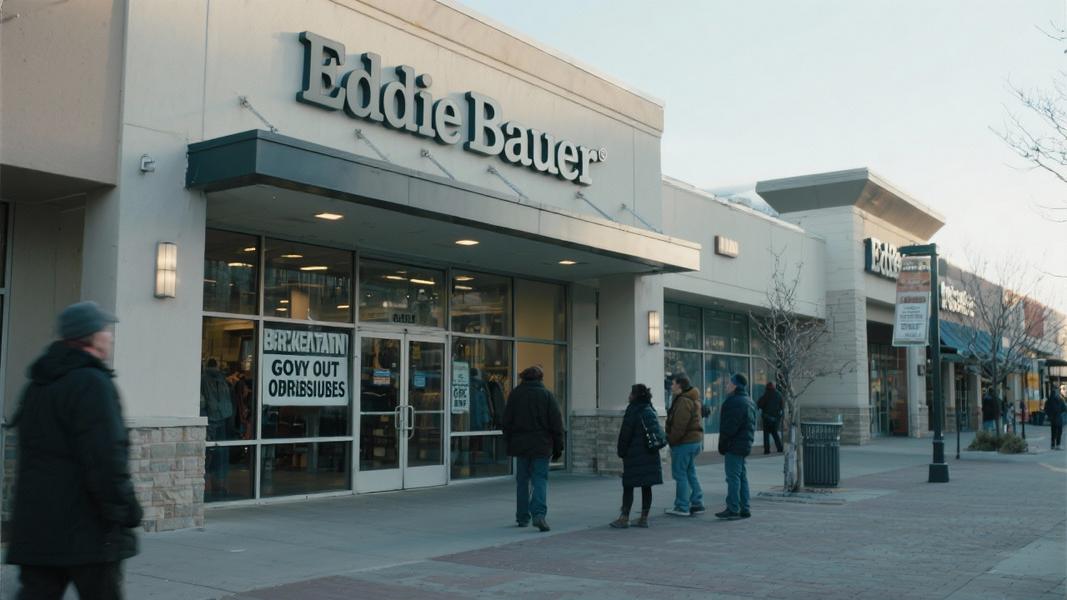
Eddie Bauer, the century-old outdoor retailer known for its flannel shirts and down jackets, appears to be heading for a dramatic downsizing as its North American operator prepares to file for bankruptcy protection.
Catalyst Brands, which licenses Eddie Bauer locations throughout the U.S. and Canada, is reportedly preparing a Chapter 11 bankruptcy filing that could result in the closure of all approximately 180 stores across North America, according to multiple industry sources.
The potential shuttering would mark a significant contraction for the 106-year-old brand, which has been a fixture in American shopping malls and outdoor gear markets for generations. Some reports suggest the closure count could affect more than 200 locations, though the exact number remains in flux as bankruptcy plans develop.
Retail Footprint Shrinking
What’s behind the sudden contraction? Eddie Bauer has faced increasing competition from both specialty outdoor retailers and fast-fashion brands that have cut into its market share. The company has weathered previous financial storms but appears unable to sustain its current brick-and-mortar footprint.
“Eddie Bauer is preparing to file for Chapter 11 bankruptcy, with sources claiming that the retailer would be closing down an estimated 200 locations across North America,” industry publication WWD noted in a January report that has since been corroborated by other retail analysts.
Interestingly, the bankruptcy won’t affect Eddie Bauer stores in Japan, which operate under different ownership and licensing agreements. The North American restructuring appears to be specifically tied to Catalyst Brands’ operations.
A Legacy Brand at Crossroads
Founded in 1920 by its namesake Seattle-based outdoorsman, Eddie Bauer built its reputation on quality outdoor gear and apparel. The company has changed hands multiple times over the decades, including previous bankruptcy restructurings.
This latest financial maneuver comes at a challenging time for mid-tier retailers across America. Department stores and mall-based chains have been struggling with changing consumer habits, online competition, and the lingering effects of pandemic-era disruptions to shopping patterns.
For loyal customers with gift cards or store credit, the news raises immediate questions about redemption periods and final sales. Bankruptcy proceedings typically establish deadlines for redeeming such credits, though specific details won’t be available until formal filings occur.
While the physical stores may disappear from North American shopping centers, the Eddie Bauer brand itself will likely continue in some form. The company’s intellectual property and online presence could survive even as its retail footprint shrinks.
The outdoor apparel landscape Eddie Bauer once dominated has transformed dramatically, with competitors like Patagonia, The North Face, and REI capturing significant market share. Even as the brand faces this existential challenge to its retail presence, its century-long legacy in American outdoor culture remains indelibly marked in the history of retail.
