
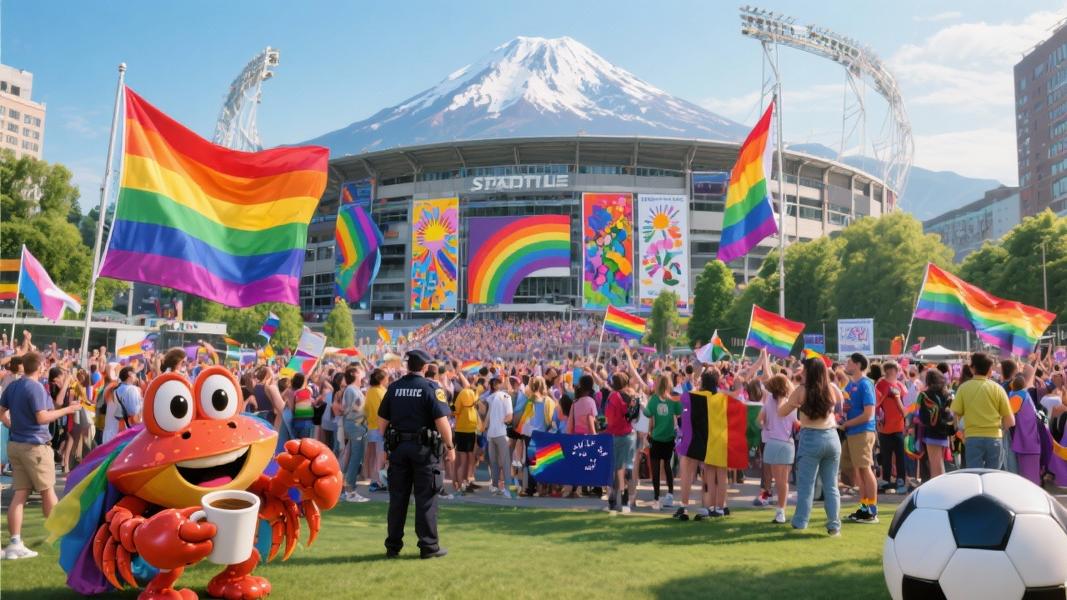
Egypt and Iran have formally objected to a World Cup match scheduled during Seattle’s Pride festivities, setting up a clash between conservative Middle Eastern values and the host city’s celebration of LGBTQ+ inclusion.
The dispute centers on a game set for June 26 in Seattle during the 2026 World Cup, which coincides with the city’s long-established Pride celebrations. Egypt’s soccer federation, led by Ado Rida, submitted an official complaint to FIFA, stating it “completely rejects such activities, which directly contradict the cultural, religious and social values in the region, especially in Arab and Islamic societies.”
Iranian officials have taken a similar stance. The country’s Football Federation President Mehdi Taj confirmed Iran would file its own complaint, calling the Pride match an “unreasonable and illogical move that essentially signals support for a particular group, and we must definitely address this point.”
Cultural Collision on the World Stage
The controversy highlights the complex cultural terrain FIFA must navigate when bringing together nations with dramatically different social values. Iran maintains some of the world’s harshest anti-LGBTQ+ laws, including potential death penalties, while Egypt routinely prosecutes LGBTQ+ individuals under various morality laws despite not technically criminalizing homosexuality.
“For years, Egyptian police have targeted gays and lesbians, sparking warnings even from the app Grindr in the past,” human rights observers have noted. “Though Egypt technically does not outlaw homosexuality, authorities frequently prosecute members of the LGBTQ+ community on the grounds of ‘debauchery,’ or ‘violating public decency.'”
Seattle, meanwhile, has embraced the opportunity to showcase its inclusive values. “With matches on Juneteenth and pride, we get to show the world that in Seattle, everyone is welcome,” the city’s Mayor-elect Kate Wilson wrote on social media. “What an incredible honor!”
Who Controls the Celebration?
A key point in this developing situation: FIFA’s authority extends only to stadiums and official fan zones, not to community events like Seattle PrideFest, which has been independently organized since 2007. The June 26 game was designated to celebrate LGBTQIA+ communities before the World Cup draw even took place.
Seattle’s organizing committee has shown no signs of backing down. “The Pacific Northwest is home to one of the nation’s largest Iranian-American communities, a thriving Egyptian diaspora and rich communities representing all nations we’re hosting in Seattle,” spokesperson Hana Tadesse stated. “We’re committed to ensuring all residents and visitors experience the warmth, respect and dignity that defines our region.”
Sound familiar? This isn’t FIFA’s first encounter with such tensions. At the 2022 World Cup in Qatar, the organization found itself caught between European teams wanting to display rainbow symbols and the host nation’s conservative stance. FIFA ultimately defended Qatar’s cultural norms.
Iran’s position on LGBTQ+ issues has long been severe. Hard-line former President Mahmoud Ahmadinejad once famously claimed during a 2007 visit to the United States: “We don’t have homosexuals like in your country” — a statement that prompted laughter and heckling from a Columbia University audience.
What happens next? FIFA has yet to comment on the brewing controversy, leaving questions about how the organization will balance respect for participating nations’ cultural sensitivities against the inclusive values promoted by host cities like Seattle.
As the 2026 World Cup approaches, this dispute underscores a persistent challenge for international sporting events: creating a truly global celebration while navigating the profound social and cultural divides that continue to shape our world.
