
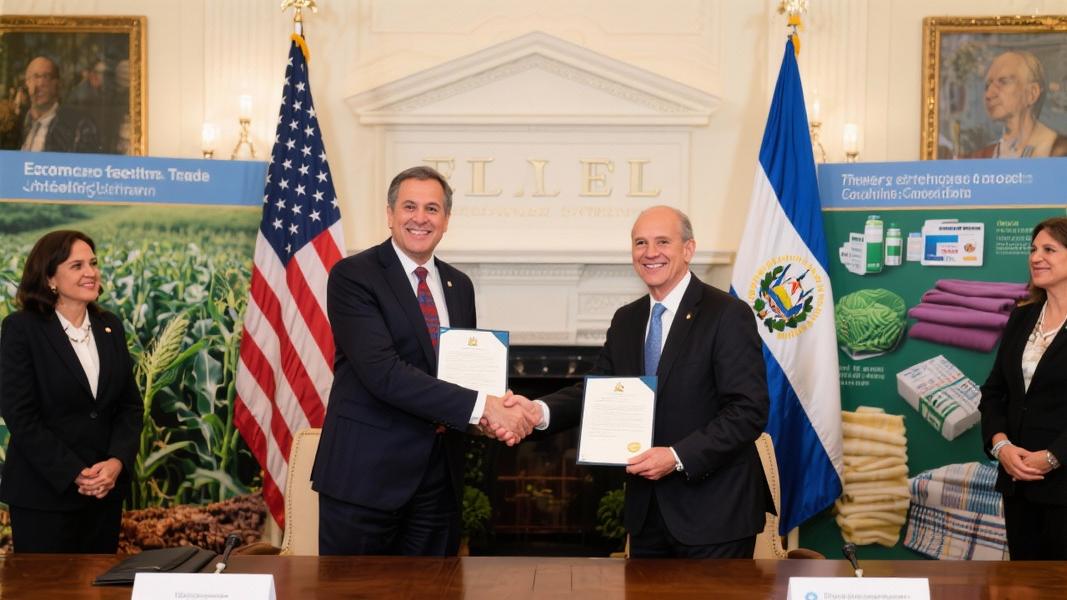
El Salvador and the United States have struck a sweeping new trade agreement aimed at dismantling barriers and strengthening economic ties between the two nations, marking a significant shift in bilateral relations that could reshape Central American commerce.
The deal, announced this week, commits El Salvador to addressing a wide range of non-tariff barriers affecting priority trade areas, including streamlining regulatory requirements for pharmaceutical products and medical devices, removing import restrictions on remanufactured goods, and accepting U.S. auto standards, according to officials familiar with the agreement.
Breaking Down Trade Barriers
For American exporters, the agreement promises substantial relief from bureaucratic hurdles. El Salvador has pledged to expedite product registration requirements, remove apostille requirements, and streamline certificate of free sale processes — even accepting electronic certificates, a move long sought by U.S. businesses operating in the region.
“This represents a significant step forward in our trading relationship,” said a senior U.S. trade official who requested anonymity because they weren’t authorized to speak publicly. “The removal of these administrative barriers could substantially increase the flow of goods between our countries.”
Agricultural trade also stands to benefit considerably. El Salvador has committed to addressing and preventing barriers to U.S. agricultural products, including accepting regulatory certificates issued by U.S. authorities. The country has also agreed not to restrict market access based on the use of certain cheese and meat terms, while advancing with international intellectual property treaties with transparency and fairness, trade experts noted.
Labor and Environmental Protections
But what about worker rights? The agreement doesn’t just focus on streamlining trade — it also reinforces El Salvador’s commitment to protecting internationally recognized labor rights. Notably, the Central American nation will prohibit the importation of goods produced by forced or compulsory labor, aligning with international standards.
On the environmental front, El Salvador has pledged to adopt and maintain high levels of environmental protection and effectively enforce its environmental laws. The country has also committed to improving forest sector governance, combating illegal logging, strengthening enforcement of fisheries measures, and fighting illegal wildlife trade and mining. Additionally, El Salvador will work toward accepting the World Trade Organization Agreement on Fisheries Subsidies, according to documents reviewed by our team.
U.S. Offers Tariff Relief
In return for these commitments, the United States has agreed to remove reciprocal tariffs on certain Salvadoran exports. This relief will apply to qualifying exports that cannot be grown, mined, or naturally produced in sufficient quantities within the United States, as well as specific products like textiles and apparel originating under the Central America-Dominican Republic Free Trade Agreement (CAFTA-DR), trade officials confirmed.
This tariff relief comes at a critical time for El Salvador’s economy. The United States accounts for a whopping 36% of El Salvador’s total exports in 2024, with textiles representing 31% of total exports in 2023 and 68% of exports to the U.S. Other key export categories include electrical and electronic equipment, plastics, coffee, and sugar, according to economic data.
The textile sector, however, has faced challenges recently, with exports already falling by 10% in 2024 amid a U.S. economic slowdown. This new agreement could provide much-needed relief to this crucial sector of El Salvador’s economy.
Beyond Trade: Security Cooperation
The agreement extends beyond purely commercial interests to address security concerns as well. Both countries have committed to strengthening economic and national security cooperation to enhance supply chain resilience and innovation. They will work together to address non-market policies of other countries, combat duty evasion, and cooperate on government procurement, investment security, and export controls, according to joint statements.
This security focus was recently reinforced during an October 2024 visit by Troy Miller, Acting Commissioner of U.S. Customs and Border Protection. During the visit, officials signed a Customs Mutual Assistance Agreement aimed at improving border security and facilitating trade through information exchange on customs violations. Another key development was the signing of a Passenger Information Sharing Agreement between U.S. Customs and Border Protection and the Salvadoran Directorate General of Immigration, security experts revealed.
The timing of these agreements signals a potential warming of relations between Washington and San Salvador after periods of tension during President Nayib Bukele’s administration. For U.S. businesses eyeing Central American markets and Salvadoran exporters struggling with economic headwinds, this comprehensive trade pact might just be the jolt of confidence both economies need.
