
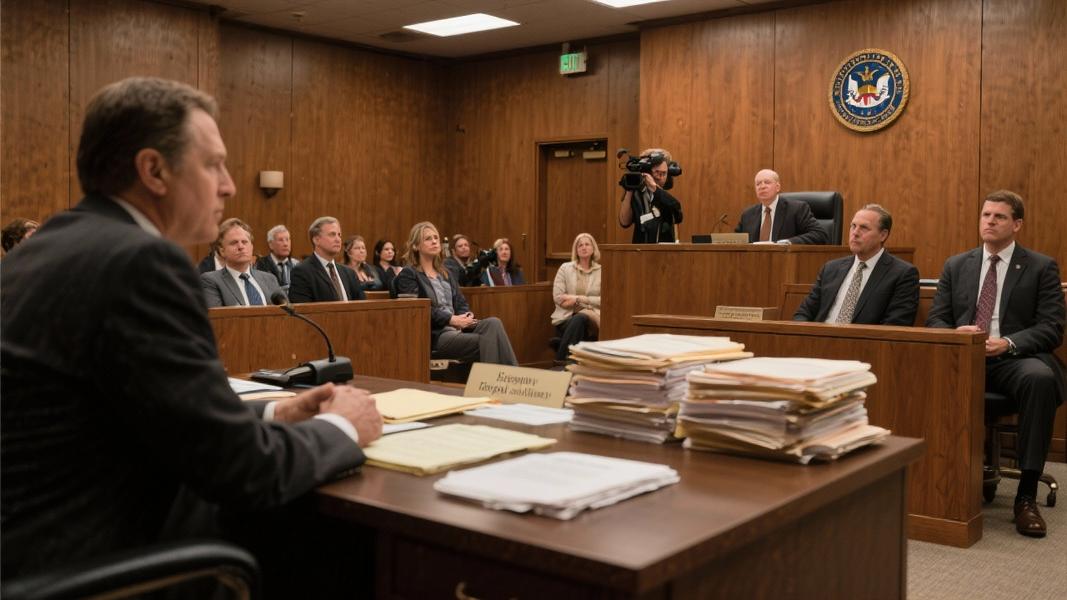
A federal judge has ordered the release of grand jury transcripts from the abandoned 2006-2007 investigation into Jeffrey Epstein, providing unprecedented insight into how the notorious sex trafficker initially escaped serious federal prosecution despite evidence he assaulted girls as young as 14.
U.S. District Judge Rodney Smith ruled Friday that a newly passed federal law — the Epstein Files Transparency Act — overrides traditional grand jury secrecy rules, compelling disclosure of materials that have remained sealed for nearly two decades. “U.S. District Judge Rodney Smith said a recently passed federal law ordering the release of records related to the cases overrode a federal rule prohibiting the release of matters before a grand jury,” according to a report from the Associated Press.
The transcripts paint a damning picture of what prosecutors knew in 2005 — that Epstein, then in his 40s, had systematically abused teenage girls at his Palm Beach mansion. “The details in the record will be outrageous to decent people,” wrote one judge reviewing the materials. “The testimony taken by the Grand Jury concerns activity ranging from grossly unacceptable to rape — all of the conduct at issue is sexually deviant, disgusting, and criminal,” court documents revealed.
A Sweetheart Deal That Shocked the Nation
Despite this evidence, Epstein ultimately secured what many consider one of the most lenient plea deals in modern American judicial history. In 2008, he pleaded guilty to relatively minor state charges of soliciting prostitution from someone under 18. The deal allowed him to serve most of his 18-month sentence in a work release program that let him spend his days in his office rather than behind bars.
The architect of that agreement? Alex Acosta, then the U.S. attorney in Miami, who later became President Trump’s Labor Secretary. When the details of this arrangement surfaced in 2018, public outrage was swift, eventually forcing Acosta’s resignation from Trump’s cabinet.
How could such serious allegations result in such minimal punishment? That question has haunted victims and justice advocates for years. The newly ordered release may finally provide answers.
From Local Police Work to Federal Investigation
The investigation began in 2005 when Palm Beach police interviewed teenage girls who reported being hired to give Epstein “massages” that quickly turned sexual. The FBI joined the investigation, and federal prosecutors prepared an indictment in 2007 — but it was never filed.
Instead, Epstein’s high-powered legal team “attacked the credibility of his accusers publicly while secretly negotiating a plea bargain that would let him avoid serious jail time,” court documents indicate.
The transcripts show the grand jury heard testimony that Epstein had not only assaulted these girls but created a recruitment system, “paying them cash or rented cars if they found him more girls” — effectively building a pyramid scheme of sexual abuse with himself at the top.
Justice Delayed, But Not Entirely Denied
Epstein’s legal troubles didn’t end with the 2008 plea deal. In 2019, federal prosecutors in New York — operating independently from their Florida counterparts — brought sex trafficking charges against him that mirrored many of the same allegations from the earlier investigation.
Epstein never stood trial for these charges. He died by suicide in his Manhattan jail cell while awaiting trial, a development that sparked numerous conspiracy theories and denied victims their day in court.
Still, authorities pursued his alleged accomplices. In July 2020, Acting U.S. Attorney Audrey Strauss announced charges against Ghislaine Maxwell, Epstein’s confidant and ex-girlfriend. Maxwell was ultimately convicted and sentenced in 2022 to 20 years in prison for her role in the sexual exploitation of multiple minor girls.
The Epstein Files Transparency Act
The release of these transcripts comes as a direct result of the Epstein Files Transparency Act, signed by President Trump in November. The law compels the Justice Department, FBI and federal prosecutors to release their materials related to Epstein investigations by December 19th.
There are some limitations. The Justice Department can withhold files that might jeopardize active federal investigations or those classified as pertaining to national defense or foreign policy — a provision that has raised eyebrows given longstanding rumors about Epstein’s connections to powerful figures around the world.
Judge Smith, who ordered the Florida transcripts released, is himself a Trump nominee, confirmed by the Senate in 2019 with a 78-18 vote. Before his federal appointment, he served on the Eleventh Circuit Court of Florida from 2012 to 2019.
The Justice Department has made similar requests to unseal grand jury records from two other Epstein-related cases: the 2019 New York federal sex trafficking case against Epstein himself and Ghislaine Maxwell’s 2021 case. Those requests remain pending, with decisions expected in the coming weeks.
For Epstein’s victims, many of whom have waited nearly two decades for full transparency, the release of these transcripts represents a bittersweet victory — revealing what authorities knew, when they knew it, and raising uncomfortable questions about why justice took so long to arrive.
