
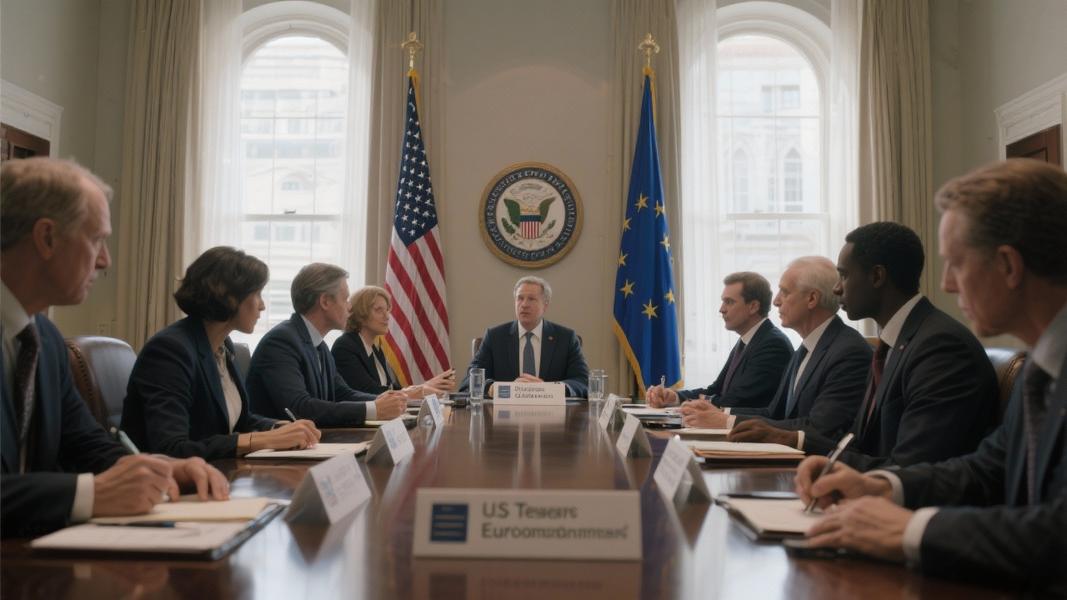
U.S. and EU financial regulators met in Washington last week for their latest high-level dialogue, focusing on digital innovation and operational resilience as transatlantic regulatory coordination intensifies amid shifting market conditions.
The EU-U.S. Joint Financial Regulatory Forum, held December 9-10, brought together representatives from the European Commission and the U.S. Department of the Treasury, who co-chaired the event, alongside major financial regulatory bodies from both sides of the Atlantic. The two-day meeting covered six primary topics, including banking regulation modernization and capital markets revitalization.
Building Financial Bridges
This wasn’t just another bureaucratic gathering. Participants emphasized that consistent communication on regulatory issues is crucial for supporting economic growth and maintaining financial stability. The ongoing dialogue aims to ensure investor protection while maintaining market integrity and a level playing field between the two economic powerhouses, Treasury officials noted in their post-meeting statement.
Why does this matter? Because when the world’s two largest economic blocs coordinate their financial regulations, it creates ripple effects throughout the global financial system. The discussions in Washington represent the latest chapter in what has become a sustained institutionalized dialogue between EU and U.S. regulators, with multiple meetings occurring each year.
Digital financial innovation stood front and center at the talks. As both regions grapple with the implications of emerging technologies in finance, from blockchain to AI-powered trading systems, officials have made operational resilience a central theme in their transatlantic regulatory conversations, according to Treasury documents.
Settlement Cycles in Focus
One particularly noteworthy topic was settlement-cycle reforms. The U.S. Securities and Exchange Commission provided updates following America’s migration to T+1 (trade date plus one day), while EU representatives shared progress on their own efforts to shorten settlement cycles. This technical-sounding shift has real implications for market liquidity and risk management across borders.
“The exchange of views on settlement-cycle reforms highlights the practical nature of these discussions,” said one participant who requested anonymity because they weren’t authorized to speak publicly. “It’s not just about high-level principles, but about coordinating specific market infrastructure changes that affect billions in daily transactions.”
Other agenda items included updates on the Foreign Account Tax Compliance Act (FATCA), U.S. priorities for its upcoming G20 presidency, and the strengthening of the European Savings and Investments Union — a key initiative in the EU’s broader capital markets strategy.
These forums rarely make headlines, but they represent the unglamorous yet essential work of aligning regulatory frameworks that underpin trillions in cross-border financial flows. As one seasoned observer put it: “The financial plumbing isn’t sexy until it breaks.”
With the next forum likely scheduled for mid-2026, the transatlantic regulatory dialogue continues its quiet but consequential work — shaping how money moves in an increasingly interconnected global economy.
