
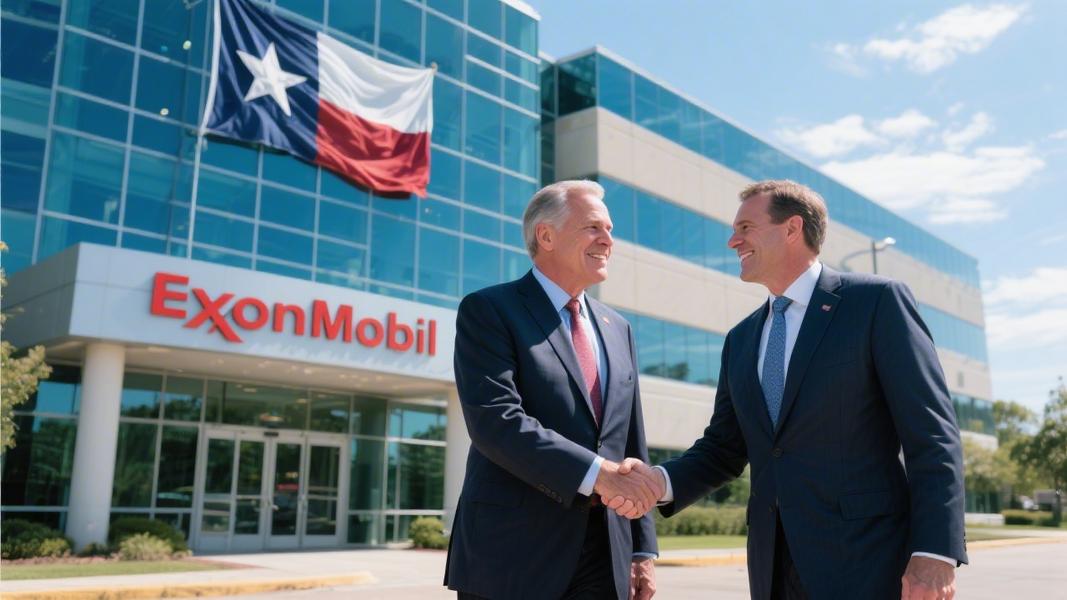
ExxonMobil is coming home — at least on paper. The oil giant announced plans to shift its legal domicile from New Jersey to Texas, formalizing a relationship with the Lone Star State that has been decades in the making.
The move, which still requires shareholder approval, would align ExxonMobil’s legal address with its operational reality. The company has been headquartered in Texas since 1989, and today the state hosts its executive leadership, major research facilities, and the overwhelming bulk of its workforce. It’s less a relocation than a recognition — a long-overdue update to the letterhead, if you will.
A Legal Formality With Real Symbolism
ExxonMobil’s board of directors unanimously recommended shareholders back the change, framing it as a straightforward alignment of legal and operational identity. CEO and Chairman Darren Woods didn’t mince words about what’s driving the decision. “Over the past several years, Texas has made a noticeable effort to embrace the business community,” he said. “In doing so, it has created a policy and regulatory environment that can allow the company to maximize shareholder value. Aligning our legal home with our operating home, in a state that understands our business and has a stake in the company’s success, is important.”
That’s a pointed message — and one that New Jersey, however quietly, is on the receiving end of. Texas, by contrast, appears to be lapping it up.
Abbott Seizes the Moment
Governor Greg Abbott issued a statement that read less like a press release and more like a campaign ad. “Freed from the stranglehold of over-regulation, Texas is where global brand leaders thrive and jobs for hardworking Texans grow,” Abbott declared, adding that the decision would help Texas “further dominate the corporate landscape.” The governor has made attracting major corporations a signature of his tenure, and ExxonMobil’s announcement hands him a marquee win — one he clearly wasn’t going to let pass quietly.
Still, it’s worth asking: what actually changes here? In practical terms, not much. ExxonMobil has been confirmed that the redomiciling will have no effect on day-to-day operations, its workforce, management structure, corporate strategy, or assets. Shareholder rights, the company says, will remain largely comparable — or in some respects stronger — under Texas law.
The Numbers Tell the Story
Look at the footprint and the decision makes obvious sense. Texas already accounts for 30 percent of ExxonMobil’s global workforce and a striking 75 percent of its U.S. employees, according to the company’s own filings. Corporate functions, research and development, and the top brass are all there. New Jersey, meanwhile, has largely been a legal placeholder — a vestige of an earlier corporate era that no longer reflects where ExxonMobil actually lives and breathes.
Shareholders will have the final say. The proposal is set to come before investors at ExxonMobil’s 2026 Annual Meeting, following a preliminary proxy statement filed with the SEC. Given the board’s unanimous backing and the largely cosmetic nature of the change, a close vote seems unlikely. But until the ballots are counted, nothing is official.
Bigger Than One Company
There’s a broader narrative here that goes well beyond ExxonMobil’s corporate paperwork. Texas has spent years positioning itself as the destination for companies chafing under what they see as regulatory overreach in legacy business states. Whether or not one agrees with that framing, the results are hard to argue with — major employers keep arriving, and governors like Abbott keep holding press conferences.
For ExxonMobil, the redomiciling is a tidy piece of housekeeping. For Texas, it’s a trophy. And for the states watching from the sidelines — well, that’s the kind of thing that tends to start a conversation in a statehouse.
As Woods put it, Texas has “a stake in the company’s success.” After this move, that’s not just rhetoric — it’s on the record.
