
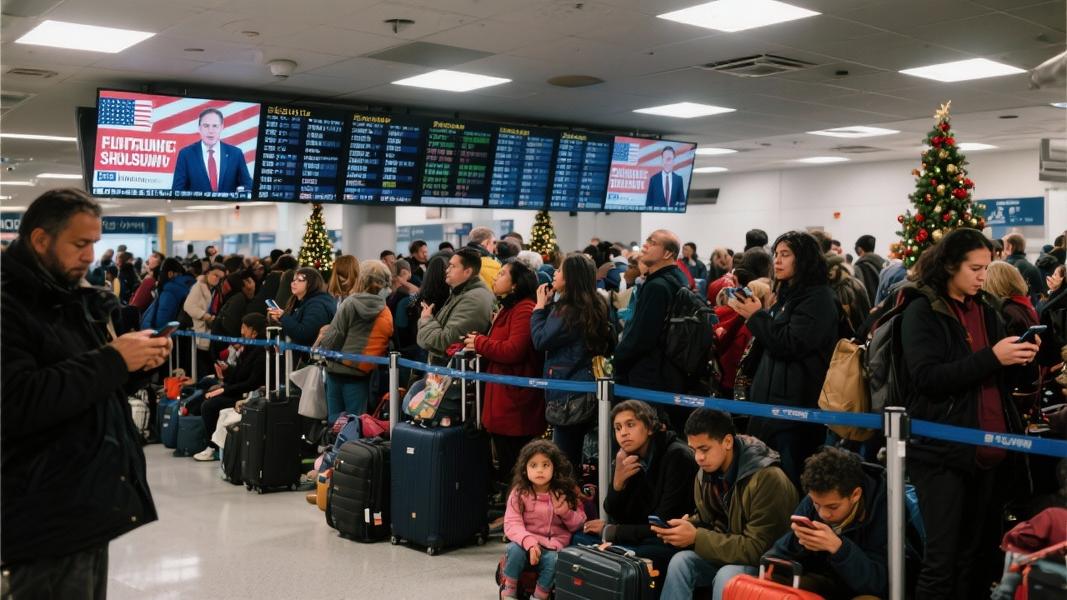
The U.S. aviation system is bracing for significant disruption as the Federal Aviation Administration announces a 4% reduction in flights at 40 major airports starting today, with plans to increase cuts to 10% by November 14 if the government shutdown persists.
The cutbacks come as the shutdown enters its 36th day, leaving air traffic controllers working without pay since October 28 and creating staffing shortages that threaten the safety and efficiency of America’s airspace. Transportation Secretary Sean Duffy painted a stark picture of what could happen if the impasse continues: “You will see mass chaos. You will see mass flight delays. You’ll see mass cancellations, and you may see us close certain parts of the airspace because we just cannot manage it because we don’t have air traffic controllers,” he warned.
Controller Crisis Deepens
The impact is already being felt across the country. With over 400 staffing shortages and 98 staffing trigger alerts in the first month of the shutdown, the system is showing signs of strain. In a single day, 2,800 flights were delayed and more than 100 canceled as the FAA’s airspace flow program struggled to manage the growing congestion, according to government data.
The busiest airports are bearing the brunt of these reductions, including major hubs in New York, Los Angeles, Chicago, Atlanta, and Washington DC. International routes remain exempt for now, but domestic travelers are already feeling the squeeze.
“Our controllers haven’t been paid in a month,” Duffy acknowledged, highlighting the financial strain forcing some controllers to seek alternative employment. “Many are taking side jobs to put food on the table. I don’t want them to take side jobs—I want them to show up for work—but I understand they’re trying to meet their obligations.”
The situation has prompted the FAA to take the extraordinary step of proactively reducing flight capacity by 10% starting Friday morning across 40 “high-volume” markets to maintain safety standards and ease pressure on the remaining controllers. This decision wasn’t made lightly—it represents what some officials privately describe as an admission of defeat in maintaining normal operations during the shutdown.
Airlines Unite in Urgent Appeal
How bad is it getting? Major carriers including American Airlines, Delta, Southwest, and United have formed a rare united front, jointly urging Congress to pass a clean continuing resolution immediately to end the shutdown. In a statement through Airlines for America, they emphasized: “At this time of record air travel and increased reliance on cargo shipments, stability and predictability for U.S. aviation are more important than ever… We urge elected leaders to act with an appropriate sense of urgency to solve this problem and immediately reopen the federal government.”
The timing couldn’t be worse, with the holiday travel season approaching and millions of Americans planning trips. The cutbacks will affect thousands of flights nationwide, potentially disrupting Thanksgiving travel plans for countless families.
Travelers across the country are expressing growing frustration. “I’m more than a little concerned,” said one passenger at Las Vegas Harry Reid International Airport, while another at Hartsfield–Jackson Atlanta International Airport simply stated, “I am so frustrated.” A traveler at Detroit Metropolitan Wayne County Airport voiced what many are feeling: “I’m a little worried because I’m supposed to fly to see my mom on Thanksgiving and I don’t see this ending,” they told reporters.
Political Standoff Continues
The standoff in Washington continues to intensify, with both sides digging in. Republicans blame Democrats for refusing to approve a clean continuing resolution, while Democrats point to other factors in the complex budget negotiations. Meanwhile, air traffic in the United States will be reduced by 4% at 40 airports starting today due to the system overload caused by controller absences, with reductions steadily rising to reach 10% by November 14, according to government and air traffic officials.
The FAA’s announcement on Wednesday that it would begin reducing traffic across high-volume markets starting this morning confirms what aviation experts have feared: the shutdown has pushed the air traffic system to a breaking point.
As travelers brace for what could be weeks of disruption, the message from airlines, controllers, and passengers alike is clear: resolve the shutdown before the nation’s aviation system suffers damage that could take months to repair. For now, those with upcoming travel plans would be wise to check with their airlines regularly and prepare for potential delays and cancellations—unwelcome companions for the holiday season ahead.
