
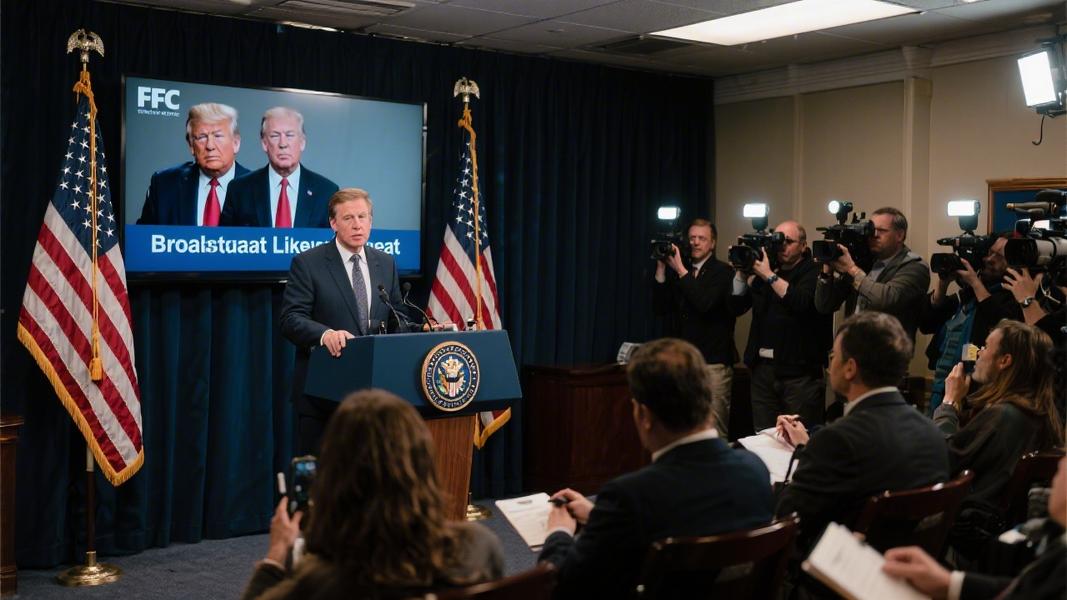
The Federal Communications Commission is wading into dangerous territory — and the chairman seems to know it, or at least doesn’t care.
FCC Chair Brendan Carr issued a stark warning this week to broadcast networks, threatening to revoke station licenses over what he described as “hoaxes and news distortions” — remarks that landed squarely in the middle of an already heated dispute over media coverage of the U.S.-Israeli military campaign against Iran. The threat drew immediate scrutiny from First Amendment advocates, media law experts, and anyone who’s paid attention to how this kind of pressure tends to play out historically.
The trigger, at least in part, was reporting on U.S. tanker aircraft stationed in Saudi Arabia. President Trump pushed back hard on headlines he said falsely claimed five American tankers had been destroyed. “Four of the five had virtually no damage, and are already back in service,” Trump wrote, adding: “None were destroyed, or close to that, as the Fake News said in headlines.”
Carr amplified the sentiment, and then some. “Broadcasters that are running hoaxes and news distortions — also known as the fake news — have a chance now to correct course before their license renewals come up,” he posted on social media. “The law is clear. Broadcasters must operate in the public interest, and they will lose their licenses if they do not.”
The Legal Reality Is More Complicated
That’s the catch. The FCC does hold real licensing power — but it’s narrower than Carr’s rhetoric suggests. The agency issues eight-year licenses to individual broadcast stations, not to the networks themselves. So while the FCC could theoretically go after a CBS-owned local affiliate, it has no direct handle on CBS News as an entity. And that’s before you get to the First Amendment, which has long constrained the government’s ability to police editorial content on the airwaves. The agency’s own history reflects those limits.
Still, the threat isn’t toothless, either. License renewal proceedings are slow, expensive, and disruptive — even when they fail. The mere suggestion of federal scrutiny can have a chilling effect on newsrooms, and critics have noted that’s precisely the point.
A Deregulator Who Wants to Regulate
Here’s where it gets genuinely strange. At the same time Carr is threatening to use the FCC’s public interest authority as a cudgel against coverage he dislikes, he’s also championing a sweeping deregulation initiative aimed at stripping away what he calls outdated broadcast rules. The agenda includes updates to AM station modification procedures, revised definitions for authorized stations, and a consolidation of license renewal denial processes — with votes scheduled around March 26.
“We’re moving forward with an agenda that puts American consumers first — improving service, protecting public dollars and modernizing the rules that stand in the way of progress,” Carr wrote in a recent blog post. It’s a message that plays well in industry circles. But it sits awkwardly alongside threats to pull licenses over editorial decisions — a form of content regulation that goes well beyond anything the modern FCC has attempted.
Echoes of the Fairness Doctrine
Observers haven’t missed the irony. Carr has drawn criticism for his comments about specific programming — including remarks directed at Jimmy Kimmel’s show on ABC — with some media law scholars drawing uncomfortable parallels to the old Fairness Doctrine, the now-defunct FCC policy that required broadcasters to present contrasting views on controversial issues. The Reagan FCC famously abolished it in 1987, arguing it actually chilled free speech rather than protecting it. That Carr, an avowed deregulator, might be edging toward something similar is not lost on his critics.
How far does this actually go? That’s the question hovering over all of it. Carr’s statements, so far, remain statements. No licenses have been pulled. No formal proceedings have been opened. But in a media environment already rattled by political pressure and economic precarity, the line between a warning shot and a genuine threat can blur fast.
The FCC chair says broadcasters have a chance to “correct course.” What that course looks like — and who gets to define it — remains, pointedly, unanswered.
