
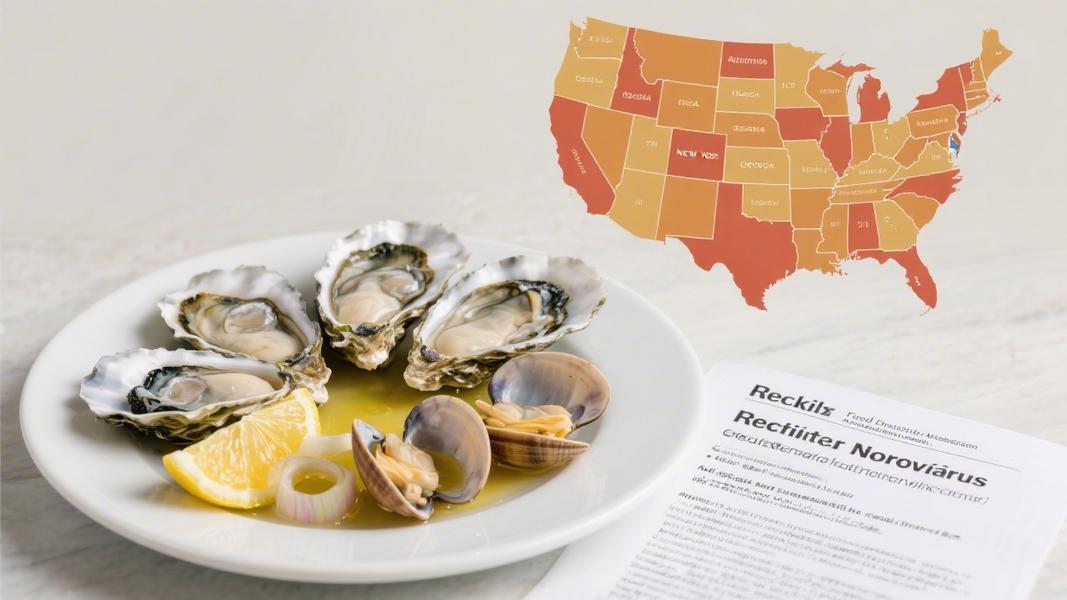
The FDA is telling Americans to put down their oysters — and this time, it means it. A norovirus scare tied to shellfish harvested along the Washington coast has triggered a multi-state alert affecting restaurants, retailers, and consumers across nine states.
The U.S. Food and Drug Administration is advising restaurants, retailers, and consumers not to serve, sell, or eat certain raw oysters harvested by Drayton Harbor Oyster Company (WA-1723-SS) and Manila clams harvested by the Lummi Indian Business Council (WA-0098-SS). The affected products were harvested between February 13 and March 3, 2026, from Drayton Harbor in Washington state, and the concern is potential norovirus contamination — a pathogen that doesn’t announce itself on the plate.
How the Warning Unfolded
It started with sick people. On March 4, 2026, the Washington Department of Health notified the FDA of a norovirus-like illness outbreak directly linked to raw oyster consumption. That notification set off a chain of federal advisories that quickly spread beyond the Pacific Northwest.
The products, it turns out, had already traveled far. Distributors in Arizona, California, Florida, Georgia, Illinois, Nevada, New York, Oregon, and Washington received shipments from both harvesters, according to the FDA. That’s a coast-to-coast footprint for what began as a localized harvest operation in a single Washington harbor.
The Invisible Risk on Your Plate
Here’s what makes norovirus particularly unsettling: you can’t taste it, smell it, or see it. The FDA has been blunt on that point, warning that “food containing norovirus may look, smell, and taste normal but can cause serious illness if consumed.” That’s the catch with shellfish contamination — there’s no obvious red flag sitting on the half shell.
The agency’s formal statement didn’t mince words either: “The FDA is issuing this alert advising restaurants and food retailers not to serve or sell and consumers not to eat certain raw oysters harvested by Drayton Harbor Oyster Company, and Manila clams harvested by Lummi Indian Business Council.” The directive is unambiguous. If you’ve got these products, don’t eat them.
What Consumers and Businesses Should Do
Still, knowing there’s a recall and knowing whether your oysters are part of it are two different things. Restaurants and retailers are being urged to pull any product from Drayton Harbor Oyster Company or the Lummi Indian Business Council that falls within the February 13 – March 3 harvest window. Consumers who may have purchased these shellfish — whether from a seafood counter, a restaurant, or an online retailer — are advised not to eat them and to discard them immediately.
Norovirus symptoms typically include nausea, vomiting, diarrhea, and stomach cramping, and they can hit fast — sometimes within 12 to 48 hours of exposure. For most healthy adults, it’s miserable but manageable. For the elderly, young children, or immunocompromised individuals, it can be considerably more serious.
The Reach Extends Beyond U.S. Borders
Internationally, food safety authorities took note as well. Hong Kong’s Centre for Food Safety issued its own notice acknowledging the U.S. recall, though officials there said no local sale or import of the affected products to Hong Kong had been identified. A small detail, but it speaks to how seriously regulators worldwide are tracking this one.
Food Safety News noted the breadth of the advisory shortly after it was issued, underscoring the wide distribution chain that had already moved these products into markets far removed from Drayton Harbor’s cold Pacific waters.
A Familiar Problem With No Easy Fix
Shellfish safety is a perennial challenge for regulators. Oysters and clams are filter feeders — they pull water through their bodies to eat, which means they also concentrate whatever happens to be in that water, including pathogens like norovirus. It’s not a flaw in the harvesting process so much as a fundamental biological reality of eating raw bivalves. That doesn’t make it any less dangerous, of course.
That said, Drayton Harbor has not historically been a chronic trouble spot, and the precise source of the contamination is still being investigated. The outbreak that triggered this alert serves as a reminder that the gap between a beautiful Pacific Northwest harvest and a public health emergency can be very, very small — and that the oyster on your plate carries a little more risk than it looks.
