
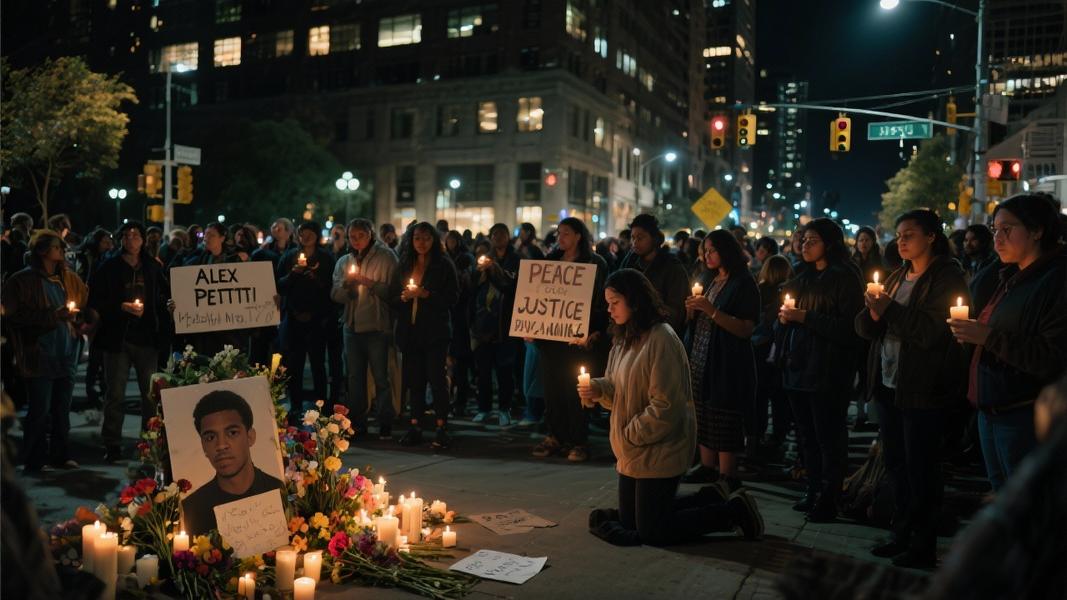
A federal judge has ordered the U.S. government to preserve all evidence related to the fatal shooting of a Minneapolis ICU nurse by a Border Patrol agent, as conflicting accounts of the incident continue to emerge.
Alex Jeffrey Pretti, 37, who worked at the Minneapolis VA hospital, was killed during what officials described as a “targeted” immigration enforcement operation. The U.S. District Court’s temporary restraining order comes amid sharply contradictory claims about whether Pretti was holding a gun or merely a cellphone when he was shot.
Conflicting Narratives Emerge
Homeland Security Secretary Kristi Noem has defended the Border Patrol’s actions, claiming that Pretti “approached U.S. Border Patrol officers while they were conducting ‘targeted’ immigration enforcement operations, with a 9mm semiautomatic handgun.” This assertion has been echoed by Border Patrol Commander Gregory Bovino, who stated that “the suspect put himself in that situation” and that “the victims are the Border Patrol agents present.”
But video evidence appears to tell a different story. Multiple recordings from the scene indicate that Pretti was holding a cellphone, not a weapon. “The man did not approach the agents with a gun. He approached them with a camera,” according to witnesses at the scene who have disputed the official account.
Commander Bovino has doubled down on the agency’s position. “First and foremost is that Alex Preti approached Border Patrol agents with the nine millimeter semi-auto handgun,” he said during a press conference. “The suspect decided to inject himself into a law enforcement action.”
Pattern of Incidents
What makes this case particularly troubling? This is the second deadly incident involving federal immigration agents in Minneapolis this month alone. The shooting comes less than a month after the death of Renee Good in a separate incident just two miles away, raising questions about federal immigration enforcement tactics in the city.
Community activists have gathered at the scene of Pretti’s shooting, demanding accountability and transparency from federal authorities. Many have expressed skepticism about the official narrative, pointing to the video evidence that appears to contradict claims about Pretti being armed.
“We’re seeing a pattern here,” said one community organizer who asked not to be named. “Federal agents operating with impunity in our neighborhoods, and then conflicting stories about what happened.”
The court’s restraining order ensures that all evidence—including body camera footage, if it exists—will be preserved as investigations continue. It remains unclear whether the agents involved have been placed on administrative leave, which is standard procedure in officer-involved shootings.
For now, a community mourns as two narratives compete: was Pretti an armed threat who “injected himself” into a law enforcement operation, or a citizen with a cellphone who became another casualty in America’s increasingly militarized immigration enforcement landscape?
