
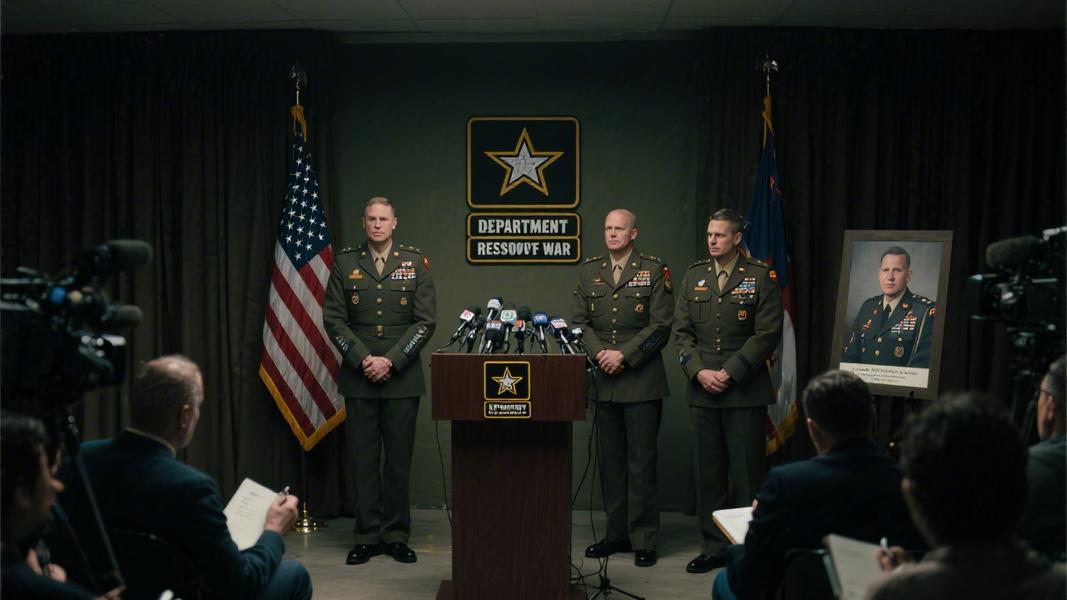
Four U.S. Army Reserve soldiers are dead. It happened over a weekend, in Kuwait, and now the Pentagon is confirming what many feared was coming — America’s first combat fatalities in the war with Iran.
The Department of War officially identified one of the fallen on March 4, 2026: Maj. Jeffrey R. O’Brien, 45, of Indianola, Iowa. He was killed on March 1, 2026, in Port Shuaiba, Kuwait, during an unmanned aircraft system attack — a drone strike — while supporting Operation Epic Fury. He was 45 years old. He had a hometown. He had a unit. And now he has a release number.
A Soldier From Iowa, a War That Just Got Real
O’Brien was assigned to the 103rd Sustainment Command out of Des Moines, Iowa, according to the official casualty announcement. Sustainment units keep armies moving — fuel, supplies, logistics. They’re not typically the ones making headlines. That changed this weekend.
The Pentagon confirmed that O’Brien was among four Army Reserve soldiers killed in the drone attack, marking the first U.S. deaths since hostilities with Iran escalated into what is now formally a named conflict. The incident remains under investigation, though officials have not disputed the basic facts: an unmanned aerial system struck a position in Kuwait, and Americans died.
The First, But the Question Is Whether They’ll Be the Last
How does a war announce itself? Sometimes it’s a headline. Sometimes it’s four names on a Pentagon release, dropped on a Tuesday. This one came both ways.
The attack at Port Shuaiba — a port city on Kuwait’s coast — signals something significant about the nature of this conflict. Drone warfare doesn’t respect the traditional distinction between front lines and support positions. Logistics soldiers, maintenance crews, the people who make operations run — they’re all targets now. That’s not a new development globally, but it’s a stark one for U.S. forces in this theater.
Still, the full picture of what happened that Saturday is incomplete. Investigators are still piecing together the specifics of the attack — the origin of the drone, the exact sequence of events, what, if anything, could have been done differently. Those answers may take weeks. The grief, though, that’s already arrived in Iowa.
A Name Behind the Numbers
It’s easy, in the churn of breaking news, to let a casualty announcement blur into abstraction. Maj. O’Brien was a 45-year-old man from a small Iowa city of roughly 15,000 people. He served in a reserve command that doesn’t often make the news. He was, in every way, the kind of soldier whose sacrifice tends to get noted briefly and then overtaken by the next development in a fast-moving conflict.
He deserves more than that. They all do.
The Pentagon has confirmed the names of all four soldiers killed — a moment that, in past conflicts, has often served as the quiet turning point where the public begins to reckon with what a war actually costs. Whether that reckoning happens this time remains to be seen.
Operation Epic Fury now has its first American dead. The question no one in Washington seems eager to answer out loud is just how many more names will follow.
