
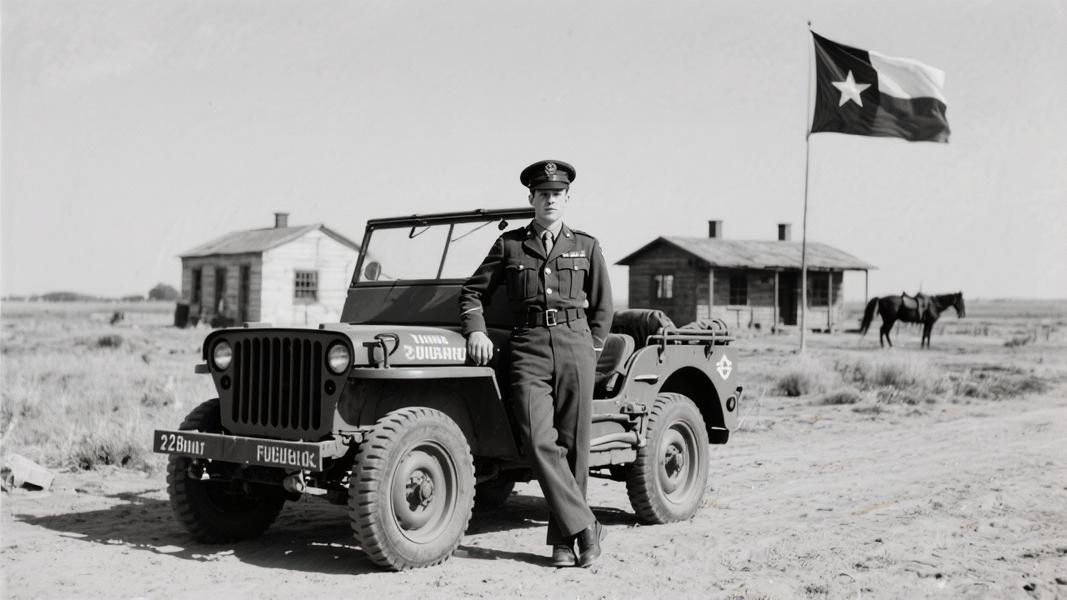
When Ben Fuelberg joined the Texas National Guard in 1934, he wasn’t chasing glory or adventure — he was after the paycheck. Just 17 years old and raised on a Washington County cotton farm during the Great Depression, Fuelberg made a practical choice that would ultimately lead him into one of history’s defining conflicts.
“The National Guard paid for meetings and we had four paid meetings a month, and a summer camp of 15 days,” Fuelberg later recalled. “Of course the pay wasn’t very high, but a dollar was worth a lot more in 1934 than it is now.”
From Weekend Warrior to Wartime Service
Fuelberg’s unit — Troop E, 124th Cavalry in Brenham, Texas — was called to active duty in November 1940, initially for a one-year commitment. Like thousands of other National Guard members across America, he found himself suddenly thrust into full-time military service as war clouds gathered over Europe and the Pacific.
What began as a temporary assignment quickly became something much more consequential. “Of course we were called to active duty for one year, which the Congress had extended the call for six months,” he explained years later. “And then Pearl Harbor happened and of course it was obvious we wasn’t gonna get out of the service for some time.”
That fateful December morning in 1941 transformed Fuelberg’s military obligation from a limited deployment into a multi-year commitment that would span the entirety of America’s involvement in World War II.
Military records confirm Fuelberg officially enlisted from Brenham, Texas in 1940, though he had already been serving in the Guard for six years by that point. His transition from part-time National Guardsman to full-time soldier mirrored the nation’s own rapid shift from peacetime to wartime footing.
A Long Way from Washington County
How does a cotton farmer’s son from rural Texas rise to significant military rank during global conflict? For Fuelberg, the journey from private to lieutenant colonel represented both personal achievement and the U.S. military’s desperate need for leadership during the war’s escalation.
Fuelberg would eventually attain the rank of Lieutenant Colonel in the U.S. Army, according to cemetery records. The farm boy from Washington County who joined the Guard for extra income ended up serving his country through its most demanding global conflict.
Born in December 1916, Fuelberg lived a remarkably long life after his wartime service, passing away in 2010 — nearly seven decades after his National Guard unit was activated for what was supposed to be just one year of service.
His story represents countless Americans whose lives were permanently altered by World War II — ordinary citizens who answered when duty called, often starting from the humblest beginnings. For Fuelberg, what began as a practical decision to earn extra money during the Depression became a defining chapter in a life that spanned nearly a century of American history.
