
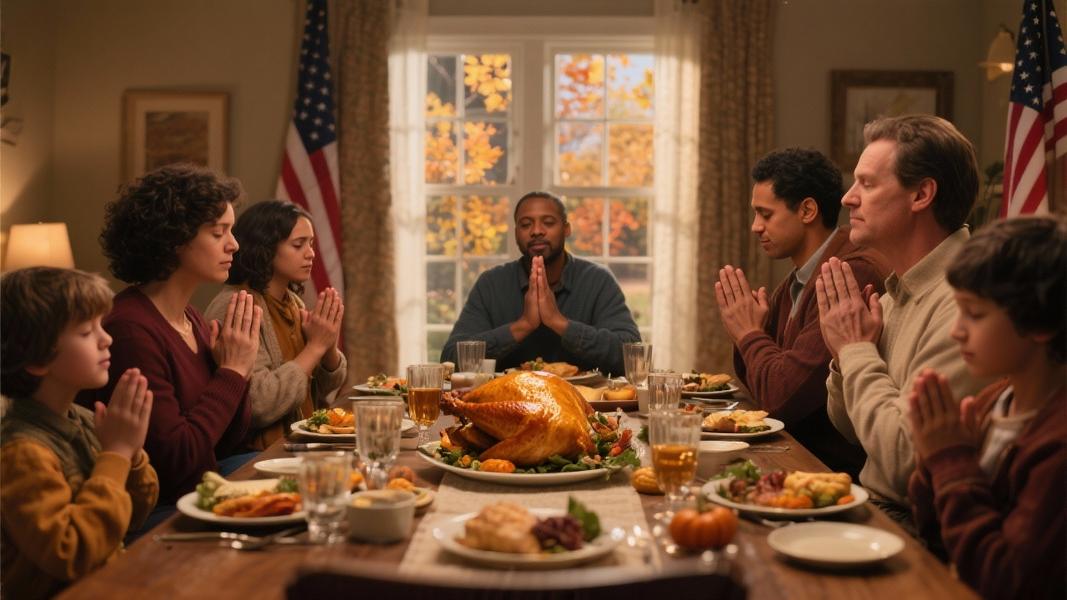
When George Washington issued the first National Thanksgiving Proclamation on October 3, 1789, he likely couldn’t have imagined that he was establishing what would become one of America’s most cherished holidays. Yet that single document, designating Thursday, November 26, 1789, as a day of “public thanksgiving and prayer,” laid the foundation for a tradition that continues more than two centuries later.
America’s First Thanksgiving Proclamation
Washington’s proclamation came shortly after Congress requested he recommend a national day of thanksgiving. The president didn’t hesitate, responding within days to the joint committee’s resolution which directed they “wait upon the President of the United States, to request that he would recommend to the people of the United States a day of public thanksgiving.”
The newly-minted president emphasized what he saw as “the duty of all Nations to acknowledge the providence of Almighty God, to obey his will, to be grateful for his benefits, and humbly to implore his protection and favor,” as documented in historical records. This religious framing wasn’t surprising for the era, but it established a precedent that would influence how Americans conceptualized the holiday for generations.
What specifically was America giving thanks for in 1789? Washington’s proclamation highlighted gratitude for the nation’s peaceful establishment of government, protection during the Revolutionary War, and the “great degree of tranquillity, union” achieved since independence. The text specifically mentioned thankfulness “for his kind care and protection of the People of this Country previous to their becoming a Nation—for the signal and manifold mercies,” according to archives at Mount Vernon.
From Proclamation to Tradition
Interestingly, this wasn’t Washington’s first rodeo with thanksgiving observances. During the Revolutionary War, the general had ordered special thanksgiving services for his troops following successful battles and publicly supported Continental Congress proclamations calling for days of thanks.
The idea had apparently been percolating in Washington’s mind for some time. Historical records show he first mentioned the possibility of a national Thanksgiving Day in a confidential letter to James Madison in August 1789, several months after taking office as the first president.
Once issued, the proclamation didn’t gather dust. It was widely distributed through newspapers, including the October 9, 1789 issue of the Pennsylvania Packet and Daily Advertiser, making it truly a national announcement. And Washington practiced what he preached—on that first official Thanksgiving Day, he attended services at St. Paul’s Chapel in New York City and donated beer and food to imprisoned debtors, as historical accounts note.
Lincoln’s Echo
Coincidence or deliberate homage? When Abraham Lincoln issued his own Thanksgiving Proclamation in 1863—the document that truly cemented the holiday in American tradition—he chose the exact same date (October 3) and designated the same day (Thursday, November 26) as Washington had 74 years earlier. Lincoln’s proclamation established Thanksgiving as the last Thursday of November, a tradition that has largely continued to this day, with only a slight adjustment to the fourth Thursday during the Franklin Roosevelt administration.
What would Washington think of modern Thanksgiving celebrations, with their football games, Black Friday sales, and turkey pardons? The holiday has certainly evolved beyond his original vision of a day devoted to prayer and gratitude for the young nation’s blessings.
Yet at its core, Thanksgiving remains what Washington intended: a moment for Americans to pause, gather, and consider their collective blessings. Perhaps that’s the most remarkable aspect of his 1789 proclamation—that its essential spirit continues to resonate in American life more than 230 years after he put pen to paper.
