
Texas Democrats finally have their candidate — and she’s heading straight for Greg Abbott.
State Rep. Gina Hinojosa swept the 2026 Democratic gubernatorial primary on Tuesday, clinching the nomination with more than 60% of the vote and setting up what is expected to be one of the most closely watched statewide races of the cycle. She’ll face incumbent Gov. Greg Abbott in November, who secured his own Republican primary win even with only about 35% of ballots tallied when the race was called. CBS News projected both outcomes as results rolled in throughout the evening.
A Crowded Night, A Clear Winner
Hinojosa’s margin wasn’t close. In a Democratic primary field that could have easily fractured the vote, she consolidated support decisively — avoiding a runoff and giving her party something it hasn’t had much of lately in Texas: momentum, at least on paper. Whether that translates to a genuine threat against Abbott in a state that hasn’t elected a Democratic governor since Ann Richards in 1990 is, of course, a much harder question.
On the Republican side, Abbott’s path was smoother than expected given the early vote count. And Lt. Gov. Dan Patrick didn’t wait long to declare a mandate. “Texas Republicans have spoken clearly,” Patrick said after his own primary win was secured, “reaffirming their commitment to keeping our state on a conservative path.” He went further, vowing to continue pushing for Texas to become “the most conservative state in the nation” during his next term. Subtle, it wasn’t.
But the Night Wasn’t Without Friction
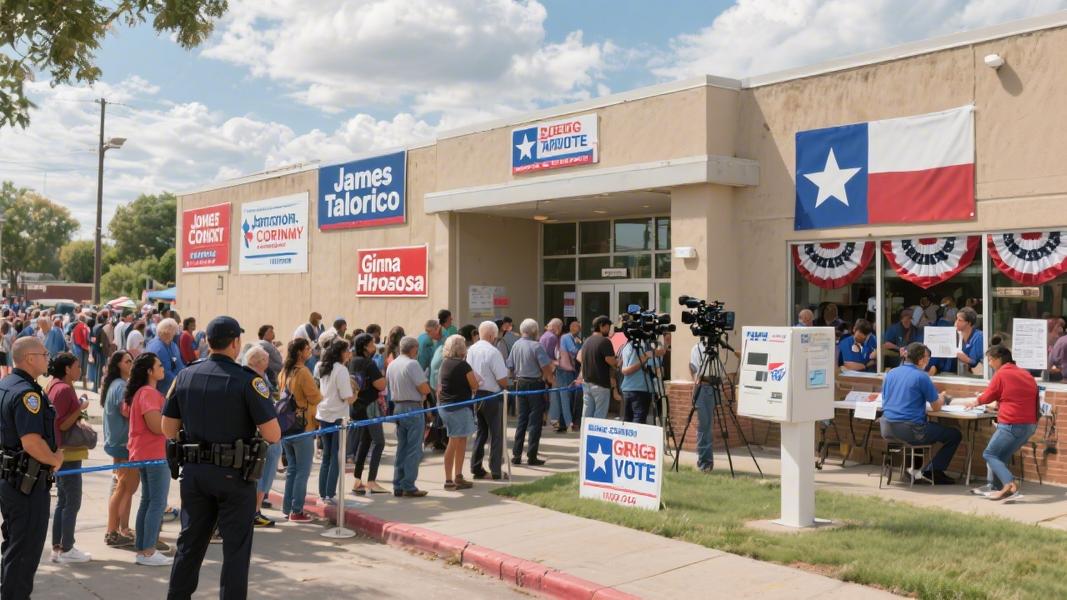
Here’s where it gets messy. The decision to run separate primary elections drew sharp criticism from Texas Democrats, who argued the logistical change blindsided ordinary voters. The party said the move disrupted a system Texans had relied on for over a decade — specifically the countywide voting system — and “sent them scrambling to find their assigned precinct.” That’s not a small complaint. Voter confusion in a primary doesn’t just dampen turnout; it can signal deeper organizational problems heading into a general election where every vote counts.
Still, Democrats appear willing to push past the procedural frustrations for now. Hinojosa’s lopsided win gives the party a unified standard-bearer, and that unity, however manufactured by circumstance, is something.
Watching the Numbers in Real Time
As results came in Tuesday night, NBC News chief data analyst Steve Kornacki was at the board, breaking down vote tallies not just from Texas but also from North Carolina and Arkansas primaries, all unfolding simultaneously on March 2. For political junkies, it was a full evening. For campaigns studying the data, it was a night of hard signals about where their bases actually showed up — and where they didn’t.
What Comes Next
Abbott is a formidable incumbent. He’s won two gubernatorial races, survived a politically turbulent few years, and shown a remarkable ability to absorb criticism from both flanks without losing his electoral footing. Hinojosa, a state legislator from Austin, will need to dramatically expand her coalition well beyond the Democratic base if she wants to make November competitive.
That’s a tall order. But then again, so was winning a primary with 60%.
Patrick’s declaration that Texas is becoming the most conservative state in the nation may be red meat for the base — but it’s also a ready-made contrast for Hinojosa to run on, should she choose to take it. The general election is still months away. In Texas, that’s enough time for a lot to happen, and also, historically, not quite enough for Democrats to close the gap. The question isn’t whether Hinojosa can make this a race. It’s whether Texas is ready to let her.
